In the high-stakes world of global finance and breaking news, time is not merely a resource—it is the primary currency. For media giants like The Wall Street Journal, Barron’s, and MarketWatch, the difference between a market-leading scoop and a missed opportunity is often measured in seconds.
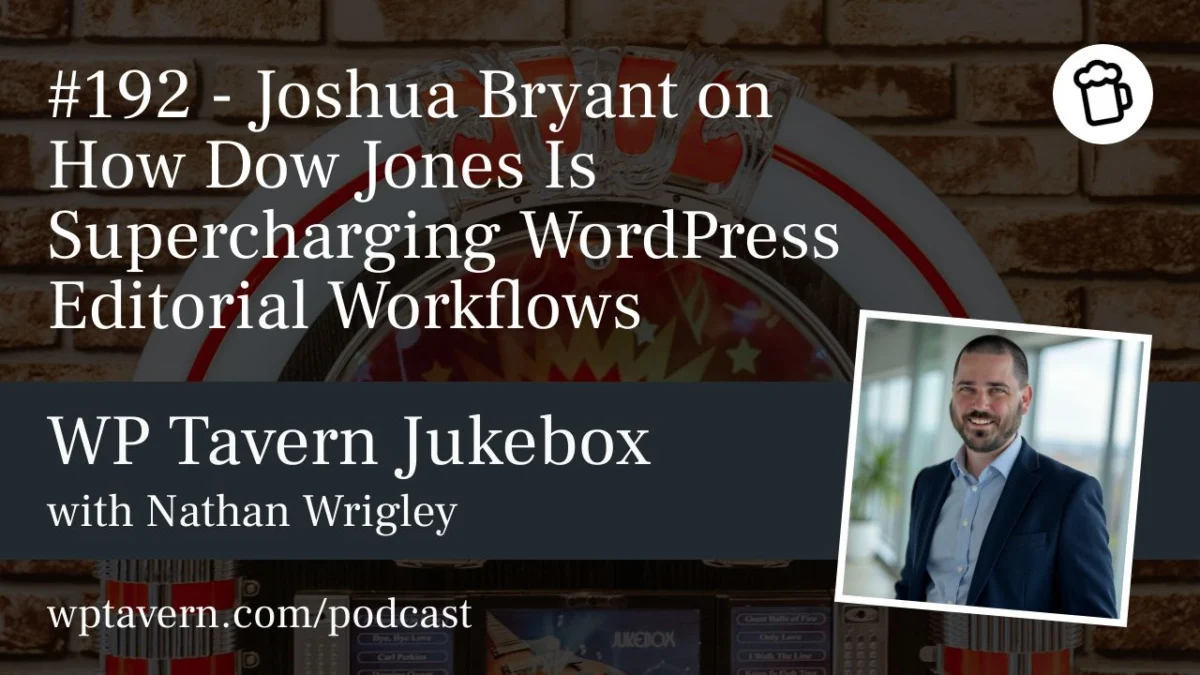
Recently, at WordCamp US, Joshua Bryant, a key developer at Dow Jones, unveiled a transformative technical architecture that has fundamentally altered how their newsrooms operate. By decoupling the Gutenberg block editor from the traditional WordPress administration panel and embedding it into a custom, standalone React application, the Dow Jones team has successfully "supercharged" their editorial workflows, achieving lightning-fast publishing speeds while maintaining the robust, enterprise-grade reliability of the WordPress ecosystem.
The Core Challenge: Why Speed Matters
For a general-interest blog, a few seconds of latency during the publishing process is inconsequential. However, for Dow Jones—an organization that provides critical financial data to millions—the stakes are vastly different. When breaking news hits the markets, or when corporate board meetings yield data that shifts stock valuations, the editorial team must move with unprecedented velocity.
"Being 10 seconds ahead of your competitor when Taylor Swift gets engaged is an important amount of time," Bryant noted during his presentation. "But in the case of MarketWatch, when there are going to be fluctuations in the market and we have editors listening in on board meetings, being able to send that information out and get that to our readers as soon as possible is the most important thing to our publications."
The challenge was not that WordPress lacked the necessary power, but rather that the native editorial environment was cluttered with features that, while useful for long-form journalism, introduced unnecessary friction for rapid-fire, breaking-news updates.
Chronology of a Technical Breakthrough
The journey to this headless solution began with an architectural audit of three distinct systems: a React-based planning tool, the WordPress editing environment, and the front-end rendering layer.
1. Planning (The Initial Phase)
The workflow starts in a React-based application where editorial staff coordinate their day. This is where stories are assigned and where photographers and editors collaborate on assets. For years, these systems were disparate buckets, requiring editors to jump between platforms to finalize content.
2. Editing (The "NewsPress" Innovation)
The breakthrough occurred when the team decided to extract the Gutenberg editor from the WP-Admin environment. By stripping away the administrative sidebar, the complex settings panels, and the traditional "Save" buttons, Bryant and his team created "NewsPress."
This stripped-down, distraction-free interface utilizes only the essential blocks—paragraphs and lists—along with proprietary plugins for tickers and bylines. This allowed editors to focus entirely on content creation, removing the cognitive load of navigating a full-scale CMS.
3. Rendering (The Headless Backend)
Once an editor hits "Publish" within this streamlined React app, the content is shunted via the WordPress REST API directly to the central database. Because the system bypasses the overhead of the traditional WordPress admin rendering, the content is live almost instantaneously.
Behind the Architecture: Simulating the Global WP Object
One of the most significant technical hurdles identified by Bryant was the reliance of WordPress on a "Global WP" object. In a standard installation, WordPress bundles its scripts to ensure efficiency and speed. When moving the Gutenberg editor into a standalone React environment, those scripts were not naturally present.
"It doesn’t exist in React or in Gutenberg," Bryant explained. "What WordPress is doing for us—building this object that all the code runs through—we had to manually do in React. We had to import those packages and set them at the global namespace level just so that the WordPress code would run."
This discovery phase required the team to pore over GitHub issues, Trac tickets, and internal source code to understand how to effectively "misuse" the platform to suit their specific enterprise needs.
The Implications of a "Hybrid" Headless Approach
The success of this implementation carries profound implications for the future of enterprise publishing. By maintaining a traditional WordPress installation as the "source of truth" while utilizing a custom, headless interface for the "creation" phase, Dow Jones has created a model that is both scalable and flexible.
Maintaining Equity in Open Source
Crucially, the team did not abandon WordPress. By keeping their content stored in a standard WordPress database, they ensured that they could still leverage the full power of the CMS—including revision histories, user permissions, and existing SEO plugins—after the initial, rapid-fire publication. Once a breaking news item is live, it can be seamlessly converted into a full-length, multimedia-rich article within the standard WordPress interface, proving that headless does not have to mean "divorced from the core."
A New Standard for Enterprise CMS
This project effectively demonstrates that organizations do not need to build a proprietary, custom CMS from the ground up to achieve high-performance, tailored workflows. Instead, they can use WordPress as a powerful, headless back-end engine.
"I think this is opening up a whole different set of opportunities," says Bryant. "You can use WordPress as its own complete system and then just slap React on top of it. You have the full Gutenberg editing experience, you save all of your information, and you still do all the things that you know how to do in WordPress."
Official Perspective and Future Outlook
While Dow Jones has not yet released the full source code for NewsPress—due to the proprietary nature of their internal business logic—Bryant has expressed a commitment to the open-source community. He has already started a repository documenting the process of moving Gutenberg into a standalone environment and hopes to continue refining it for broader use.
The goal is not to keep this architecture proprietary, but to provide a blueprint for other developers facing similar bottlenecks. "I would love for people to come and make it better, and tell me what I did wrong," Bryant stated. "And that’s the beauty of open source. We want to see it grow."
Conclusion
The Dow Jones initiative serves as a landmark case study for the WordPress community. It underscores a shift in how enterprise organizations perceive the platform: no longer as a rigid tool restricted to the WP-Admin dashboard, but as a flexible, API-driven powerhouse capable of being reshaped to meet the most rigorous performance demands.
As more developers look to move beyond "out of the box" configurations, the lessons learned by Bryant and his team—the importance of the REST API, the necessity of understanding the internal bundling processes, and the value of a distraction-free UI—will undoubtedly become part of the standard lexicon for enterprise web development. For now, the "NewsPress" experiment remains a testament to the fact that when you truly understand the layers of WordPress, there is virtually no limit to how you can innovate upon it.