The WordPress agency landscape is undergoing a seismic shift. For over a decade, the standard operating procedure for agency owners has been defined by manual effort, custom-coded solutions, and repetitive client communication. However, as Artificial Intelligence (AI) permeates every corner of the tech industry, the conversation is moving away from “AI-generated content” and toward a more critical, systemic application: the optimization of the agency itself.
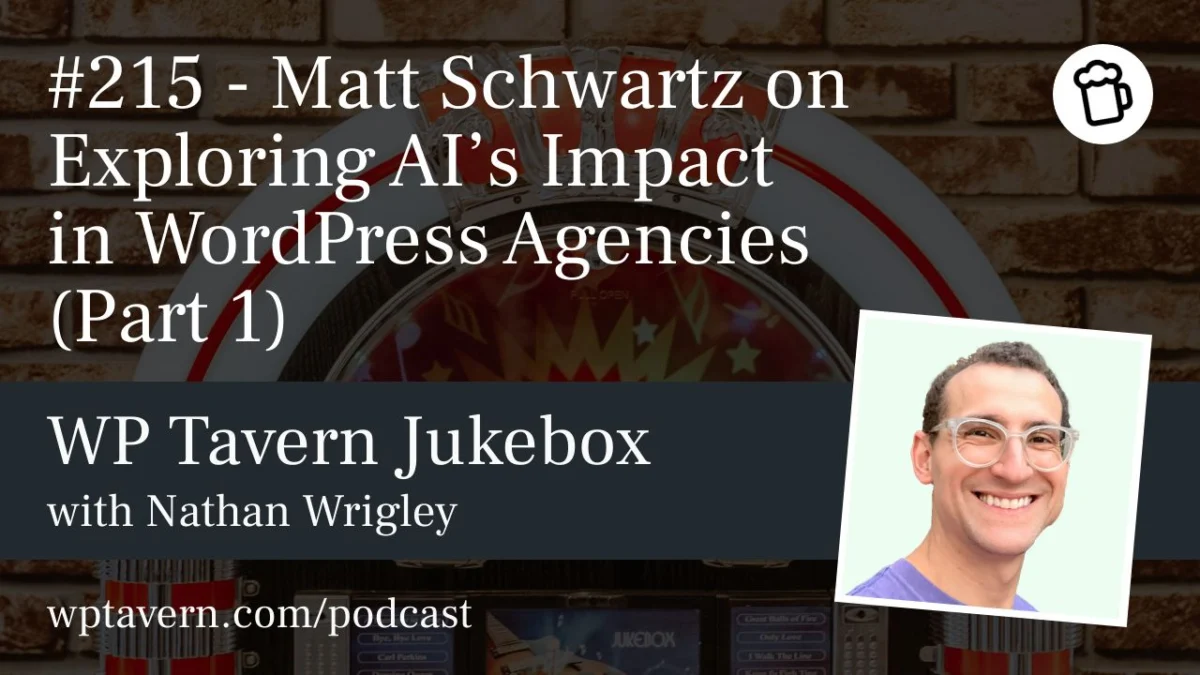
In a recent episode of the WP Tavern Jukebox podcast, host Nathan Wrigley sat down with Matt Schwartz, founder of the Atlanta-based WordPress and WooCommerce agency Inspry. Together, they explored how agency owners can move past the current “AI fatigue” to find practical, sustainable ways to integrate AI into their internal operations, service offerings, and client workflows.
The Evolution of the Agency Owner: A Chronology of Process
To understand the current state of agency operations, one must look at how owners like Schwartz arrived here. Many early WordPress professionals "stumbled" into the industry, building sites for local businesses while still in school, long before professional standards or formal SOPs (Standard Operating Procedures) were established.
- The Early Days (2011–2013): The era of "learning by doing." Agencies were built on individual grit, with owners creating their own price points, communication templates, and project management systems from scratch.
- The Scaling Phase: As these one-person shops grew, the lack of standardized documentation became a bottleneck. Agency owners realized that their "product" wasn’t just the website—it was the process itself.
- The Current AI Inflection Point: Since 2023, the industry has transitioned from incremental improvement to a state of near-constant, seismic disruption. The challenge now is not simply adopting AI, but managing it with enough intention to maintain quality.
The "Execution as a Commodity" Paradigm
A central theme of the discussion is the realization that technical execution—building a standard brochure website—is rapidly becoming a commodity. As AI tools lower the barrier to entry, the value proposition of a traditional agency must shift.
"AI to me only showed us that a lot of the work we do day to day is just not that special; it’s execution," Schwartz noted. "That just means we need to be spending more time on strategy and the value provided to the client."
The implication is clear: agencies that rely solely on the manual labor of building sites will find themselves competing with automated tools that can produce similar results in minutes. To survive, agencies must transition toward becoming strategic partners who use AI to enhance, rather than replace, their human expertise.
The AI Vision Document: Setting Guardrails
One of the most practical takeaways from the conversation is the concept of an "AI Vision Document." Rather than haphazardly deploying tools, Schwartz suggests that agencies create a formal roadmap to define where AI fits and, crucially, where it does not.
Why a Vision Document Matters:
- Intentionality: It prevents the "YOLO" approach to technology, where tools are adopted without assessing the long-term impact on workflow.
- Risk Mitigation: It establishes clear boundaries for employees and contractors regarding data privacy and the use of AI in sensitive client tasks.
- Pattern Recognition: By analyzing historical data from time-tracking software, an agency can use AI to identify which processes are most ripe for automation, ensuring that human effort is focused where it provides the most ROI.
Supporting Data and Strategic Shifts
While the allure of AI is strong, both Wrigley and Schwartz emphasize that the "human-in-the-loop" requirement remains non-negotiable.
Key Areas for AI Integration:
- Sales and Proposals: Instead of spending hours drafting bespoke proposals for every lead, AI can synthesize meeting notes, client website data, and historical project success rates to generate high-quality drafts in minutes.
- Support Workflows: Agencies are now experimenting with AI agents that can ingest help tickets, access server logs, and identify common patterns in support requests, allowing human staff to provide faster, more accurate resolutions.
- Advanced Data Analysis: AI can process large datasets—such as market spending power or geographical performance metrics—allowing agencies to offer high-level marketing insights that were previously too expensive or time-consuming to provide.
- WordPress Development: Through tools like the WordPress REST API and evolving block editor capabilities, AI is increasingly acting as an interface. Developers are using AI to debug PHP issues and manage site infrastructure, treating WordPress as the stable foundation for AI-assisted site management.
Official Stance: Transparency vs. Utility
A recurring question in the industry is whether agencies should disclose their use of AI to clients. Schwartz’s position reflects a nuanced, ethical standard:
- Transparency: When AI is used to produce a tangible deliverable (a product, a piece of content, or a piece of code), the client should be made aware.
- Internal Utility: When AI is used to streamline internal SOPs—such as meeting summaries or internal project management—transparency is not necessarily required, as it does not change the nature of the output delivered to the client.
The goal is to provide value, not to boast about the methodology. If an agency can use automation to lower costs or improve speed, that value is passed to the client regardless of the internal "magic" used to achieve it.
The Future: A New Core Service Offering?
Perhaps the most significant takeaway for agency owners is the opportunity to productize AI expertise. Many clients are overwhelmed by the rapid pace of change and are looking for guidance.
By becoming experts in AI-driven workflows, agencies can offer "Digital Transformation" as a service. This doesn’t mean building custom AI models; it means implementing existing automation tools (like n8n or Make) to help clients optimize their own business processes. This shifts the agency-client relationship from a one-off project delivery to a long-term, recurring partnership focused on business efficiency.
Implications for the WordPress Ecosystem
The conversation highlights that the future of the agency world lies in the balance between human empathy and machine efficiency. As AI continues to handle the "commodity" aspects of web development, the premium will be placed on:
- Strategy: Helping clients understand how to grow their business.
- Integrity: Ensuring that automated systems do not lead to a decline in service quality or accessibility.
- Adaptability: Maintaining a flexible, well-documented approach to technology that can pivot as the AI landscape shifts.
Ultimately, as Schwartz notes, "The floor is rising for everyone." Clients have higher expectations than ever before. Agencies that fail to leverage AI to handle the repetitive, administrative weight of their operations risk being outpaced by leaner, more efficient competitors. However, those that use AI with a clear, human-centered vision stand to deliver more value than they ever thought possible, transforming the very definition of what a WordPress agency can be.
This article is based on the first part of a two-part series on the Jukebox Podcast. Stay tuned for the upcoming second installment, where further strategies for AI implementation will be discussed.