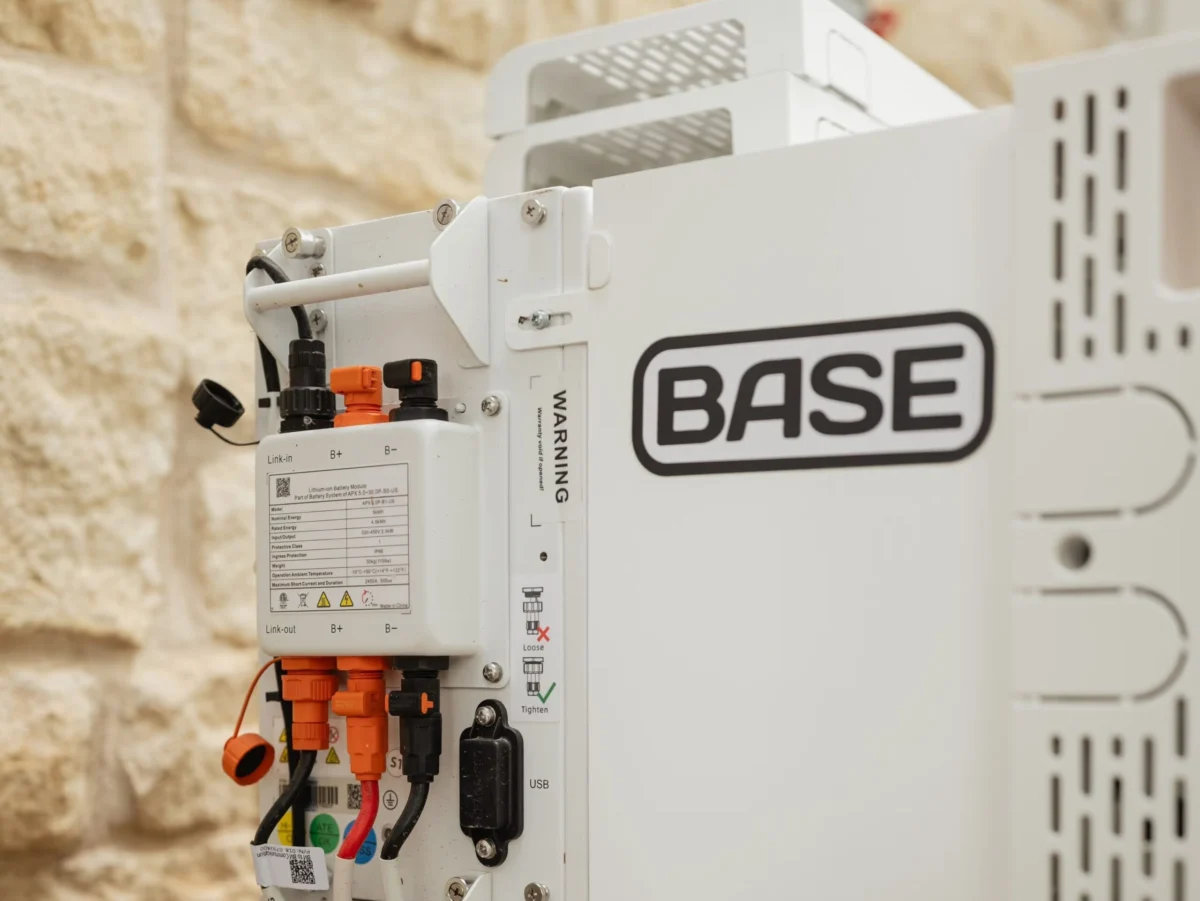
As the U.S. electrical grid faces an unprecedented convergence of rising demand, aging infrastructure, and the relentless energy appetite of artificial intelligence, a new player is bypassing traditional utility bottlenecks. Base Power, a high-growth energy storage startup, officially began deploying its massive home battery systems to residents in Illinois yesterday. This expansion marks a pivotal moment for the company, as it enters the territory of PJM Interconnection—the largest regional transmission organization in the United States—signaling a shift toward decentralized, residential-led power management.
The PJM Crisis: A Grid Under Pressure
To understand the significance of Base Power’s entry into Illinois, one must first examine the precarious state of the PJM Interconnection. PJM manages the power grid for all or parts of 13 states and the District of Columbia, serving over 65 million people. Recently, this grid has become the epicenter of a national energy crisis.
The primary catalyst for this strain is the explosive growth of data centers. Northern Virginia, which sits squarely within PJM’s territory, is home to the densest concentration of data centers on the planet. As tech giants scramble to build infrastructure to support the massive computational requirements of generative AI, the grid has been pushed to its absolute limits.
The consequences for consumers have been severe. A lack of new, dispatchable generation sources—compounded by years of administrative gridlock—has forced wholesale electricity prices to skyrocket. Reports indicate that prices in some PJM zones have nearly doubled over the past year. The situation has become so dire that American Electric Power (AEP), one of the region’s largest utilities, has publicly expressed frustration, even hinting at the possibility of exiting the market to escape the grid’s systemic instability.
Chronology of a Disruption
Base Power’s rise has been characterized by aggressive capital raising and a rapid, highly calculated operational rollout.
- 2023: Base Power launches in Texas, introducing a business model centered on "Virtual Power Plants" (VPPs). Unlike traditional residential solar companies, Base does not sell hardware to consumers. Instead, it installs massive, 25-kilowatt-hour home batteries and offers customers an electricity service agreement that guarantees rates significantly lower than the local utility.
- April 2025: The company secures a $200 million funding round led by heavyweights including Andreessen Horowitz, Lightspeed Venture Partners, and Valor Equity Partners. This infusion of capital signals the company’s intent to scale beyond its Texas pilot.
- October 2025: Base Power completes a massive $1 billion funding round led by Addition, providing the war chest necessary to expand into more complex, regulated markets like PJM.
- April 2026: PJM finally reopens its queue for new power generation applications after a multi-year freeze that began in 2022. The reopening is criticized by experts as "too little, too late," as the region struggles to keep pace with four years of skyrocketing demand.
- May 2026: Base Power officially launches in Illinois, offering rates 25% lower than the incumbent utility, ComEd, effectively firing the opening salvo in its challenge to the traditional PJM utility model.
The "End-Run" Strategy: Why Behind-the-Meter Matters
The core of Base Power’s success lies in its architectural strategy. Historically, adding new capacity to the grid has required developers to wait years for interconnection studies, regulatory approvals, and massive transmission infrastructure projects. PJM’s history of "sclerotic" decision-making has made this process a nightmare for traditional energy projects.
Base Power’s genius is in its avoidance of the grid’s front door. By deploying its capacity "behind the meter" at the residential level, the startup bypasses the interconnection queue entirely. Because the homes where these batteries are installed are already connected to the distribution network, Base Power can bring gigawatt-scale, distributed storage online in months rather than the decade it often takes for centralized power plants.
"We are deploying capacity behind the meter at the residential home, where an interconnection already exists, so we don’t wait in the interconnection queue," founder and CEO Zach Dell noted in a recent interview.
This model effectively turns thousands of individual homes into a singular, flexible power plant. In Texas, where the company already operates more than 500 megawatt-hours of storage, Base Power’s software manages the charging and discharging cycles. When electricity is cheap—often during the middle of the night or during periods of high wind production—the batteries draw from the grid. When the grid is stressed and prices spike, the batteries dispatch that power, stabilizing the system and saving the homeowner money.
Supporting Data: The Economics of the VPP
Base Power’s value proposition is driven by a stark economic reality: wholesale electricity is volatile, and retail utilities are slow to react to that volatility. By leveraging the 25 kWh battery capacity—which is significantly larger than many competitor systems like the Tesla Powerwall—Base can offer a more robust buffer for the grid.
In Illinois, the company is promising rates 25% below ComEd’s standard pricing. This is made possible through a sophisticated arbitrage strategy. By acting as a participant in the wholesale market, Base Power effectively captures the "spread" between low-cost charging periods and high-cost dispatch periods.
The scale of this operation is significant. With over 500 MWh currently active in Texas, the company is essentially managing a mid-sized peaker plant, but one that is composed of thousands of nodes distributed across neighborhoods. This decentralization makes the grid more resilient against physical threats, such as extreme weather events or localized transmission failures, which are increasingly common in the Midwest.
Official Responses and Industry Implications
The entry of a venture-backed startup into the highly regulated PJM market has sent ripples through the utility sector. Regulators are now tasked with determining how to integrate these distributed assets without compromising grid security.
While utility giants like ComEd and AEP have not released specific rebuttals to Base Power’s entry, industry analysts suggest that the "utility-as-a-service" model represents a direct threat to the traditional monopoly structure. If a homeowner can rely on a private startup for both power storage and a cheaper retail rate, the justification for continuous rate hikes by incumbent utilities becomes harder to defend in front of state public utility commissions.
However, the rapid growth of Base Power is not without its critics. Some grid experts warn that an over-reliance on private, software-driven VPPs could lead to issues with grid synchronization. There is also the question of "regulatory capture"—whether the PJM can adapt its rules quickly enough to allow these assets to participate fully in the market, or if it will attempt to impose new fees on behind-the-meter batteries to protect legacy infrastructure revenues.
The Path Ahead: A Decentralized Future
Base Power’s expansion into Illinois serves as a microcosm for the broader energy transition. The reality is that the grid is no longer a top-down system where electricity flows from a few massive plants to passive consumers. Instead, it is becoming a complex, bi-directional network of "prosumers"—people who both consume and provide energy back to the system.
If Base Power can replicate its Texas success in the PJM territory, it could set a template for the rest of the nation. The company’s ability to leverage $1.2 billion in capital to build a distributed network of batteries suggests that the era of waiting for massive, multi-billion-dollar transmission line projects may be coming to an end.
For residents in Illinois, the benefit is immediate: lower bills and a more stable home energy supply. For the PJM grid, it is a wake-up call. The age of the centralized, slow-moving utility is being challenged by the speed of software, the efficiency of lithium-ion, and the sheer necessity of a grid that can handle the AI-fueled demands of the 21st century.
As Base Power continues its rollout, all eyes will be on the company’s ability to manage this growth while maintaining the reliability that the grid requires. One thing is certain: the power dynamic is shifting, and for the first time in a long time, the consumer has a new, formidable ally in the fight for cheaper, more reliable electricity.