In the hyper-competitive landscape of modern e-commerce, the standard playbook for email marketing is reaching a point of diminishing returns. Most brands operate with a singular, transactional objective: how do we extract the next purchase? While conversion optimization, cart abandonment triggers, and welcome sequences are vital components of a healthy business, they represent an incomplete strategy.
The most resilient brands—those that survive market downturns and ignore the siren call of the "race to the bottom" on pricing—are not just building customer lists. They are cultivating communities. They are transforming one-time buyers into brand evangelists who advocate for the company without solicitation and remain loyal even when cheaper alternatives saturate their social feeds.
Email, when leveraged correctly, is the most potent, yet profoundly underrated, tool for this transformation. Unlike the volatile whims of social media algorithms or the clutter of paid advertising, the inbox remains a sanctuary of direct, intimate attention. It is the only channel where you can speak to your audience without a digital gatekeeper standing between you and the recipient.
The Fundamental Divide: Lists vs. Communities
To understand the shift in strategy, one must first distinguish between the two entities. A list is merely a database—a collection of names and digital addresses acquired through lead magnets or past purchases. A community, conversely, is a group of individuals who share a sense of belonging, common values, and a psychological investment in the brand’s mission.
The chasm between these two is not defined by technology or automated software; it is defined by intent. Most e-commerce brands view their email strategy through the lens of a "funnel"—moving a prospect from awareness to acquisition. This infrastructure is necessary for revenue, but it is not sufficient for longevity. Brands that build community treat the inbox as a relationship-first channel. They understand that revenue is not the destination, but a byproduct of a sustainable, long-term relationship.
The Anatomy of Insider Access
The most effective way to foster community is to dismantle the wall between the "brand" and the "buyer." Subscribers must feel like insiders—part of a private circle rather than targets of a marketing blast.
This does not require a complex loyalty program or a gated membership area. It requires a fundamental shift in communication style. Instead of the sterile, "The product is now available" announcement, successful brands share the "Why." They reveal the struggles of the development process, the iterations that failed, and the specific problems they sought to solve.
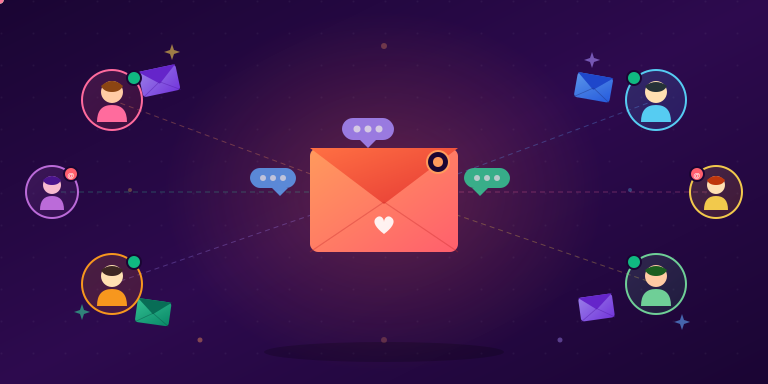
When you share the process—the packaging decisions, the supplier visits, or even the mistakes made along the way—you invite the subscriber to become a stakeholder in your journey. Humanizing the brand through founder-led emails, often written in a personal, unadorned voice, strips away the corporate facade. A simple, text-heavy note from a founder often outperforms a professionally designed, image-heavy promotion because it feels authentic, vulnerable, and real.
The Power of Two-Way Dialogue
The death knell of community is a one-directional communication loop. If your email strategy is "I talk, you receive," you are merely broadcasting. To build a community, you must invite participation.
This begins with the simple, yet radical, act of asking questions. Instead of an automated survey that feels like a chore, include a single, thoughtful question at the end of an email. "What is the one thing you are still struggling with in this area?" or "What should we build next?"
The crucial step, however, is the response. When a subscriber replies, they aren’t just clicking a button; they are initiating a human interaction. While scaling individual responses to a list of 50,000 is difficult, the impact of these conversations is exponential. The customers who receive a thoughtful reply from a founder become your most vocal advocates. They are the ones who write detailed reviews, share your brand in their circles, and provide the insights that define your next product innovation.
Constructing a Recognizable Voice
Identity is the glue that holds a community together. In the digital space, that identity is carried by your brand’s voice. If your emails could be copy-pasted and sent by any competitor in your space without anyone noticing, you have failed to build a brand identity.
A recognizable voice is built on deliberate choices. It is defined by what you stand for, what you push back against, and what you refuse to do—even when the market pressures you to conform. When your brand’s values are consistently woven into your communication, subscribers develop a sense of "knowing" you. This familiarity is the bedrock of trust. When a subscriber feels they know the person or the mission behind the email, they stay, they engage, and they trust your recommendations.
Measuring the Pulse: Beyond Open Rates
While conversion data is the lifeblood of business, it is a lagging indicator of community health. To track if your efforts are actually building a community, you must look at qualitative and behavioral metrics:
- Reply Rate: This is the most direct indicator of engagement. If your emails are not generating replies, the conversation is effectively dead.
- Forward Rate: When a subscriber forwards your email to a friend, they are performing a high-value act of social endorsement. It is a signal that your content provides utility or delight beyond the product itself.
- Referral Growth: Track how your new subscribers find you. A growing segment of your list originating from word-of-mouth recommendations is the strongest signal that your community is effectively acting as a growth channel.
- Unsubscribe Patterns: Pay attention to what causes people to leave. A spike in unsubscribes after a purely promotional blast, contrasted with stability during content-led emails, tells you exactly what your community values.
The Strategic Implication: Integration of Infrastructure
Building a community does not mean abandoning sales. It means building a foundation where sales become easier to achieve. This requires the right infrastructure. Tools like Omnisend allow brands to bridge the gap between transactional efficiency and relational building.
Advanced segmentation allows you to send the right message to the right person, while robust automation handles the heavy lifting of the customer journey, freeing up the founder and marketing team to focus on the human element—the storytelling, the questions, and the genuine engagement that keeps a list alive.
Conclusion
The most successful e-commerce businesses are not those with the most sophisticated AI-driven automation or the most aggressive send frequency. They are the brands that treat their subscribers as participants in a shared journey.
Creating a community-driven email strategy is entirely achievable, regardless of your current audience size. It requires a shift in mindset: moving from seeing your list as a set of prospects to seeing them as a group of people. By prioritizing a consistent, authentic voice, inviting two-way communication, and providing genuine value, you can build a business that is not just profitable, but resilient.
In a world of noise, the brands that listen—and the brands that speak like a human—are the ones that will win the future. Start today by asking your subscribers a question. Then, sit back and listen to what they have to say. You might be surprised by how much they are waiting to tell you.