In the traditional landscape of digital marketing and freelance services, the sales process is often a grueling exercise in persuasion. Professionals spend countless hours refining pitch decks, crafting cold emails, and attempting to convince prospects of their worth. However, a paradigm shift is underway, driven by the rapid maturation of artificial intelligence.
AI consultant Etan Polinger recently demonstrated a revolutionary approach to this cycle, using a sophisticated, AI-augmented workflow to land a $12,000 contract by replacing the "pitch" with a "proof." By moving from abstract promises to concrete, branded prototypes delivered during the very first meeting, Polinger has effectively inverted the power dynamic of the sales room.
The Shift: From Persuasion to Proof
For most service providers, the standard sales call is fraught with "I hope they choose me" anxiety. The prospect is usually in the driver’s seat, evaluating the provider based on promises, past case studies, and subjective trust. Polinger, however, argues that AI has fundamentally altered the economics of preparation.
"When you show up with the right preparation and the right assets, you remove the insecurity from the room entirely," Polinger explains. By leveraging AI to automate the heavy lifting of research and prototyping, a single professional can now produce in four hours what would have historically required a multi-person team weeks to complete. The goal is to reach a state where the prospect is not merely considering a vendor, but fearing the potential loss of a solution that is already standing before them.
A Chronology of the $12K Workflow
The efficacy of this method was proven in a real-world scenario when Polinger encountered a potential client in a digital community seeking a custom software solution. Rather than sending a standard introductory email or asking for a discovery call, he initiated a streamlined four-step workflow.
1. Decoding the Prospect’s Need
The process begins by distilling the "ask." Many prospects are technically illiterate regarding their own requirements, focusing on the pain rather than the solution. Polinger feeds the prospect’s initial inquiries—whether from a forum comment or a meeting transcript—into an LLM with a simple prompt: “What do they want? Answer in one sentence that anyone can understand.”
By focusing on the outcome—a chat widget, a CRM automation, or a lead-gen tool—rather than the technical stack, Polinger bypasses the technical noise and aligns his goals directly with the client’s business value.
2. Deep Research and Profiling
Once the objective is established, Polinger conducts a three-pronged research sprint, utilizing AI to categorize data into three distinct buckets:

- The Person: Analyzing podcast transcripts, social media posts, and public statements to identify their professional "voice" and personal pain points.
- The Company: Scraping the website and, crucially, analyzing open job postings. As Polinger notes, a company’s hiring patterns often reveal their strategic roadmap more accurately than their marketing copy.
- The Market: Identifying existing competitors and alternative solutions. This creates a safety net; if the prospect decides against a custom build, Polinger is already equipped to propose a configuration of an off-the-shelf product.
3. The "Wow" Factor: Branded Prototyping
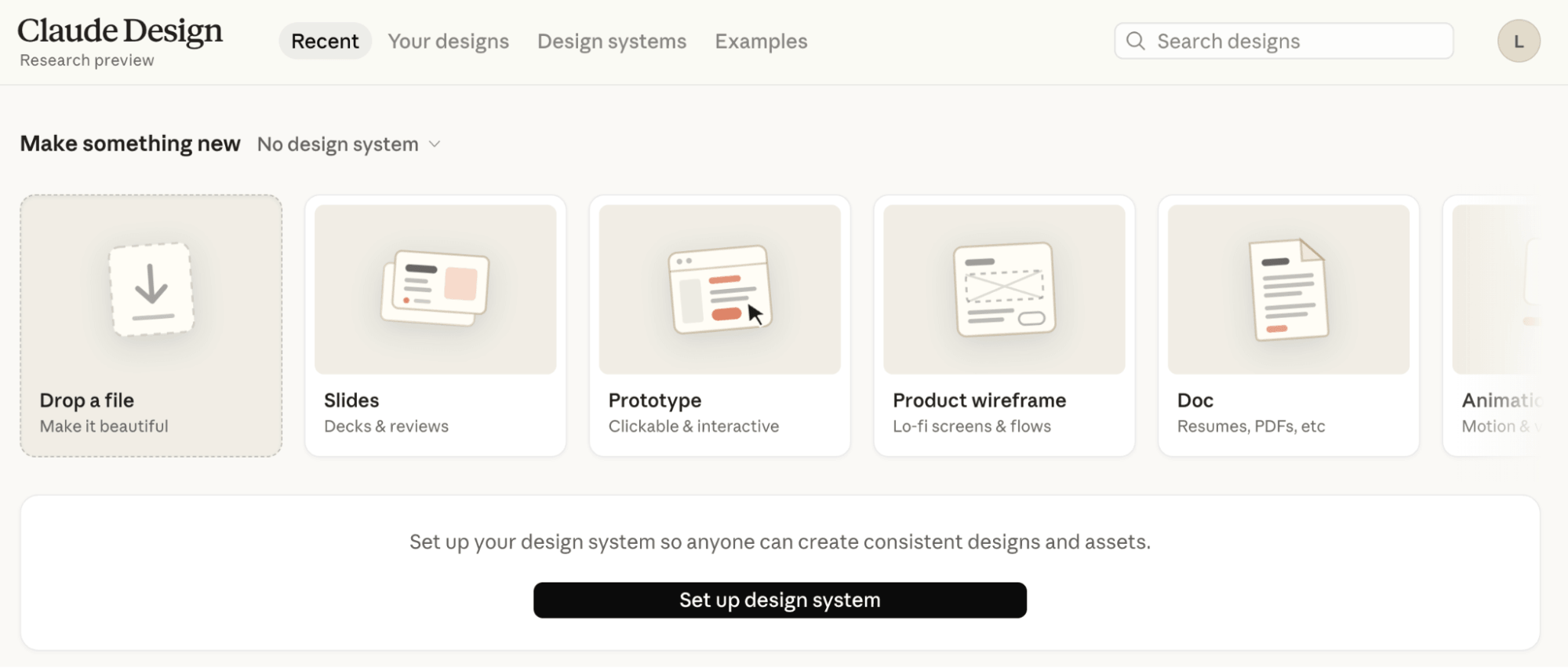
The most critical phase involves the visual presentation. Polinger uses tools like WhatFont and ColorZilla to extract the prospect’s brand identity, then feeds these elements into Claude Design. The AI generates a comprehensive brand system—including color palettes, typography, and UI/UX snippets—that allows him to build assets that appear to be internal, company-approved products.
4. The Presentation of Reality
By the time the first meeting occurs, Polinger arrives with a fully functional prototype and a customized pitch deck. During the call, he demonstrates a tool that already "lives and breathes" the prospect’s brand. This creates an immediate cognitive shift in the prospect: they cease to view the service provider as a potential expense and start viewing them as an essential resource, often pivoting the conversation to questions of capacity rather than price.
Supporting Data: Why This Methodology Scales
While some may view the labor of creating a prototype for a lead as "unpaid work," the data suggests it is a high-yield investment. Polinger’s experience indicates that this level of preparation significantly increases the close rate.
The rationale is rooted in the "Endowment Effect"—a psychological phenomenon where people place a higher value on something once they feel they possess it. By presenting a working prototype, the prospect begins to treat the solution as their own. When the provider asks, “Do you want to move forward with this?” the answer is rarely a rejection; it is an inquiry into the logistics of implementation.

Furthermore, the "AI-augmented" nature of this workflow allows for extreme scalability. Because the research and design phases are largely automated, the cost of acquisition per client remains low, allowing the professional to focus their human energy on high-level strategy rather than administrative busywork.
Official Perspectives on AI-Driven Sales
Industry experts are increasingly echoing Polinger’s sentiments. The consensus is that we are moving toward an era of "hyper-personalization." The AI Business Society—a community of marketers and entrepreneurs—reports that the most successful businesses are those that use AI to move from "generic outreach" to "bespoke problem solving."
"The goal is not to use AI to spam more people," says Michael Stelzner, co-creator of the AI Explored podcast. "The goal is to use AI to create such high-quality, relevant assets that you only need to reach out to a few people to fill your pipeline."
The shift is moving the industry away from volume-based lead generation toward value-based surgical strikes. The technological barrier to entry for high-end professional services is collapsing, which means the competitive advantage is no longer "access to tools," but rather the "curation and application of AI workflows."
Strategic Implications for the Future
The implications of this workflow are profound for both the freelancer and the established agency:
- The Death of the Generic Proposal: In a world where AI can build a prototype in an afternoon, a slide deck full of bullet points will become increasingly perceived as unprofessional.
- The Rise of the "AI Integrator": Professionals who can bridge the gap between business strategy and AI implementation will command higher premiums. The ability to "vibe code"—using natural language to guide AI agents toward functional outcomes—is becoming the most valuable skill in the service economy.
- Client Selection Sovereignty: Perhaps the most compelling outcome of this methodology is the ability to choose one’s clients. When a professional demonstrates such clear value, they move from a position of begging for work to a position of assessing whether the client is a good fit for their specific expertise.
Conclusion
The $12,000 deal secured by Etan Polinger serves as a case study for the future of professional services. By leveraging AI to perform deep research, branding, and prototyping before the first handshake, the sales process is stripped of its traditional friction.
The message for digital marketers, consultants, and agencies is clear: the era of the generic pitch is ending. In its place, we are entering the era of the "Pre-Built Solution." Those who learn to harness these AI workflows will find themselves not just closing more deals, but defining the terms under which they work. Whether you are a solo consultant or part of a larger team, the ability to show, rather than tell, has never been more accessible—or more profitable.