The narrative that "outbound is dead" has become a pervasive trope in the B2B SaaS landscape over the last 24 months. It is a sentiment born of frustration—a reaction to the cluttered inboxes and hollow, automated cadences that characterized the 2018–2021 era. However, according to industry veterans and innovators, this diagnosis is not only inaccurate; it is dangerously misleading.
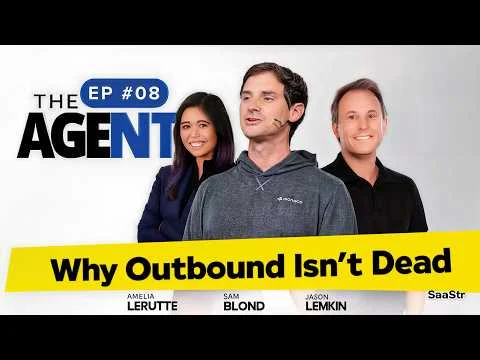
In a recent episode of The Agents, Sam Blond, founder and CEO of Monaco and a seasoned executive who previously led outbound at powerhouses like Brex and Zenefits, joined the discussion to challenge the status quo. The consensus was clear: outbound sales is not dead. The "lazy" version—characterized by mass-market volume and generic messaging—has simply reached its expiration date. In its place, a more surgical, AI-native approach is emerging, one that prioritizes intent, high-quality messaging, and human-led strategy.
The Chronology of a Shift: From Volume to Value
To understand where outbound is going, one must first recognize why the old model collapsed. Historically, the "spray-and-pray" methodology relied on the sheer force of volume. Companies would purchase massive contact lists, plug them into automated sequences, and measure success based on the number of emails sent.
The 2018–2021 Era: The Age of Automation
During this period, the barrier to entry for outbound was low. AI was in its infancy in the sales stack, and the market was flush with capital. The primary goal was to fill the funnel at any cost. However, as the digital landscape became increasingly saturated, prospects developed "outbound blindness." They learned to ignore generic outreach, leading to a plummeting return on investment for high-volume, low-effort tactics.
The 2024–2026 Transition: The Rise of the Agent
The current shift is defined by the transition from "automation" (which just does the same task faster) to "agentic workflows" (which use reasoning to make decisions). Modern platforms like Monaco are not merely sending emails; they are building Total Addressable Markets (TAMs), identifying high-intent companies, and orchestrating multi-channel sequences that respect the buyer’s time.
The turning point for many firms has been the realization that the AI agent is not a replacement for the salesperson, but a force multiplier for the most time-consuming parts of the job: data entry, initial outreach, and follow-up logistics.
Supporting Data: Why The New Model Wins
The economic argument for agentic outbound is becoming impossible to ignore. Industry leaders are seeing a drastic shift in efficiency metrics.
- Revenue per Representative: Pre-AI, the standard for revenue-per-rep was fixed by the physical limitations of how many hours a human could spend typing and calling. Today, revenue-per-rep is estimated to be 2x higher than pre-AI levels. Within two years, as agentic integration matures, that number is projected to climb to 5x.
- The "Owner.com" Benchmark: Forward-thinking companies like Owner.com are already achieving upwards of $2 million in revenue per sales representative in the SMB segment—a feat that was virtually unheard of under the legacy model.
- The Conversion Gap: Research from the SaaStr team suggests that when an agent handles the "breadth" of outreach—reaching every stakeholder in a target account—the human lead can focus entirely on the "depth," managing relationships with the top 1% of decision-makers.
Official Perspectives: The "Monaco Method"
Sam Blond’s approach at Monaco provides a blueprint for what a successful modern outbound engine looks like. The "Monaco Method" is built on two pillars that invert traditional sales logic:
- Sequence Structure: Modern outbound is multi-channel and intentionally ordered. A connection request on LinkedIn serves as the "handshake," followed by a synchronized touch via email. The goal is to maximize reply rates through context, not to maximize volume.
- Message-Market Fit: AI cannot invent value. A common failure mode for startups is using AI to polish a message for a product that lacks a real, felt need. If the outreach bounces repeatedly, no amount of AI-generated personalization can save it. As Blond notes, if you have a product that solves a burning problem, your reply rate will be high regardless of your brand name.
Implications: The Role of the Human in the Loop
The most profound implication of this shift is the evolution of the human sales role. If agents handle the mechanical work, what happens to the SDRs and AEs?
The "Human-topped" Strategy
The future of sales is not "AI-only." It is "human-topped." In this model, agents handle the heavy lifting of identifying prospects and warming them up with intelligent, personalized content. The human salesperson steps in only when the "warmth" of the interaction warrants it.
For instance, at SaaStr, even with the use of advanced agents, top-tier leadership still personally emails their most critical contacts. When the agent has done the work of "covering the map" at a large enterprise, the human can perform the high-value surgical strike to close the deal.
Brand is a Force Multiplier, Not a Barrier
A persistent myth is that outbound only works for companies with established brand equity. While it is true that a known name converts at a higher rate, most companies underestimate their own "micro-brand." Within a specific industry or niche, a company that has been active for even a year often has enough recognition to ensure that a cold email is not a "cold start."
The bar for success is not becoming a global household name; it is simply being recognizable enough within your Ideal Customer Profile (ICP) that your message is perceived as relevant rather than spam.
The Three Determinants of Success
According to the analysis presented by The Agents, three factors dictate whether your outbound strategy will thrive in 2026:
- Brand Awareness: You don’t need mass-market fame, but you do need "domain authority" within your specific segment. If you aren’t known, prioritize activities that build that reputation.
- Message-Market Fit: This is the most critical variable. Your value proposition must map to a pre-existing, painful need. If the market doesn’t feel the "itch," the AI-enabled "scratch" will be ignored.
- Willingness to do the Work: This is the final, most overlooked factor. Many founders are capable of deploying agents, but they fail because they treat it as a "set it and forget it" tool. Building an outbound engine requires the same discipline as building a product: constant iteration, target refinement, and the courage to pick a dream customer and go deep.
Conclusion: The Future of Go-To-Market
The "outbound is dead" narrative is a comfort blanket for those unwilling to evolve. The reality is that we are witnessing a fundamental decoupling of effort and outcome. By offloading the mechanical, data-heavy, and repetitive tasks to agents, organizations are freeing their human talent to do the work that actually generates revenue: building relationships, negotiating, and solving complex problems.
The transition to an agent-led sales organization is not a shortcut to success; it is a fundamental shift in business architecture. For the companies willing to embrace this change—those who balance the cold efficiency of AI with the irreplaceable warmth of human connection—the opportunity to scale revenue is greater than it has ever been. The tools are ready; the question is whether the leadership is willing to put in the reps.