Digital marketing budgets are under more scrutiny than ever. As the cost-per-click (CPC) across major platforms like Google Ads and Meta continues to rise, businesses are finding that the battle for profitability is no longer won solely within the ad auction. Instead, a growing consensus among performance marketing experts suggests that the "silent killer" of modern Pay-Per-Click (PPC) campaigns is the landing page—specifically, the disconnect between user expectation and the post-click reality.
While advertisers spend weeks refining keyword lists and perfecting ad copy, the destination of that traffic is frequently an afterthought. This systemic failure to align search intent with landing page content is resulting in billions of dollars in wasted ad spend annually.
Main Facts: The Disconnect Epidemic in Digital Advertising
The core of the issue lies in a fundamental misunderstanding of the user journey. Many businesses operate under the "one-page-fits-all" philosophy, directing diverse traffic streams toward a single, generic homepage or a broad "Book a Demo" page. This approach ignores the nuanced psychological state of the user at the moment of the click.
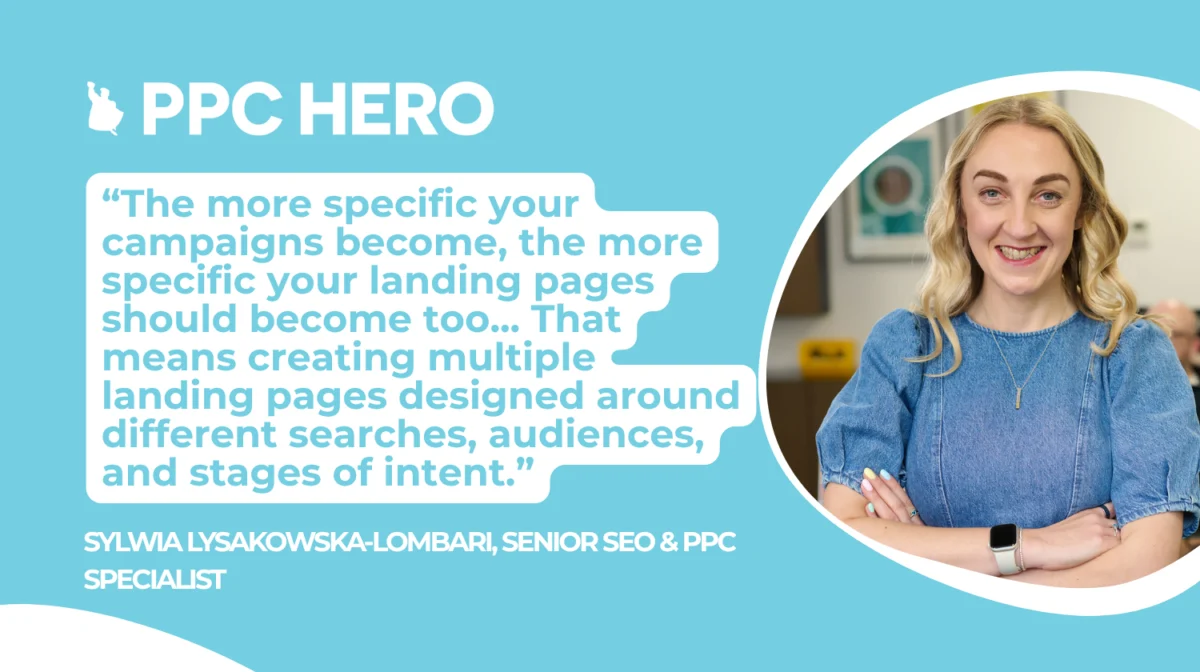
Industry data suggests that the more specific a PPC campaign becomes, the more specific the corresponding landing page must be. When a user searches for a specific solution and is met with a generic corporate overview, a "relevance gap" is created. This gap is where conversions disappear.
The Relevance Gap in Action
Consider a recent case study involving a vegan meal subscription service. An ad explicitly promised a "50% discount on first-time vegan meal boxes." However, upon clicking, the user was directed to the company’s general homepage. There was no mention of the 50% discount, no immediate path to vegan-specific options, and no clear "next step" related to the offer.
In this scenario, the business paid for the click, but the user was forced to "work" to find the offer they were promised. In the high-speed world of mobile browsing, users rarely put in that effort; they simply bounce. This highlights a critical rule of modern PPC: users should never have to investigate whether they are in the right place. The landing page must provide immediate, visual, and textual confirmation of the ad’s promise.
Chronology: The Evolution of the PPC Journey
To understand how we arrived at this point of friction, one must look at the evolution of search behavior and advertising technology over the last decade.
1. The Era of the Keyword (2010–2015)
In the early days of PPC, the focus was almost entirely on keyword matching. If you bid on "CRM software," and your page mentioned "CRM software," you were likely to see a conversion. Competition was lower, and users were more patient with broad experiences.

2. The Rise of Quality Score and Intent (2016–2020)
Google and other platforms began heavily weighting "Landing Page Experience" within their Quality Score algorithms. This forced advertisers to start thinking about page speed and mobile responsiveness. Simultaneously, user behavior shifted; consumers began using longer, more specific "long-tail" queries, signaling a need for more granular content.
3. The Modern Era of Hyper-Relevance (2021–Present)
Today, the market is saturated. The "PPC journey" is no longer a straight line from ad to purchase. It is a complex interaction involving trust-building, risk mitigation, and education. Advertisers who still rely on a single "master page" are essentially using a 2012 strategy in a 2024 market. The modern chronology of a successful conversion now requires multiple touchpoints, each tailored to a specific stage of the buyer’s journey.
Supporting Data: Understanding the Three Pillars of Search Intent
The most successful digital strategists categorize their landing page architecture based on the intent behind the search query. Forcing all users through the same funnel creates friction because it ignores their current stage in the buying cycle.
Transactional Intent: The "Ready to Buy" Stage
Users with transactional intent are at the bottom of the funnel. They use keywords like "buy," "pricing," "get a quote," or "discount code."
- Expectations: Quick access to costs, clear calls-to-action (CTAs), and a frictionless checkout or sign-up process.
- The Landing Page Solution: Short, punchy pages. These pages should minimize scrolling and focus entirely on the "How" and "How Much." Long-form explanations of the company’s history are counterproductive here.
Commercial Investigation: The "Evaluation" Stage
These users are comparing solutions. They use keywords like "best CRM for small business," "Product A vs. Product B," or "top-rated meal kits."
- Expectations: Reassurance, social proof, and feature comparisons.
- The Landing Page Solution: Pages that feature testimonials, case studies, trust badges, and clear differentiation points. Sending these users to a "hard-sell" transactional page often feels too aggressive and drives them away before trust is established.
Informational Intent: The "Research" Stage
At the top of the funnel, users are looking for answers to problems, not necessarily a product yet. They search for "how to improve sales efficiency" or "benefits of a plant-based diet."
- Expectations: Education and value without an immediate sales pitch.
- The Landing Page Solution: Lead magnets, whitepapers, or insightful blog-style landing pages. The goal here is to capture an email address or establish brand authority, not to force a "Book a Demo" click.
Official Recommendations and Expert Frameworks
Marketing analysts and platform specialists suggest a shift toward "Intent-Based Architecture." Rather than one service page, a business should ideally maintain a library of landing pages designed around specific segments.
The "Four-Point" Optimization Framework
Experts recommend that every PPC landing page be audited against four critical metrics:

- Message Match: Does the headline of the landing page mirror the headline of the ad? If the ad says "Recruitment CRM," the page should not say "All-in-One Business Management Suite."
- Friction Reduction: Are there unnecessary form fields? Is the page loading in under two seconds? Every extra second of load time can result in a 7% drop in conversions.
- Visual Hierarchy: Does the most important information stand out? Heatmap data often shows that users ignore "hero images" and scan for bolded text and bullet points.
- The "Scent" of the Conversion: The user should feel they are on a continuous trail from the search query to the final click. If the visual style or tone of voice changes abruptly between the ad and the page, the "scent" is lost, and trust evaporates.
Leveraging Advanced Telemetry
The modern journalistic approach to marketing also emphasizes the use of sophisticated data tools to move beyond "gut feeling" optimizations.
- Google Analytics 4 (GA4): Instead of looking at simple page views, experts focus on "Key Events" and "Engagement Rate." A high bounce rate from paid traffic is a diagnostic signal of a message mismatch.
- Microsoft Clarity: This tool provides session recordings and heatmaps. "Rage clicks" (where a user clicks a non-link repeatedly) or "dead clicks" highlight design flaws that prevent conversion. If users are consistently clicking on an unlinked image of a product, the page is failing to meet their intuitive expectations.
Implications: The Future of PPC and the Cost of Inaction
The implications of failing to optimize landing pages extend beyond a single campaign. In an era of automated bidding and AI-driven ad placements, the landing page is one of the few remaining levers of manual control and competitive advantage.
The Rising Cost of "Technical Debt"
Businesses that refuse to build specific landing pages are accumulating "marketing technical debt." As Google’s algorithms become more adept at measuring user satisfaction (through signals like "pogo-sticking"—when a user clicks an ad and immediately hits the back button), pages with poor relevance will be penalized with higher CPCs. In effect, the "lazy" advertiser pays a "relevance tax."
The Role of AI in Personalization
Looking forward, the industry is moving toward dynamic landing pages. AI tools are now capable of swapping headlines, images, and CTAs in real-time based on the user’s search query or geographic location. However, even the most advanced AI cannot fix a fundamentally flawed strategy. The human element—understanding the psychological "why" behind a search—remains the most critical component.
Conclusion: A Strategic Pivot
The era of "set it and forget it" PPC is over. To survive in an increasingly expensive digital landscape, brands must treat their landing pages as living assets that require constant refinement.
The path forward is clear:
- Audit existing campaigns for "relevance gaps."
- Segment traffic based on the three types of search intent.
- Test simple variations in headlines and CTAs based on real user behavior data from tools like GA4 and Clarity.
Ultimately, a landing page is not just a destination; it is a handshake. If that handshake feels cold, generic, or confusing, the relationship ends before it even begins. By prioritizing specificity and relevance, businesses can stop the "silent leak" in their budgets and finally see the true potential of their PPC investments.