The wearable technology landscape is currently undergoing a seismic shift. As industry titans like Meta and Snap aggressively push forward with new hardware iterations, the battle for the bridge of the human nose has intensified. While the giants lean into high-resolution cameras and generative AI-powered multimedia capture, a Shenzhen-based upstart, Even Realities, is carving out a distinctive, premium niche. By prioritizing privacy and optical innovation over surveillance-heavy features, the startup has officially achieved “unicorn” status, signaling that the future of augmented reality (AR) might be far more subtle than initially imagined.
The Rise of the New Unicorn
Even Realities, founded just three years ago, has successfully closed a $150 million pre-Series B funding round. The investment was led by the Chinese tech giant Meituan, with continued support from existing backer Tencent. This capital injection has pushed the company’s valuation to a staggering $1 billion, a testament to investor confidence in their unique "display-first" philosophy.
For a startup born in the competitive crucible of Shenzhen, this valuation is not merely a financial milestone; it is a validation of their contrarian approach. While the broader industry is currently obsessed with "content capture"—the ability to record, stream, and document one’s life through smart frames—Even Realities is betting on a different value proposition: the ability to feed critical information directly into the user’s line of sight without ever turning the device into a camera.
A Chronology of Innovation: From Apple Roots to Global Ambition
The story of Even Realities is one of rapid execution and pedigree. Founded in 2023, the company was built by a cohort of industry veterans who brought experience from both the cutting edge of consumer electronics and the meticulous craftsmanship of luxury eyewear.
- 2023: The Foundation: The startup was established by a team including former Apple engineers, specifically those who had cut their teeth on the development of the Apple Watch and the iPhone. Their ranks were bolstered by experts from high-end eyewear firms like Lindberg, ensuring that the hardware would not only be functional but also aesthetically wearable.
- 2024: The G1 Breakthrough: Within its first year, the company launched the "Even G1," which earned the distinction of being the lightest waveguide-based smart glasses available at the time. The product defied low expectations for the category, successfully moving over 10,000 units—a significant feat for a first-generation hardware startup.
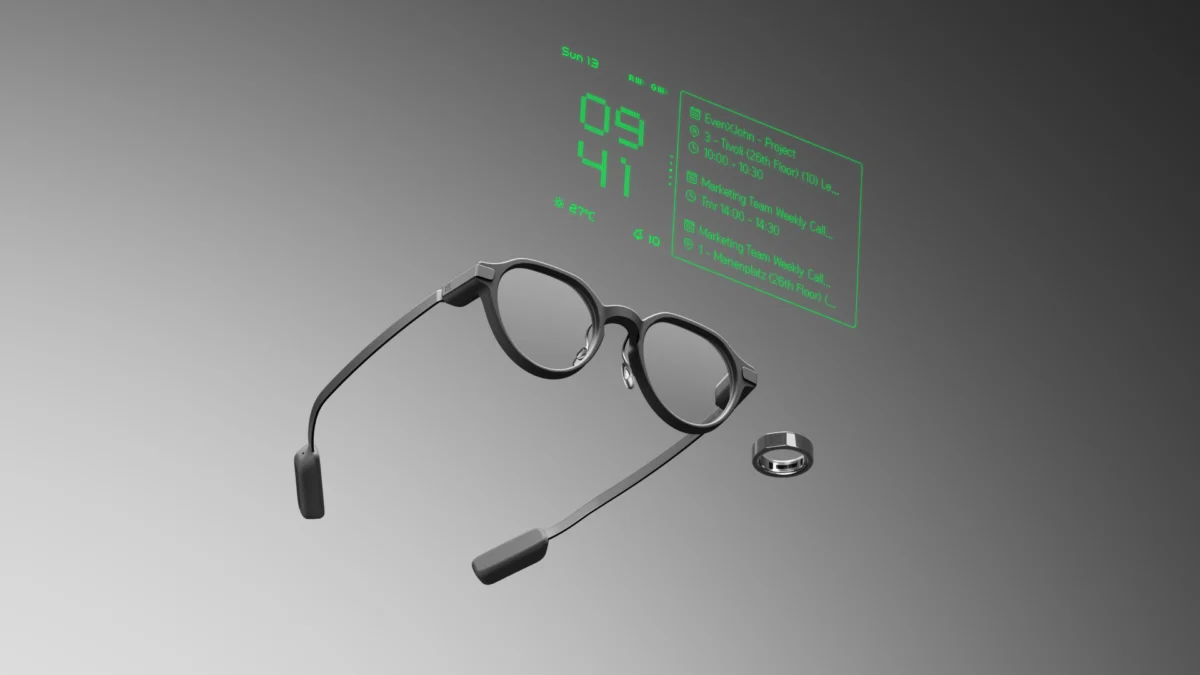
- Late 2024: The G2 Flagship: Building on the momentum of the G1, the company launched the G2, its current flagship. This model solidified their commitment to a camera-less future, integrating a heads-up display (HUD) controlled by a proprietary wearable ring, the Even R1.
- 2025-2026: Scaling the Ecosystem: Today, the company has expanded its staff from a lean team of 40 to a robust workforce of nearly 400. With its new $1 billion valuation, the company is now positioning itself to challenge the market share of incumbents in the U.S., Japan, South Korea, and Europe.
Supporting Data: Understanding the Market Dynamics
The success of Even Realities is rooted in a fundamental understanding of its user base. According to CEO Will Wang, the company has intentionally avoided the "gadget enthusiast" trap, instead focusing on high-value professionals.
Demographic Breakdown
The company’s internal surveys reveal a striking profile of its core consumer:
- Primary Audience: Male professionals aged 30 to 50.
- Professional Status: Approximately one-third of the user base consists of company executives.
- Geographic Reach: Despite being headquartered in China and manufacturing there, more than 50% of the company’s revenue is generated in the United States, its fastest-growing market.
Economic Metrics
The pricing strategy at Even Realities is decidedly premium, yet it has not hindered adoption. The G2 frames retail for $599, and with the addition of the R1 control ring and prescription lenses, the average order value (AOV) reaches approximately $1,000. This indicates a willingness among power users to pay a premium for a device that offers utility without the social friction of a built-in camera.
Optical Superiority: The "Even HAO" Advantage
Perhaps the most significant differentiator for the company is its proprietary optical stack, dubbed "Even HAO" (Holistic Adaptive Optics).
In traditional consumer electronics, components are often modular; an OEM might source a screen from one supplier, a chip from another, and optics from a third. Wang argues that this approach is the fatal flaw in most smart glasses.
"With a phone or a watch, the display is just a conventional OLED or LCD screen," Wang explained in a recent interview. "Smart glasses are the first product category to rely on optical displays, which require an entirely different technology stack. You have to design the microchip, the optics, and the waveguide together. That’s where we’ve invested the most."
By integrating the microchip, the waveguide, and prescription support at the design phase rather than the assembly phase, Even Realities has managed to reduce the physical footprint of the glasses while maintaining a crisp, high-fidelity HUD.
Privacy as a Design Philosophy
In an era where "smart" often implies "surveillance," Even Realities is marketing itself as the "privacy-first" alternative. The decision to omit a camera is not merely a cost-saving measure or a stylistic choice; it is a core philosophical stance.
"Smart glasses are probably the most personal computing device people will ever wear," Wang stated. "Worn on the face all day, they have to feel comfortable to both the wearer and those around them."
To support this, the company has implemented:
- Transcription, Not Recording: Its voice-to-text features, such as the "Conversate" copilot, transcribe audio in real time to provide summaries or translation assistance, but they do not store raw audio recordings.
- Data Sovereignty: The company has engineered its infrastructure to comply with Europe’s stringent General Data Protection Regulation (GDPR), ensuring that user data remains encrypted and localized.
- Social Lubrication: By removing the camera, the wearer is not perceived as a potential privacy threat by peers, making the glasses more acceptable in professional boardrooms or social settings.
Implications for the Future of Wearables
The emergence of Even Realities serves as a wake-up call for the "Big Tech" players. For years, the assumption has been that smart glasses must function as an extension of a smartphone’s camera—a way to capture "moments" and feed them into AI models.
However, Even Realities has proven that there is a significant, high-spending market for information-centric wearables. By focusing on "Conversate"—a copilot that feeds real-time data, jargon definitions, and meeting summaries to the user—the company has transformed the glasses from a novelty toy into a professional productivity tool.
The Looming Conflict
As Meta and Snap continue to iterate on their camera-heavy designs, they will likely face increasing regulatory and social pushback regarding privacy. Even Realities, by sidestepping these concerns entirely, is positioning itself as the "safe" alternative for the enterprise market.
Furthermore, the company’s success in scaling to a $1 billion valuation while maintaining profitability suggests that the market for smart glasses is bifurcating. One path leads to the "augmented reality camera," while the other, championed by Even Realities, leads to the "augmented intelligence assistant."
Conclusion: The Road Ahead
While the company has yet to launch in its home market of China, citing a desire to perfect its supply chain and market readiness first, the global footprint is already substantial. With $150 million in fresh capital and a growing developer community centered in the U.S., Even Realities is no longer a peripheral player.
The industry is watching closely. If the G2’s trajectory is any indication, the next iteration of the "smart" revolution might not be about what we can capture, but about what we can process—all while keeping our privacy, and our social decorum, intact. As the lines between human cognition and machine assistance blur, Even Realities is proving that sometimes, the most sophisticated technology is the kind that stays out of the way.