In the hyper-competitive landscape of digital marketing, the metric that haunts every strategist is the conversion rate. It is the definitive pulse check of a campaign’s health. Yet, for years, marketers have been chasing a phantom: the "ideal" conversion rate. According to the 2024 Conversion Benchmark Report, which synthesized data from over 57 million conversions and 464 million pageviews across 41,000 landing pages, the search for a universal "good" number is fundamentally flawed.
Conversion is not a static target; it is a fluid reflection of industry, audience intent, and platform dynamics. To understand where your brand stands, you must first stop comparing your performance to generic internet averages and start looking at the nuanced realities of your specific sector.

The Myth of the "One-Size-Fits-All" Benchmark
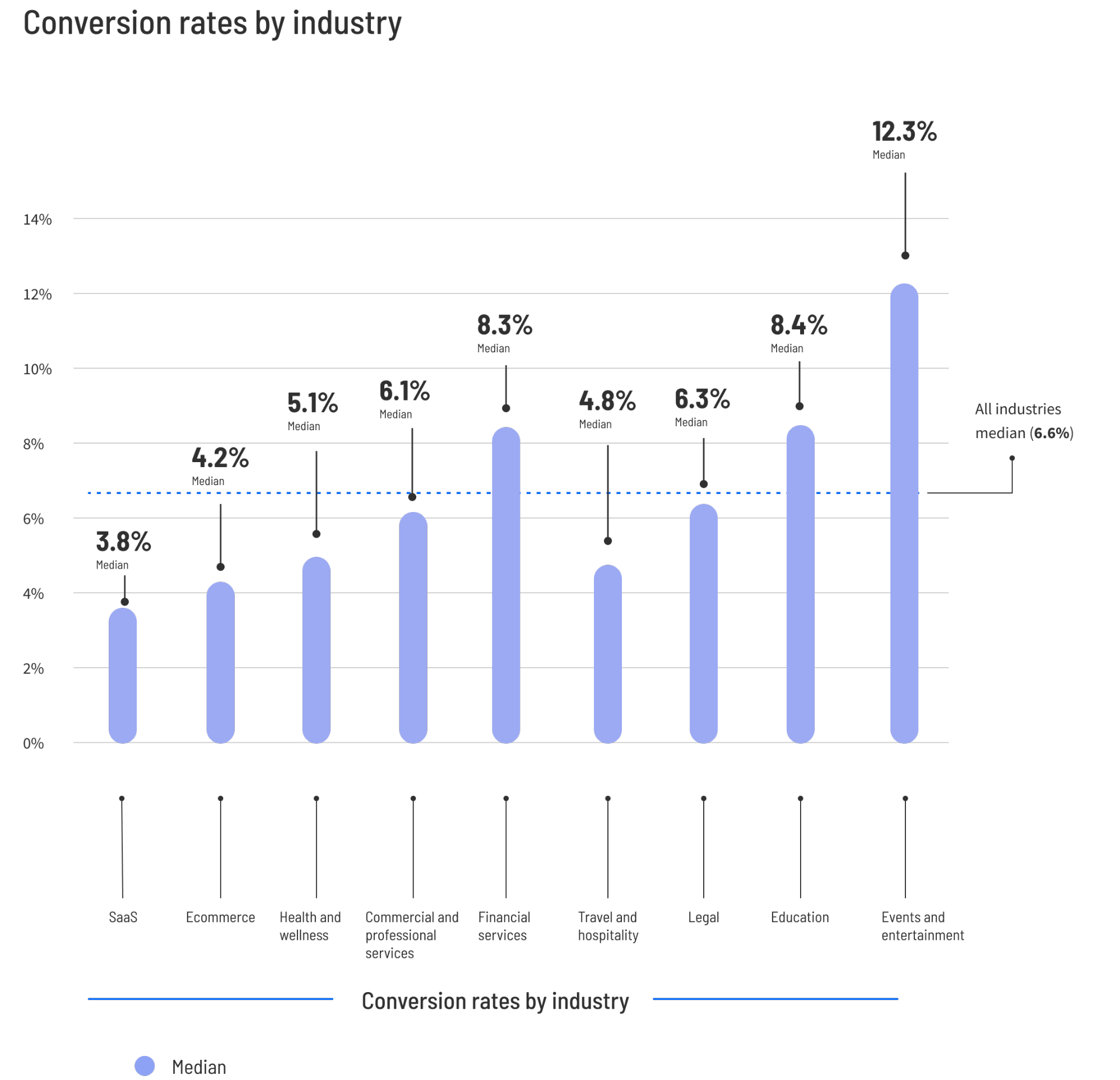
The median conversion rate across all industries currently sits at 6.6%. However, viewing this as a target is a strategic error. Much like the average human height, a median provides a baseline for existence but fails to account for the unique requirements of the individual—or in this case, the business model.
When Josh Gallant, founder of the organic growth firm Backstage SEO, emphasizes the importance of median values over averages, he highlights a critical statistical truth. Averages are easily skewed by "unicorn" pages that achieve 90% conversion rates or underperforming pages that languish near 0%. By utilizing medians, the industry gains a more accurate picture of the "middle-of-the-pack" performance, providing a realistic goalpost for the average marketing team.

A Deep Dive into Industry-Specific Performance
To truly gauge success, one must segment performance by industry. The variance is stark, driven by factors ranging from product complexity to the immediacy of consumer need.
Ecommerce: The Volume Game
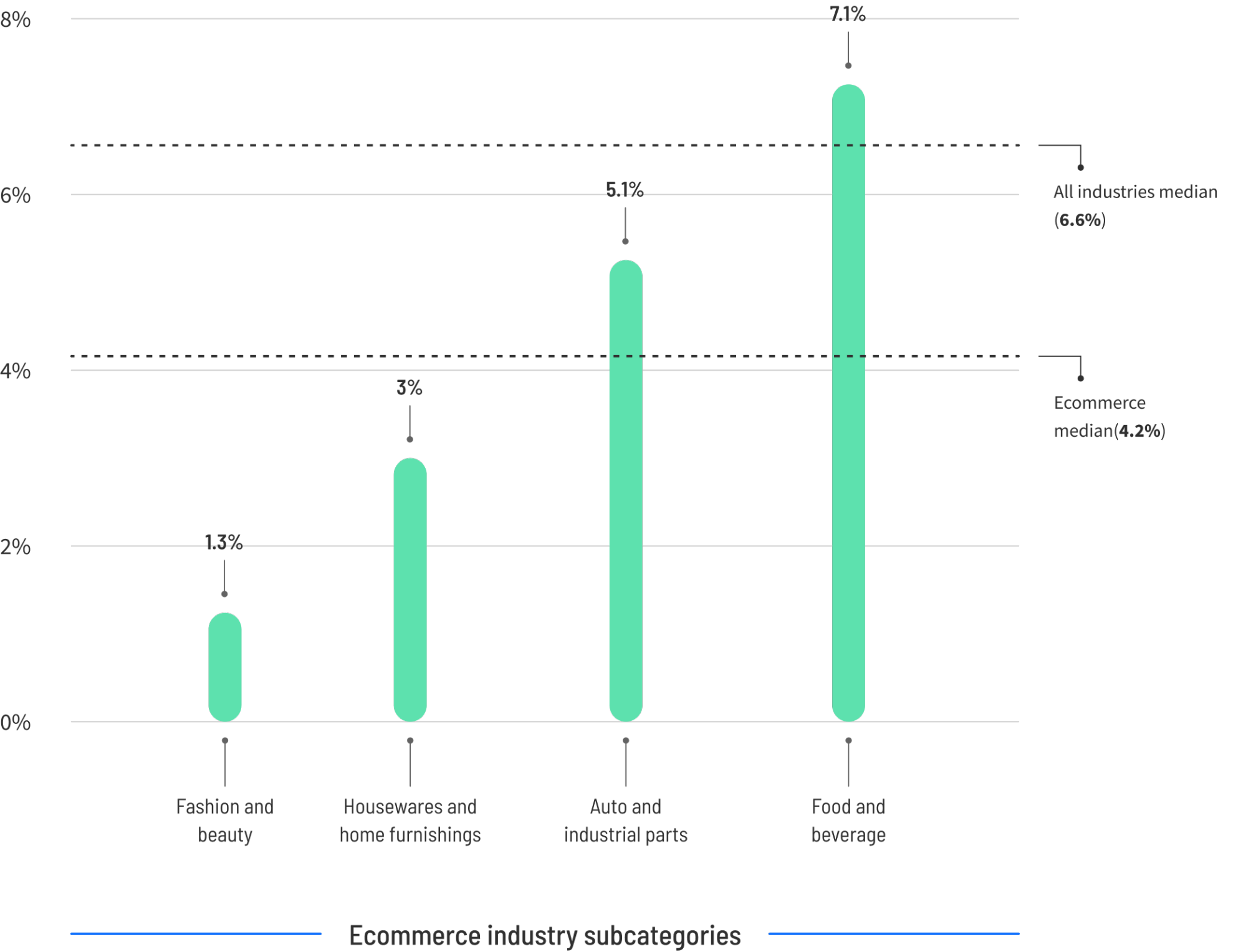
Ecommerce landing pages hover at a median conversion rate of 4.2%. However, the top 25% of performers—those in the "good" category—are achieving rates of 11.4% or higher. This delta represents a massive revenue opportunity. For a brand generating 10,000 monthly visitors, a jump from the median to the top-tier benchmark could translate into hundreds of additional orders, potentially yielding tens of thousands of dollars in incremental monthly revenue.
SaaS: Navigating Complexity
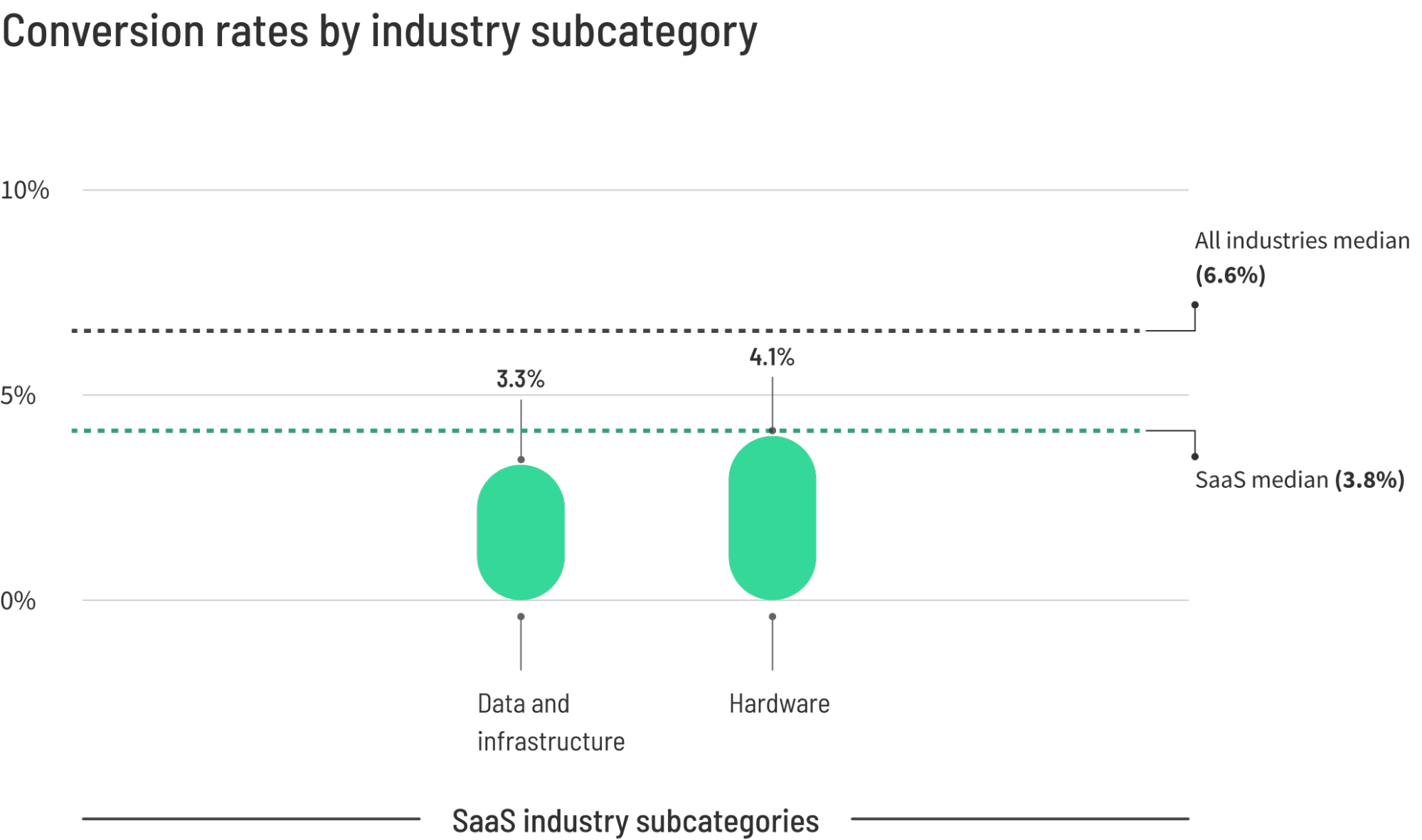
Software-as-a-Service (SaaS) presents a unique challenge. With a median conversion rate of 3.8%, these pages often deal with longer, more complex sales cycles. A visitor might be anywhere from a casual researcher to a buyer ready for a trial. Top-performing SaaS pages bridge this gap by reducing friction—utilizing tactics like "no-credit-card-required" trials and highly targeted messaging that speaks directly to specific pain points. To reach the top 25% of the sector, companies must aim for a 11.6% conversion rate.
Professional Services: The Trust Factor
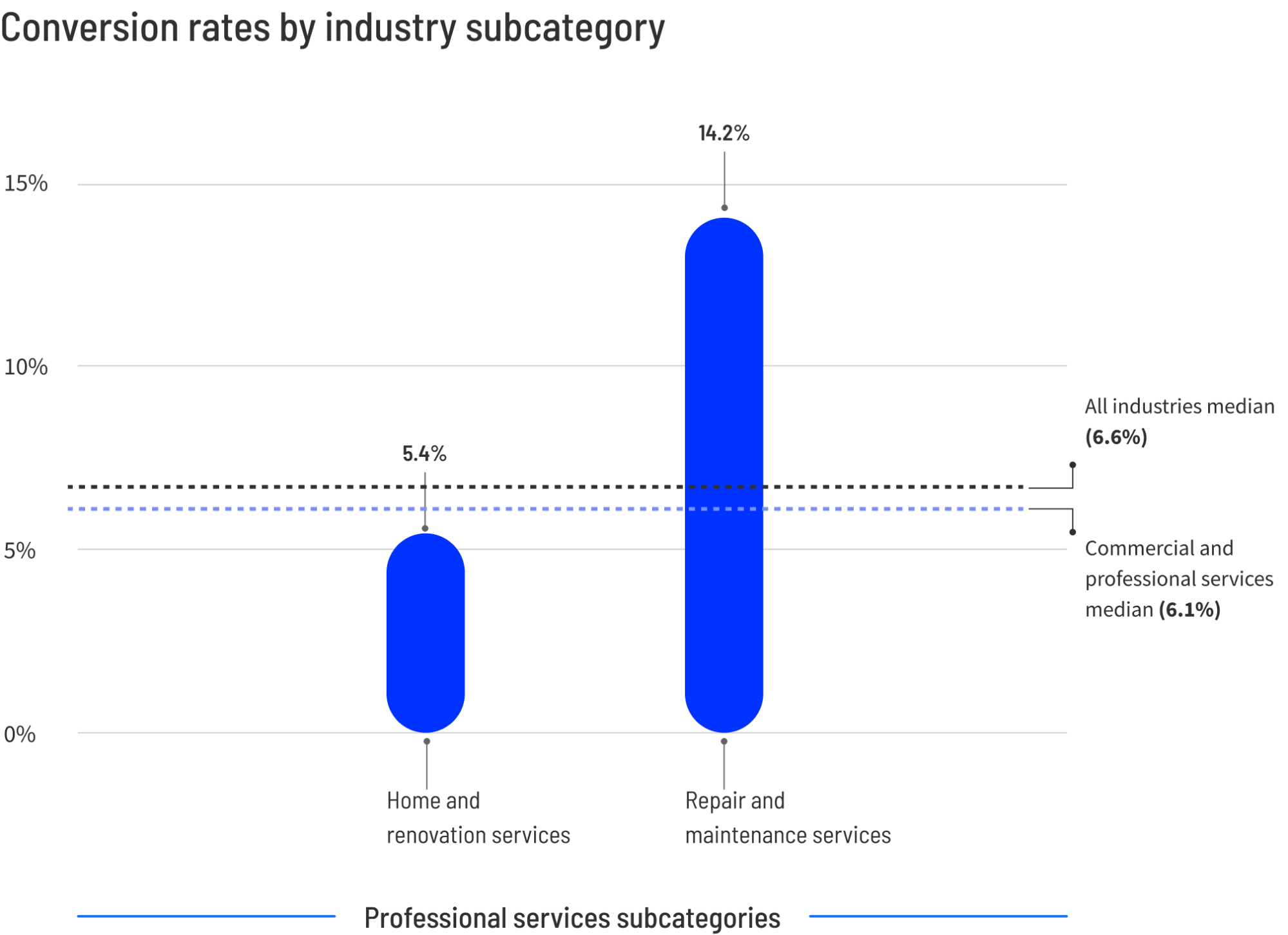
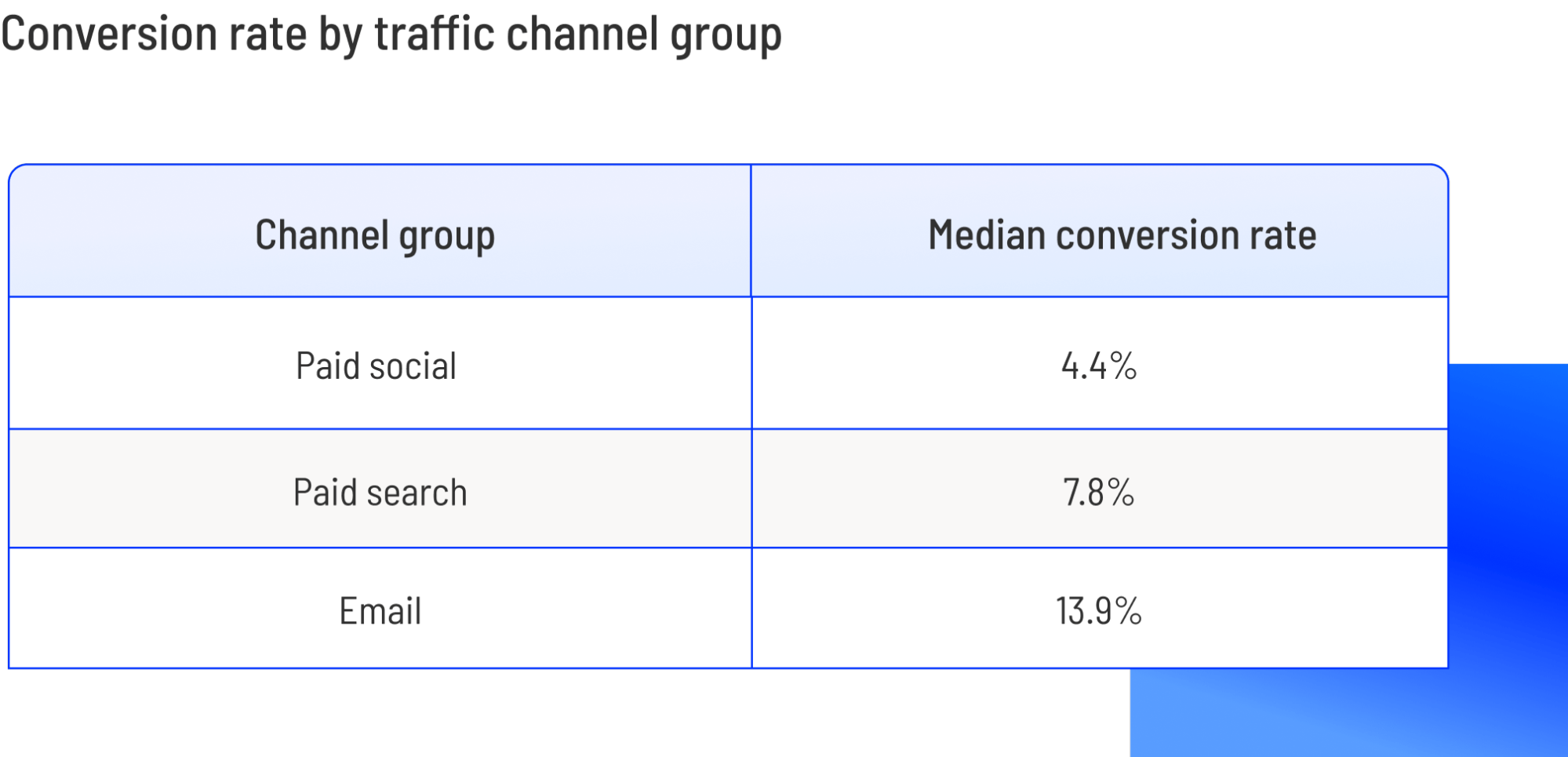
This sector is highly diverse, encompassing everything from legal counsel to home renovation. The median sits at 6.1%, but elite players reach 14.1%. Interestingly, the data reveals a massive discrepancy in traffic quality: email nurture campaigns in professional services convert at nearly 14%, while paid social traffic often struggles to clear 4.4%. This suggests that for service-based businesses, established trust is the ultimate currency.
Finance and Insurance: High Intent, High Stakes
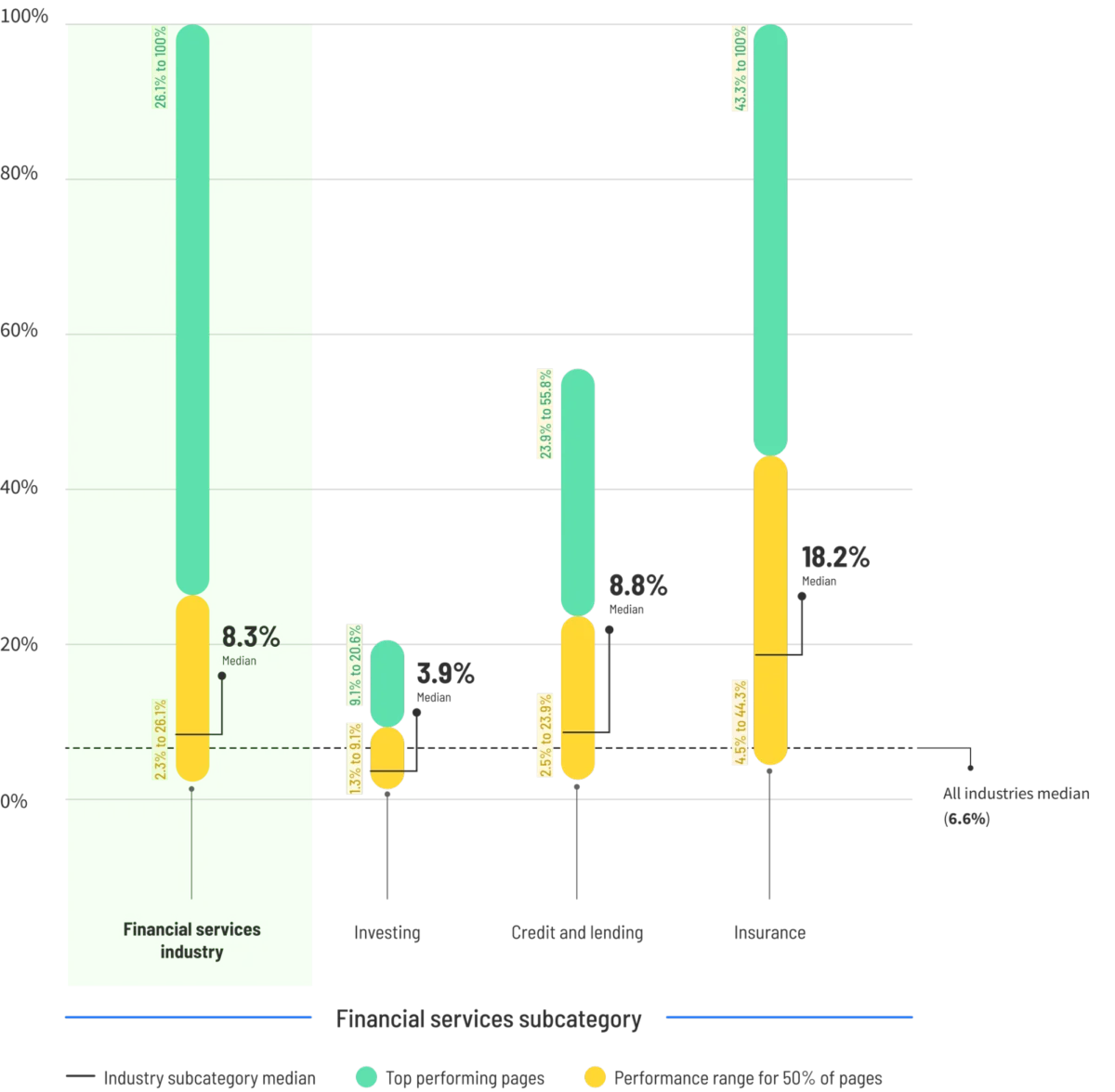
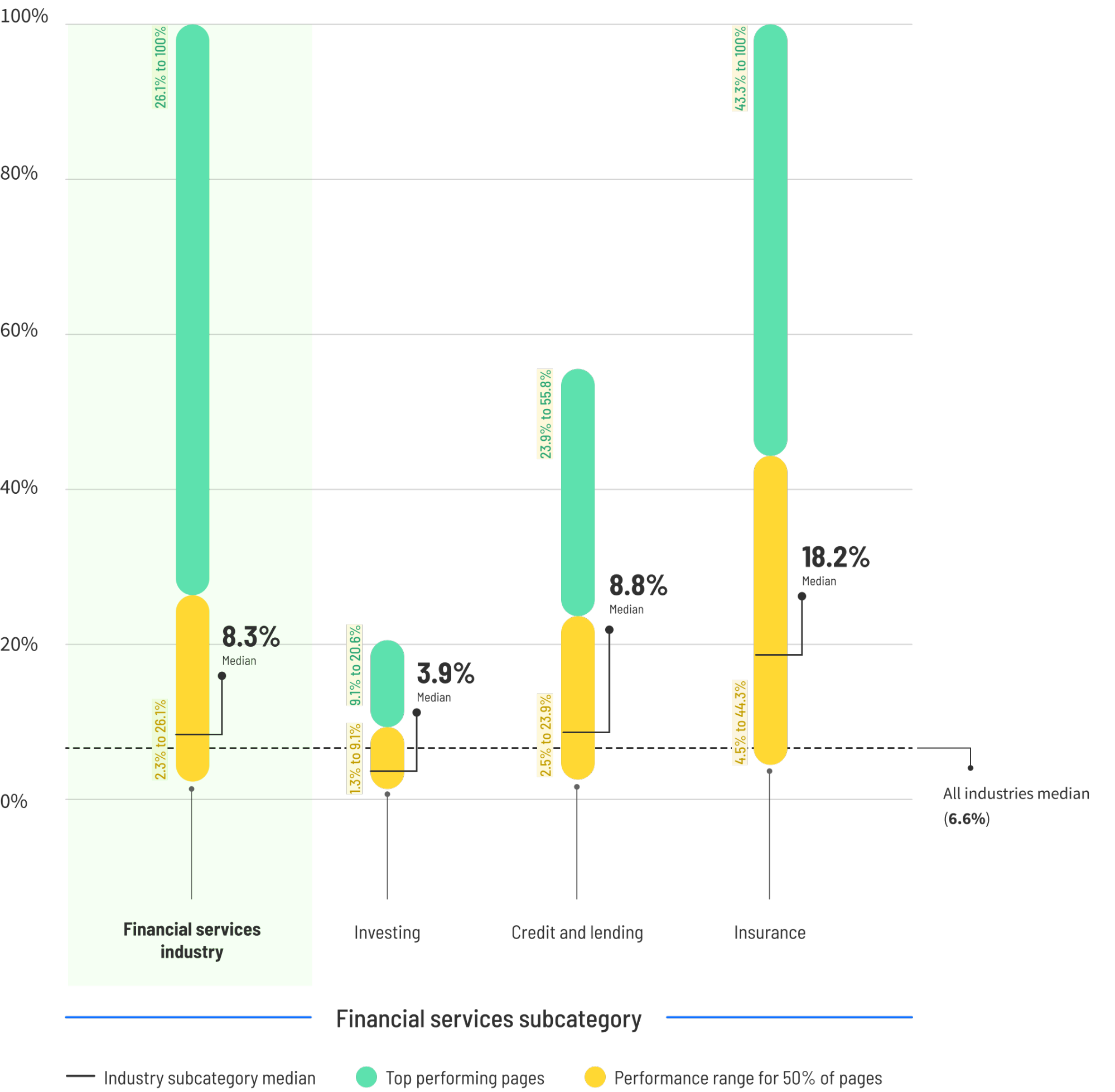
Financial services boast a strong 8.3% median. In this sector, the standard "desktop-first" rule is often inverted. Mobile traffic in finance converts 27.8% better than desktop, proving that mobile-first optimization is not just a trend here—it is a requirement for survival. Insurance subcategories, in particular, show remarkable strength, with some segments reaching as high as 18.2%.
Legal: The Urgency Metric
Legal landing pages are a testament to the power of context. While the median is 6.3%, top-tier pages reach 13.1%. Unlike most industries, legal services see higher conversion rates on mobile devices (21%) than on desktop (15.9%). This makes logical sense: a prospective client searching for legal help after an accident or a legal notice is rarely sitting at a desk. They are mobile, they are anxious, and they are looking for immediate solutions.
Education and Entertainment: Selling Transformation
The education sector shows a fascinating split. Online courses, which solve immediate, actionable problems, see median conversion rates of 18.3%, while institutional higher education sits at 6.3%. Meanwhile, the entertainment sector sees astronomical rates—sometimes nearing 47.5% for sweepstakes—though these often represent lower-commitment actions compared to a SaaS trial or a legal consultation.
The Anatomy of a High-Converting Page
If benchmarks show us where we stand, they do not tell us how to move the needle. Data-backed analysis points to five fundamental pillars that separate average pages from top-tier performers:
- Linguistic Clarity: Complex language is a conversion killer. Pages written at a 5th-to-7th-grade reading level convert at 11.1%—more than double the conversion rate of pages utilizing complex, "professional" jargon.
- Iterative Testing: The highest-converting pages are rarely perfect at launch. They are the result of relentless A/B testing on button colors, CTA copy, and form field lengths.
- Social Proof Placement: Testimonials and review counts must be strategically placed near conversion points. Burying them at the bottom of a page renders them invisible to the visitors who need them most.
- Mobile Friction Removal: With mobile accounting for 83% of landing page visits, any latency or UX failure on a phone is a direct tax on your conversion rate.
- Distraction Elimination: A landing page is not a website. By stripping away navigation menus and secondary links, you focus the user’s journey on a single, clear outcome.
The Strategic Implication: The Path Forward
The gap between the "average" and the "excellent" is where the most significant business growth occurs. Moving from the median to the 75th percentile is not a matter of magic; it is a matter of systematic, disciplined optimization.
Marketing leaders must resist the urge to view benchmarks as final destinations. Instead, they should be used as diagnostic tools to identify where a brand is underperforming relative to its peers. The most successful organizations are those that treat conversion rate optimization (CRO) as a continuous, 24/7 process rather than a seasonal project.
The Role of Technology in Optimization
As the landscape grows more complex, the tools available to marketers have evolved to match. Solutions like Unbounce’s Smart Traffic, which automatically routes visitors to the page variant most likely to convert based on their profile, represent the future of the industry. By leveraging AI to handle the heavy lifting of traffic routing, teams can focus on the more nuanced work of messaging, design, and offer strategy.
Conclusion
The 2024 data provides a clear mandate for modern marketers: stop aiming for the "average." The average is a baseline, not a goal. By understanding the specific benchmarks of your industry, acknowledging the role of visitor intent, and committing to a culture of constant testing, you can break through the noise.
In an era where every click costs money and every bounce is a lost opportunity, the winners will be the ones who treat their landing pages not as static documents, but as living, breathing components of a sophisticated, data-driven conversion machine. Whether you are in SaaS, ecommerce, or professional services, the ceiling for your performance is significantly higher than the median. It is time to start climbing.