Welcome back to TechCrunch Mobility, your definitive hub for the evolving landscape of transportation and the increasingly critical role artificial intelligence plays in moving people and goods. As we navigate the complexities of 2026, the sector is undergoing a profound transformation—one characterized by both rapid innovation and heightened regulatory scrutiny.
The Fracturing Robotaxi Landscape: Waymo and Uber
I have just returned from vacation to find that the autonomous vehicle (AV) landscape has shifted significantly in my absence. Perhaps the most notable development is the quiet dissolution of the Uber-Waymo partnership in Phoenix. While the two companies continue to maintain active robotaxi service agreements in Atlanta and Austin, the termination of the Phoenix contract raises a fundamental, existential question for the industry: If these partnerships are inherently temporary, what happens when the remaining agreements expire?
It is no secret that tension has been simmering behind the scenes. We have already witnessed Uber executives taking pointed, albeit subtle, shots at Waymo’s operational strategy. I suspect that once the remaining partnerships conclude, these thinly veiled barbs will evolve into direct, aggressive competition.
The primary battleground will likely be regulatory policy. As robotaxi companies vie for dominance in high-density urban markets, the fight for municipal access, operational permits, and public trust will become increasingly litigious. The transition from collaborative partners to fierce rivals is all but inevitable as both firms look to capture the lucrative market share of autonomous ride-hailing.
Federal Oversight: A Call to Action on Public Safety
This week, the autonomous vehicle industry faced a significant intervention on the federal stage. National Highway Traffic Safety Administration (NHTSA) administrator Jonathan Morrison issued a sharp, unambiguous directive to all AV developers. The core of the message: it is categorically unacceptable for autonomous vehicles to interfere with first responders or law enforcement.

The "money quote" from Morrison’s missive serves as a stern warning: "Let me be clear: the inability to detect and appropriately respond to such situations represents a functional insufficiency. Emergency scenes are not rare or extreme ‘edge cases.’ As such, NHTSA is today issuing a call to action for AV developers and operators to immediately focus their resources on fixing this issue."
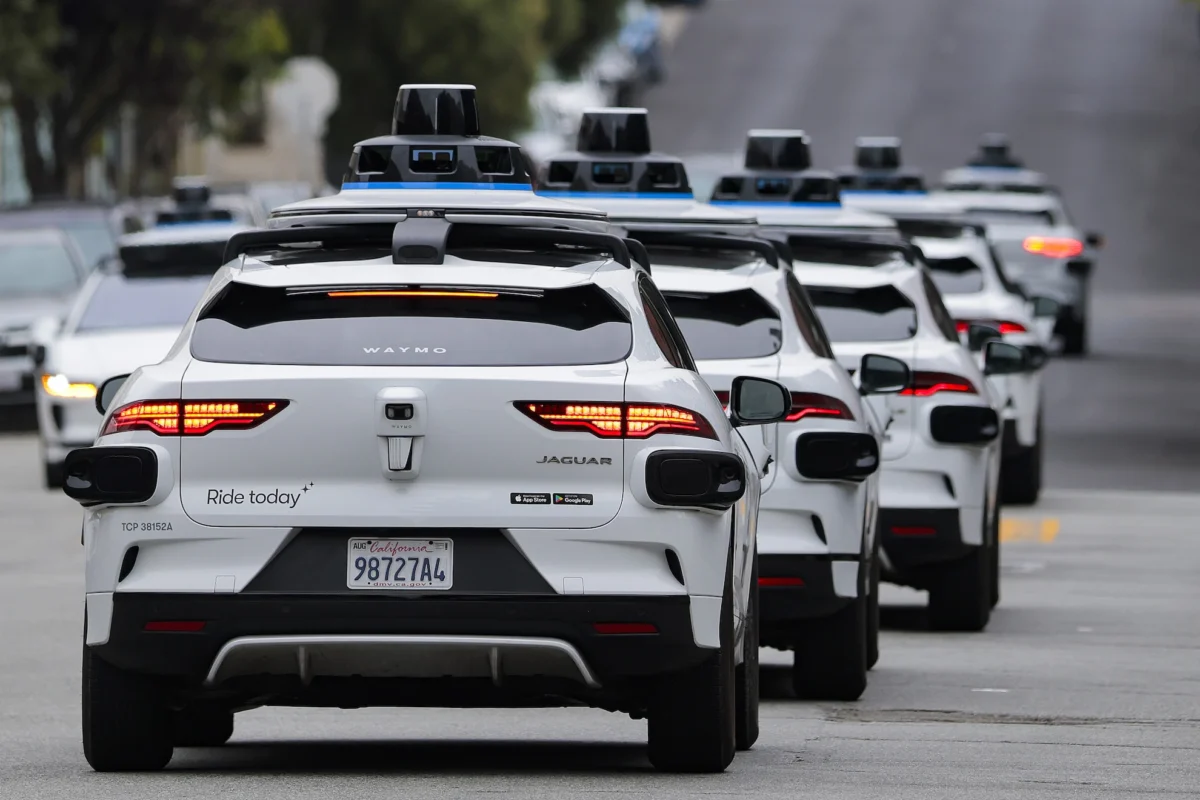
While Morrison’s letter does not name a specific company—it was addressed to every developer listed in the Department of Transportation’s Standing General Order—the subtext is hard to ignore. Many industry observers believe the agency’s ire is directed squarely at Waymo. A recent TechCrunch investigation revealed that Waymo, which currently operates the largest robotaxi fleet in the U.S. across Los Angeles, Phoenix, and San Francisco, has experienced a disturbing frequency of run-ins with emergency services.
Chronology of Recent Friction
The pressure on Waymo and the broader AV industry has been building for months. The recent timeline of events highlights the growing friction between autonomous technology and urban infrastructure:
- July 2026: San Francisco Supervisor Bilal Mahmood announced plans to launch a formal inquiry into how AVs impacted public transit and emergency response efforts following the city’s July 4th fireworks celebrations.
- Post-Fireworks Chaos: Local reports confirmed that numerous Waymo vehicles became stranded in gridlock, eventually running out of power and requiring towing. This incident sparked renewed outrage among local officials regarding the "functional insufficiency" of the fleet to navigate high-traffic, emergency-sensitive scenarios.
- NHTSA Directive: Shortly following these localized issues, Administrator Morrison issued his call to action, demanding that companies present concrete "solutions" to the agency by the end of the current month.
The question remains: Will these directives lead to substantive, long-term consequences? For now, the NHTSA has stopped short of heavy-handed regulation, opting instead to demand developer accountability. However, the requirement to present solutions by the end of the month suggests that the grace period for "learning on the job" is coming to a close.
Regulatory Evolution: Paving the Way for Steering-Wheel-Free Cars
Beyond the immediate safety concerns, the federal government is also looking toward the future of vehicle design. The updated 2026 Regulatory Plan and Unified Agenda contains a comprehensive list of proposed changes to the Federal Motor Vehicle Safety Standards (FMVSS).

These standards, which historically govern vehicle design and equipment requirements, are finally being modernized to accommodate the reality of the 21st century. Proposed amendments could provide a massive tailwind for companies like Tesla and Zoox, which are actively developing vehicles entirely devoid of steering wheels, pedals, and other manual controls. By removing these legacy requirements, the NHTSA is signaling its willingness to support the next generation of purpose-built, fully autonomous transportation.
The Financial Pulse: Rivian’s Billion-Dollar Gamble
In the broader mobility market, capital remains king. Rivian grabbed headlines this week with a massive capital raise: the sale of 86.25 million Class A common shares at $15.50 each. This move is expected to net the EV maker approximately $1.32 billion in new liquidity.
This injection of capital comes at a pivotal juncture for the company. With the recent launch of the R2 SUV and a revised, upward-trending sales forecast for 2026—projecting between 65,000 and 70,000 deliveries—Rivian is clearly betting on scale. However, the company remains unprofitable, and the cost of scaling the R2 production line is immense. This raise is likely a strategic insurance policy to ensure the company has enough runway to hit its volume targets without liquidity-driven disruptions.
Other Notable Market Movements
- Bidbus: The Los Angeles-based startup, which operates a digital marketplace for dealership bidding on used cars, secured $15 million in a Series A round led by Ibex Investors.
- Lyft’s Expansion: In a move to bolster its micromobility portfolio, Lyft announced plans to acquire Serveo’s bike-share business in Spain, signaling continued commitment to multi-modal transit.
- Sustainable Battery Tech: U.K.-based battery startup TaiSan raised £4.65 million to advance its sodium-ion battery technology, a promising alternative to the current lithium-dominated landscape.
Implications for the Industry
The combination of increased regulatory pressure, shifting partnerships, and a volatile capital market indicates that the "wild west" phase of autonomous vehicles is rapidly maturing.
- Safety is Non-Negotiable: The NHTSA’s intervention marks the end of the "experimentation" era. Companies that cannot integrate seamlessly with emergency responders will likely face punitive measures or operational suspensions.
- Consolidation and Competition: As seen with the Uber-Waymo split, the industry is moving away from collaborative trials toward direct, head-to-head market competition. This will likely lead to better user experiences but will also necessitate more aggressive lobbying and legal strategies.
- The Infrastructure Gap: The July 4th incident in San Francisco exposed a critical vulnerability: the lack of robust energy management for AVs in gridlocked, high-density scenarios. Future success will depend as much on power infrastructure as it does on sensor fusion and AI algorithms.
A Note on Data Security
We would be remiss not to mention the ongoing threats to consumer privacy. AssuranceAmerica recently confirmed a massive data breach affecting 6.9 million people, including the exposure of sensitive driver’s license information. As the mobility sector collects an unprecedented amount of user data to fuel AI development, companies must prioritize cybersecurity with the same intensity they apply to vehicle safety. A failure to protect user data could lead to a massive public and regulatory backlash that threatens the very foundation of the mobility-as-a-service model.

Final Tidbits: From Drones to Anti-Elon ETFs
The diversity of the mobility sector continues to surprise. Beta Technologies has successfully completed operational flights under the FAA’s new eVTOL integration pilot program, marking a major milestone for electric aviation. Meanwhile, Manna Aero is doubling down on drone delivery with a massive expansion in Tulsa, and even Slate Auto is finding creative ways to differentiate by partnering with Crayola for custom vehicle wraps.
For our readers, if you are looking to deepen your understanding of the early-stage landscape, I highly recommend the third season of the Build Mode podcast. Hosted by Isabelle Johannessen, it provides an invaluable guide for founders navigating the current, complex fundraising environment.
Got a tip for us? Email me at [email protected] or reach out via Signal at kkorosec.07. You can also contact Sean O’Kane at [email protected].
Disclaimer: When you purchase through links in our articles, we may earn a small commission. This does not affect our editorial independence.