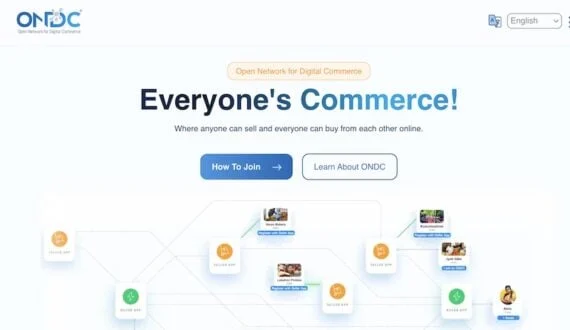
India stands at a pivotal juncture in the history of global commerce. With a population that has officially surpassed China to become the world’s most populous nation, the country is experiencing a demographic dividend unlike any other: half of its 1.4 billion citizens are under the age of 25. With 840 million smartphone users fueling a burgeoning digital economy, the stage is set for an ecommerce explosion. However, the path to maturity for the Indian market is not following the conventional "Amazon-first" blueprint. Instead, it is being paved by a radical, government-backed infrastructure initiative known as the Open Network for Digital Commerce (ONDC).
The Core Opportunity and the Regulatory Paradox
The Indian ecommerce landscape is characterized by a unique tension. While the appetite for digital consumption is growing at an unprecedented rate, online penetration remains significantly lower than in the United States or China. This is not for a lack of consumer demand, but rather a reflection of the country’s retail anatomy.
Approximately 75% of consumer goods sales in India are driven by kiranas—small, family-owned neighborhood convenience stores that serve as the backbone of the Indian economy. Policymakers face a daunting balancing act: they must accelerate the nation’s digital transformation while ensuring that these millions of small merchants are not marginalized or eradicated by predatory marketplace giants.
This tension has birthed a dual-track strategy. On one side, the government has championed the United Payments Interface (UPI), a peer-to-peer digital payment infrastructure that has become a global gold standard for financial inclusion. On the other, it maintains strict regulatory frameworks that limit the dominance of foreign-owned ecommerce marketplaces, favoring a more "democratized" approach to digital trade.
Chronology: The Evolution of ONDC
The journey toward a decentralized commerce network began as a response to the "walled garden" approach of traditional marketplaces.
- 2021 (The Genesis): The Indian government officially launched the ONDC project. The vision was clear: to move away from platform-centric models—where a single entity controls search, logistics, and payment—toward a protocol-based model.
- 2022 (Pilot Phase): ONDC began its initial rollouts in select cities, testing the interoperability of different buyer and seller applications.
- 2023 (Scaling Up): The network expanded its categories, moving beyond grocery and food delivery into fashion, electronics, and home decor. It started gaining traction among established local brands and logistics providers.
- 2024–2025 (Integration and Maturity): The focus shifted to onboarding large multinational corporations and refining the seller-buyer application interoperability. The network is now moving from a "proof of concept" to a legitimate, high-volume alternative to legacy marketplaces.
Supporting Data: The Economics of Open Commerce
The primary value proposition of ONDC lies in its cost structure. In traditional marketplaces like Amazon India or Flipkart, merchants often face commission fees ranging from 18% to 40%, depending on the category and fulfillment services utilized.
In stark contrast, ONDC functions on an open-source framework, where selling fees are drastically lower, typically ranging between 3% and 10%. This disparity is a lifeline for small businesses operating on thin margins.
Beyond cost, the infrastructure provides:
- Algorithmic Transparency: Unlike proprietary marketplaces, which often prioritize internal labels or high-paying advertisers, ONDC operates on a transparent, non-discriminatory sorting mechanism.
- Portable Ratings: A merchant’s reputation is not tied to a single platform. A seller’s performance history and ratings are portable, allowing them to carry their "digital trust" across different buyer apps.
- Interoperability: A shopper using a payment app like Paytm can browse and purchase products listed by a merchant on a seller app like Mystore or GoFrugal. The network effectively unbundles the supply chain.
Official Responses and Strategic Implications
The government of India views ONDC as a "public good." Proponents argue that by decoupling the various components of an ecommerce transaction, ONDC prevents monopolies from dictating market terms.
However, the initiative has not been without its critics. Traditional marketplaces have expressed concerns regarding liability, quality control, and the complexity of managing a decentralized network. In response, the ONDC team has implemented rigorous certification processes for apps joining the network to ensure that consumer rights and data privacy remain protected.
For the international community, the implications are profound. Global brands—including Nestle, PepsiCo, Procter & Gamble, Unilever, and L’Oreal—are already testing the waters. For these giants, ONDC serves as an additional distribution channel rather than a replacement for their existing D2C (Direct-to-Consumer) sites or marketplace presence. By tapping into the ONDC ecosystem, these companies can reach the "next billion" Indian consumers who are already comfortable with digital payments but have historically been underserved by traditional ecommerce logistics.
Implications for Foreign Sellers
For foreign companies eyeing the Indian market, the landscape is complex. India’s regulatory environment for foreign direct investment (FDI) in ecommerce remains stringent. Companies must navigate a labyrinth of rules regarding inventory ownership and marketplace models.
However, ONDC offers a unique pathway for compliance. Because ONDC is an open protocol, foreign brands can leverage local seller apps to interface with the network without necessarily needing to build their own massive, end-to-end proprietary infrastructure in the country.
The Categorical Shift
The network’s growth is currently segmented by order frequency. Grocery and food delivery have scaled the fastest, as these categories benefit most from the hyper-local logistics enabled by the network. Fashion, pharmaceuticals, and hospitality are following suit, albeit at a slower pace due to the higher requirements for quality assurance and regulatory compliance in those sectors.
The Future of "Everyone’s Commerce"
The tagline of ONDC, "Everyone’s Commerce," is more than a slogan; it is a declaration of intent. By lowering the barriers to entry, the Indian government hopes to bring millions of kirana stores into the formal digital economy, effectively digitizing the retail backbone of the nation.
For global brands, the lesson is clear: the Indian market is moving toward a model where "place" (the platform) matters less than "protocol" (the network). While Amazon and Flipkart will undoubtedly remain dominant players for the foreseeable future, ONDC represents a significant shift in power.
As the network continues to scale, foreign sellers must evaluate their India strategy. The traditional path—distributors, marketplaces, and D2C—is no longer the only route. By integrating with the ONDC ecosystem, brands can achieve a level of reach and cost-efficiency that was previously impossible in the world’s most complex and promising retail market.
The "ecommerce boom" in India is no longer a prediction; it is an active, ongoing infrastructure project. For those willing to navigate the complexities of this decentralized future, the rewards in the world’s most populous market are, quite literally, unprecedented.