In an era where digital video consumption is at an all-time high, advertisers face the dual challenge of maximizing audience reach while preventing the budget-draining effects of ad fatigue. Addressing this critical pain point, Google has officially launched "video campaign groups" globally for YouTube reach and frequency campaigns.
This new structural feature within Google Ads provides media buyers and brand marketers with a centralized mechanism to coordinate delivery across multiple distinct video campaigns, optimizing them toward a singular, shared reach or frequency objective.
By bridging the gap between automated distribution and granular campaign control, the update promises to simplify workflow management, minimize audience overexposure, and significantly boost return on investment (ROI).
1. Main Facts: Mechanics of the New Feature
At its core, the introduction of video campaign groups represents a shift in how Google Ads handles budget allocation and ad delivery across multiple YouTube campaigns. Historically, advertisers who wanted to run diverse creative formats—such as short-form bumper ads alongside longer-form skippable in-stream assets—had to manage these efforts in silos, often leading to overlapping target audiences and uncontrolled frequency.
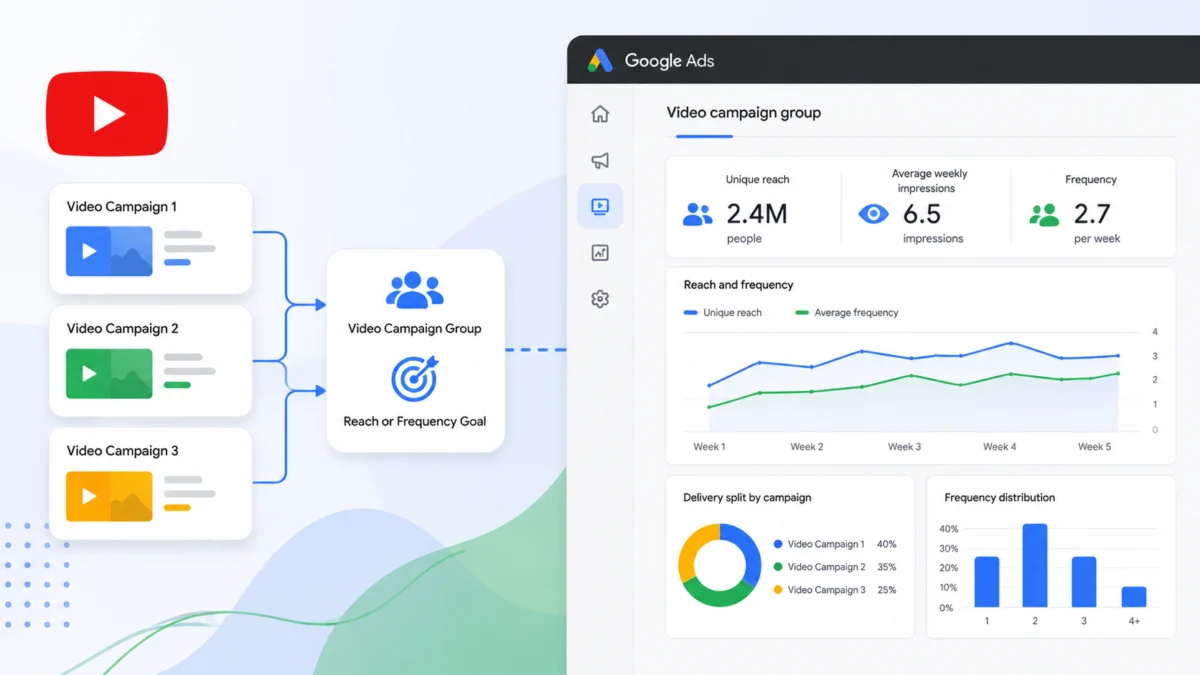
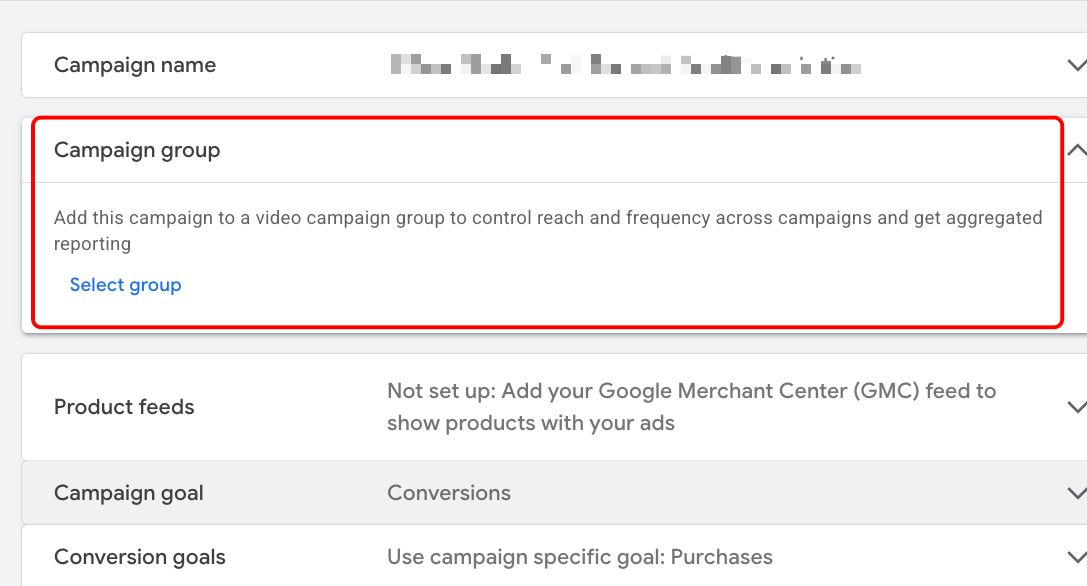
With this global rollout, advertisers can group several individual video campaigns under a unified reach or frequency goal. The system then dynamically optimizes delivery across the grouped campaigns to meet the target objective, while still preserving crucial campaign-level controls.
[Unified Video Campaign Group Goal]
       │
       ├─► Campaign A: Bumper Ads (Budget, Creative, Bidding)
       ├─► Campaign B: Non-Skippable In-Stream (Budget, Creative, Bidding)
       └─► Campaign C: YouTube Shorts (Budget, Creative, Bidding)
Preserving Campaign-Level Autonomy
Unlike rigid consolidation features that force advertisers to merge budgets and creative assets, video campaign groups allow marketers to retain localized settings. Within a single group, advertisers can maintain independent:
- Budgets: Allocate specific financial limits to individual campaigns based on the value of the format.
- Creative Assets: Tailor video lengths, messaging, and calls-to-action (CTAs) to suit different viewing contexts (e.g., YouTube Shorts versus living room connected TV screens).
- Bidding Strategies: Customize bids for specific placements or target segments within the broader group.
Unified Reporting Capabilities
To measure the success of these grouped efforts, Google has introduced a suite of unified reporting metrics. Previously, calculating the deduplicated reach of multiple campaigns required complex manual data exports or reliance on third-party measurement tools. The new unified reporting dashboard provides direct visibility into:
- Deduplicated Unique Reach: The actual number of individual users who saw at least one ad across the entire campaign group.
- Frequency Distribution: A breakdown of how many times users were exposed to ads across the group (e.g., the percentage of the audience exposed 1x, 2x, 3x, or more).
- Average Frequency: The average number of times a unique viewer saw ads from any of the grouped campaigns.
- Group-Level Cost-Per-Thousand (CPM): An aggregate efficiency metric reflecting the cost of reaching one thousand unique viewers across all combined assets.
2. Chronology: The Road to Cross-Campaign Optimization
The launch of video campaign groups is the latest milestone in a multi-year effort by Google to transition from manual, line-item-based campaign management to automated, goal-based media buying.
Early 2010s               Late 2010s               2021-2023               2026 (Present)
┌───────────────────────┐ ┌───────────────────────┐ ┌─────────────────────┐ ┌───────────────────────┐
│ Manual Campaign Caps  │ │ Programmatic Buying   │ │ Target Frequency    │ │ Video Campaign Groups │
│ Channel-level limits; │ │ Reach & Frequency     │ │ Campaign-level caps │ │ Cross-campaign groups │
│ high overlap risk.    │ │ buying tools emerge.  │ │ on single formats.  │ │ global rollout.       │
└───────────────────────┘ └───────────────────────┘ └─────────────────────┘ └───────────────────────┘- The Early Era of YouTube Advertising (Early 2010s): Advertisers managed frequency capping on a strict campaign-by-campaign or even channel-by-channel basis. This worked adequately when YouTube was primarily viewed on desktop computers, but became highly inefficient as user behavior fractured across mobile devices, tablets, and Connected TVs (CTVs).
- The Rise of Programmatic and Reach Buying (Late 2010s): Google introduced specialized buying options aimed at traditional TV planners, allowing agencies to buy YouTube inventory on a fixed CPM with guaranteed reach and frequency. However, these tools remained rigid, offering little flexibility for mid-campaign creative swaps or budget reallocations.
- The Introduction of Target Frequency (2021–2023): Google rolled out "Target Frequency" campaigns, allowing advertisers to set a goal for how many times, on average, a viewer should see their ad in a week. While powerful, this feature was restricted to single campaigns, forcing advertisers to choose between a single creative format or an automated mix with limited control.
- The Discovery (Recent Weeks): The capability was first spotted in the wild by Paid Search Expert Arpan Banerjee, who shared screenshots of the interface on LinkedIn, sparking industry discussion about Google’s move toward holistic campaign architecture.
- The Global Rollout (Present): Google officially launched video campaign groups worldwide, confirming that the tool is now available to all standard Google Ads accounts, with programmatic platforms slated to follow shortly.
3. Supporting Data: The Science of Frequency and ROI
To justify the engineering and rollout of video campaign groups, Google has pointed to extensive econometric data demonstrating the financial impact of frequency management.
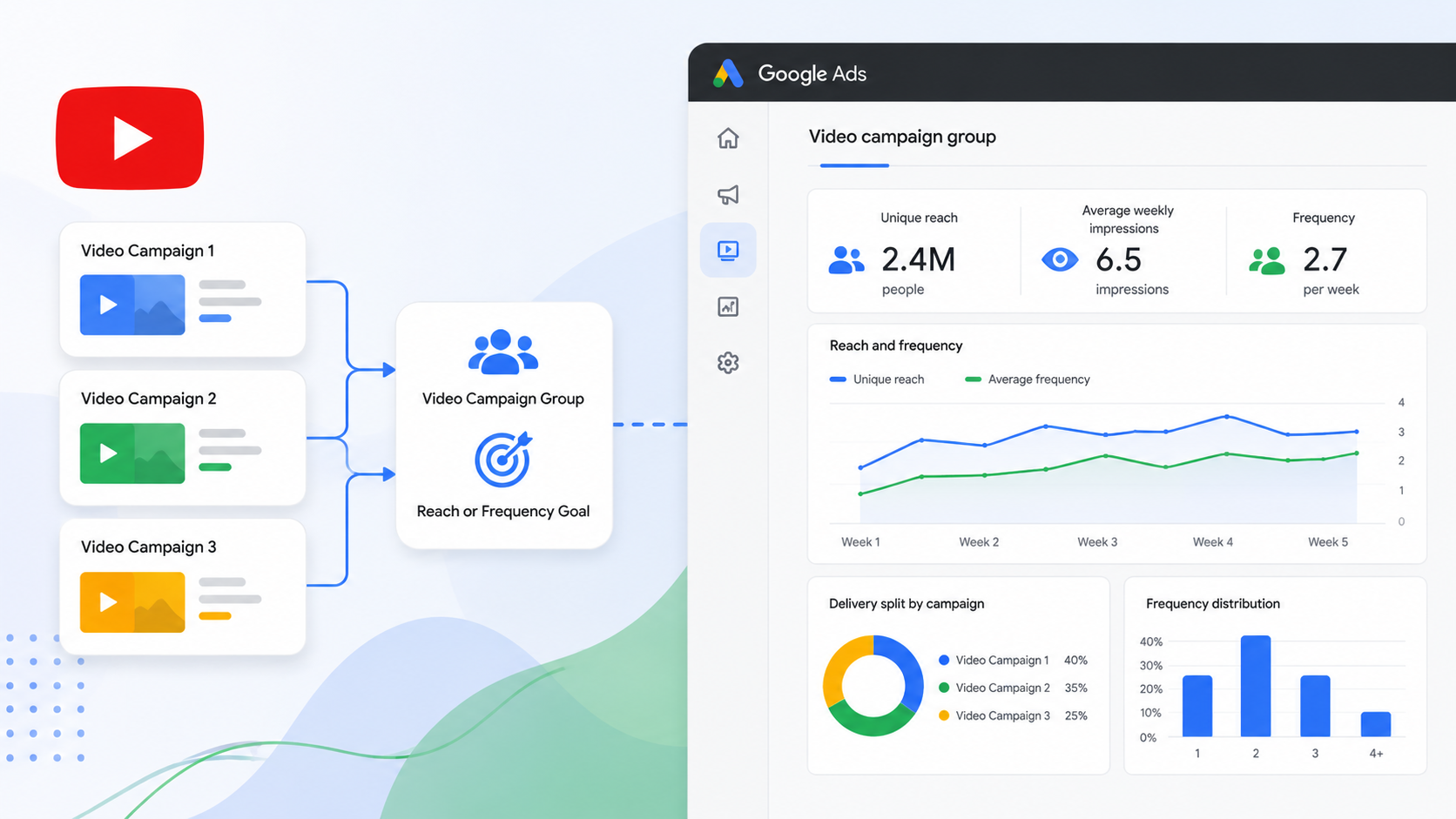
Among the key research cited is a study conducted via Meridian, Google’s open-source marketing mix modeling (MMM) platform. The study evaluated how different ad exposure levels on YouTube affected consumer purchase intent and overall campaign profitability.
| Metric | Weekly Impression Frequency | ROI Impact | Key Takeaway |
|---|---|---|---|
| Sub-Optimal Exposure | < 1.5 impressions / week | Negligible lift | Fails to build lasting brand recall. |
| Optimal Frequency | 2.7 impressions / week | +19% ROI Increase | The "Goldilocks Zone" for maximum efficiency. |
| Overexposure / Fatigue | > 5.0 impressions / week | Diminishing returns | Budgets are wasted; risks negative brand sentiment. |
The "Goldilocks Zone" of Ad Exposure
The Meridian study identified that an optimal frequency of 2.7 impressions per week resulted in a 19% average increase in ROI compared to campaigns that did not actively optimize for frequency.
This finding highlights a common pitfall in digital video advertising:
- Under-exposure (< 1.5 impressions per week): The ad fails to register in the consumer’s long-term memory, rendering the media spend largely ineffective.
- Over-exposure (> 5.0 impressions per week): The ad reaches a point of diminishing returns, where additional views do not increase purchase intent but do increase media costs and can lead to negative brand sentiment.
By allowing advertisers to group campaigns, Google’s algorithm can dynamically shift impressions away from users who have already hit the 2.7-exposure threshold in Campaign A (e.g., a bumper ad) and redirect those impressions to new users via Campaign B (e.g., an in-stream ad), maintaining the ideal frequency across the entire brand portfolio.
4. Official Responses and Future Roadmap
In product documentation and official communications, Google has framed video campaign groups as a direct response to advertiser feedback. Modern brands rarely rely on a single video format; instead, they run complex, multi-layered strategies featuring short teasers, longer narrative ads, and direct-response formats simultaneously.
According to Google, the feature was built specifically to "centralize optimization and reporting, making it easier to control audience exposure while maintaining separate budgets and creative strategies." The company emphasizes that by automating the delivery decisions across campaigns, advertisers can redirect their attention away from daily budget-shuffling and toward macro-level audience strategy.
Expanding to Enterprise Programmatic: Display & Video 360 (DV360)
Recognizing that enterprise-level brands and holding-company agencies manage their media buying through programmatic demand-side platforms (DSPs) rather than the standard Google Ads interface, Google has confirmed a clear expansion roadmap.
The company announced that video campaign groups will soon be integrated into Display & Video 360 (DV360). Once implemented, this will allow programmatic media buyers to coordinate reach and frequency across multiple YouTube line items. This expansion is highly anticipated by global brands, as it allows for the integration of YouTube campaigns with broader programmatic digital-out-of-home (DOOH), connected TV, and display campaigns.
5. Implications for Advertisers and the Ad Tech Landscape
The introduction of video campaign groups carries significant implications for digital marketing strategies, agency workflows, and the broader ad tech ecosystem.
A. Operational Efficiency for Agencies
Historically, managing frequency across multiple YouTube campaigns was an operational headache. Media buyers had to manually monitor frequency reports, pause over-delivering campaigns, and manually shift budgets to under-delivering assets.
By automating this process, video campaign groups reduce manual overhead. Agencies can now set the overarching goal and allow Google’s machine learning engine to handle real-time optimization. This allows strategists to focus on creative testing, audience segmentation, and post-campaign analysis.
B. Creative Sequencing and Storytelling
One of the most exciting applications of this feature is the potential for advanced creative sequencing. Because advertisers can group different campaigns while keeping creative assets separate, they can design structured brand narratives:
[User enters Target Audience]
       │
       ▼
Phase 1: 6-Second Bumper (Awareness)
       │
       ▼ (System tracks exposure)
       │
       ▼
Phase 2: 15-Second Non-Skippable Ad (Consideration)
       │
       ▼ (System tracks exposure)
       │
       ▼
Phase 3: Skippable In-Stream with CTA (Conversion)
This ensures the user sees the complete narrative arc without being repeatedly spammed by the same 6-second bumper.
C. Financial Optimization in a Cookieless World
As the advertising industry navigates the deprecation of third-party cookies and evolving privacy regulations, first-party platform optimization tools have become essential.
Because Google operates YouTube as a logged-in, first-party environment, it can track unique users across devices (mobile, desktop, and smart TVs) with high accuracy. Video campaign groups leverage this first-party identity graph to deliver precise frequency capping, offering a level of cross-device efficiency that independent, third-party ad servers struggle to match.
D. The Competitive Pressure on Rival Platforms
Google’s rollout of this feature places competitive pressure on other major video platforms, such as Meta (Instagram/Facebook Reels), TikTok, and Amazon. While these platforms offer frequency capping within individual campaigns, Google’s ability to coordinate and optimize frequency across multiple distinct campaigns with different creative formats and bidding structures sets a new benchmark for programmatic video buying.
Summary: A Necessary Evolution
As video budgets continue to migrate from traditional linear television to digital streaming platforms, the tools used to buy and measure this media must evolve. Google Ads’ video campaign groups provide a sophisticated, user-friendly solution to the age-old problem of ad overexposure.
By unifying reporting, automating frequency distribution, and preserving the creative flexibility of individual campaigns, this update stands to deliver higher ROI for brands and a more pleasant viewing experience for audiences worldwide.