In the latest installment of the Niche Pursuits podcast, host Jared Bauman sits down with serial entrepreneur Nick Gray for a masterclass in unconventional business growth. Moving beyond the standard playbook of SEO tactics and affiliate marketing, the conversation delves into the psychology of turning niche passions into high-value exits and the increasingly critical role of personal digital infrastructure in an age dominated by Artificial Intelligence (AI) and Generative Engine Optimization (GEO).
Gray’s career serves as a blueprint for modern founders: identify an overlooked human desire, refine it through a lens of high-touch service, and leverage personal authority to scale. Whether he is transforming the way people experience world-class museums or advocating for the necessity of a personal website, Gray’s methodology remains consistent—he finds the "friction" in human experiences and smooths it out with story, structure, and accessibility.
The Genesis of Museum Hack: A Hobbyist’s Disruption
Long before he was a recognized authority on personal branding, Nick Gray was simply a newcomer in New York City looking to connect with his surroundings. His journey began not in a boardroom, but in the halls of the Metropolitan Museum of Art. What started as casual, unauthorized tours for friends quickly evolved into a viral sensation.
The Power of the "Un-Expert"
Gray’s greatest competitive advantage was his lack of formal art history training. By positioning himself as a relatable storyteller rather than an academic lecturer, he tapped into an audience that felt alienated by traditional museum tours. His strategy was simple but radical: he focused on gossip, scandal, financial history, and the human drama behind the art. By ignoring the "stuffy" conventions of the industry, Gray created a product that felt like an exclusive social event rather than a history lesson.
Scaling Through Standardized Chaos
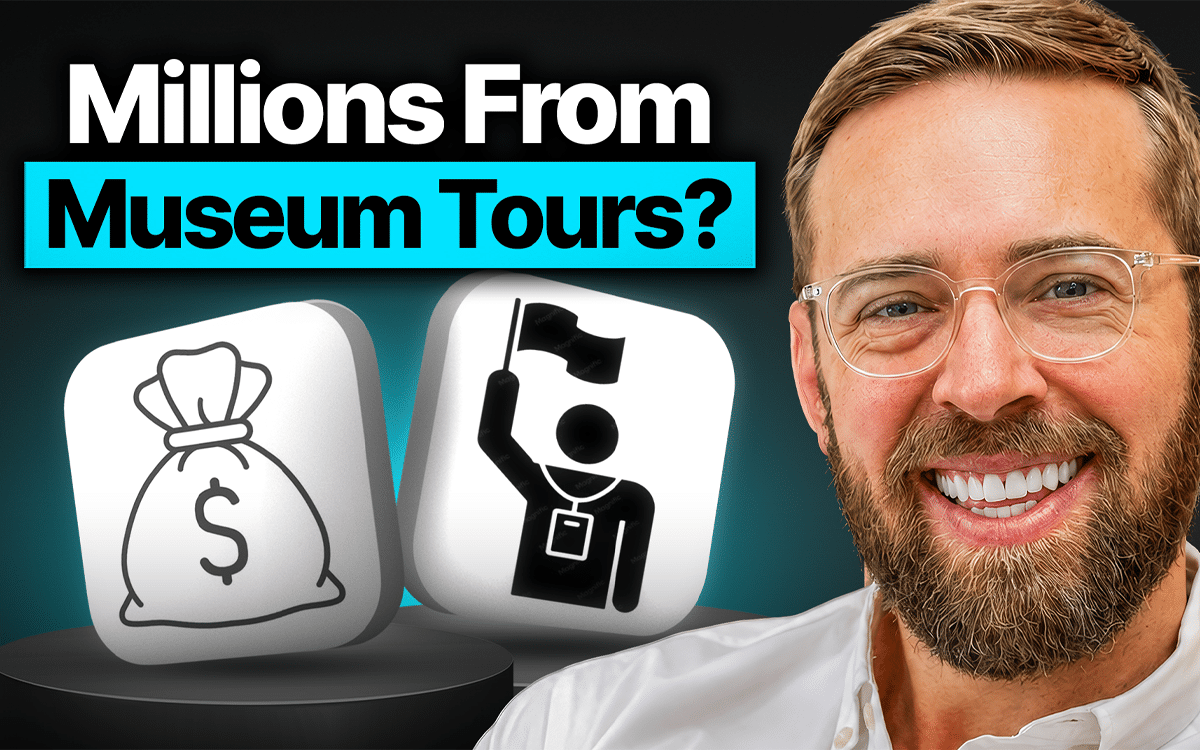
The transition from a side hobby to a multi-million-dollar company, Museum Hack, required Gray to overcome the "founder’s trap"—the belief that the business could only function if he personally led every tour.
To scale, Gray implemented a hiring philosophy that prioritized raw personality and performance ability over museum experience. By recruiting freelancers with backgrounds in comedy, acting, or hospitality, he ensured that the "energy" of the experience remained consistent across cities like Washington, D.C., and San Francisco. This model turned a personality-driven venture into a scalable operation that thrived on the high volume of freelance labor found in major metropolitan hubs.
The Anatomy of an Exit: Financial Mechanics and Resilience
The exit of Museum Hack in 2019 serves as a unique case study in business valuation and transition. Despite the company’s success, it hit a revenue plateau in the $3 million range, prompting Gray to prepare for an exit.
Seller Financing and Trust
In an unconventional twist, the business was sold via a full seller-financing deal. With zero dollars down, the buyers committed to paying Gray from future company profits. This arrangement relied entirely on trust and the structural integrity of the business model.
Weathering the Pandemic
The deal was finalized just before the COVID-19 pandemic effectively shuttered the global tourism industry. While the business’s revenue plummeted to zero, the new owners utilized the crisis as a pivot point, shifting toward remote, digital team-building experiences. Gray describes this "painful restart" as a blessing, noting that the forced transition necessitated a move toward a leaner, more profitable business model that better suited the post-2020 landscape.
Authority Building: The Role of Books and Digital Assets
Post-exit, Gray pivoted to The 2-Hour Cocktail Party, a tactical guide for hosting small, high-impact gatherings. This venture was not designed merely for profit, but as an exercise in "trust-building."
The Book as a Long-Form Business Card
Gray invested $60,000 into the production of the book, prioritizing high-end design and professional editorial support. In the conversation, he highlights that a book acts as a unique authority signal. Unlike a blog post, which is consumed in seconds, a book requires a multi-hour commitment from the reader. This deep-time engagement creates a level of trust that is difficult to replicate through traditional social media marketing.
The LLM Challenge
However, Gray acknowledges that the era of the business nonfiction book is changing. With the rise of Large Language Models (LLMs) and AI-driven information synthesis, the value proposition of a book has shifted. Entrepreneurs must now ask whether a book is the most efficient way to capture attention when an AI can summarize the key takeaways in seconds. Despite this, Gray maintains that books remain the gold standard for "establishing a footprint" in one’s industry.
Personal Websites: The Future of Reputation Management
Gray’s current focus is PersonalWebsites.org, a service dedicated to helping professionals reclaim their digital narrative. He argues that in an era where "Googling someone" is the standard due diligence process, failing to own a personal website is a significant strategic error.
Why Personal Websites Matter
- Entity Clarity: For founders who are closely tied to their companies, the lines between the person and the brand often blur. A personal website provides search engines with the necessary metadata to distinguish the individual as a unique "entity."
- Proactive Reputation: Rather than reacting to negative search results, a personal website allows an individual to curate their own history, testimonials, and professional achievements.
- The AI Factor: As AI agents begin to power search results, having a structured, crawlable, and authoritative personal site ensures that these tools describe you accurately.
The Technical Edge
Gray’s team has pushed the boundaries of performance by migrating personal sites from traditional WordPress setups to static site generators like Astro and Payload CMS. The result is a dramatic increase in page speed—often pushing Google’s PageSpeed Insights scores to a near-perfect 99. This technical rigor ensures that personal websites are not just vanity projects, but optimized assets that perform well in search rankings.
Implications: The Rise of the Personal Entity
The interview concludes with a live, impromptu audit of the JaredBauman.com website. Gray emphasizes that "surface area" is key: a website should be more than a bio. It should include speaker reels, press mentions, clear testimonials, and distinct pages for different facets of one’s career.
The broader implication of this discussion is clear: the digital economy is moving away from generic brand-only visibility. Whether you are a local service provider or an international founder, your personal reputation is becoming your most liquid asset.
Key Takeaways for Business Owners
- Decouple your identity: Ensure that search engines can distinguish between "You" (the person) and "Your Business" (the entity).
- Own your infrastructure: Don’t rely solely on social media profiles. A personal website is the only digital real estate you fully control.
- Optimize for machines: Use clean, static, and structured data to help AI systems understand your professional history.
Nick Gray’s trajectory proves that the most successful businesses are often those that solve the "hidden" problems of the modern entrepreneur. By focusing on personal websites, Gray is not just building a service—he is providing the foundational infrastructure for the next generation of digital reputation management.