In the annals of corporate history, few moments are as jarring as when a titan of industry stumbles under the weight of its own legacy. On Wednesday, IBM—a 115-year-old institution that has weathered every economic cycle since the dawn of the computing age—officially reported quarterly earnings that sent shockwaves through Wall Street. While the headline figures remained superficially robust—$17.2 billion in revenue and $9.9 billion in gross profit—the reality beneath the surface revealed a company caught in the crosshairs of an industry-wide transition.
For IBM, the results were not merely a miss; they were a systemic failure to meet the expectations of investors who had grown accustomed to the company’s recent AI-fueled resurgence. The fallout was swift, brutal, and historic.
The Chronology of a Crisis: From Optimism to Unprecedented Warning
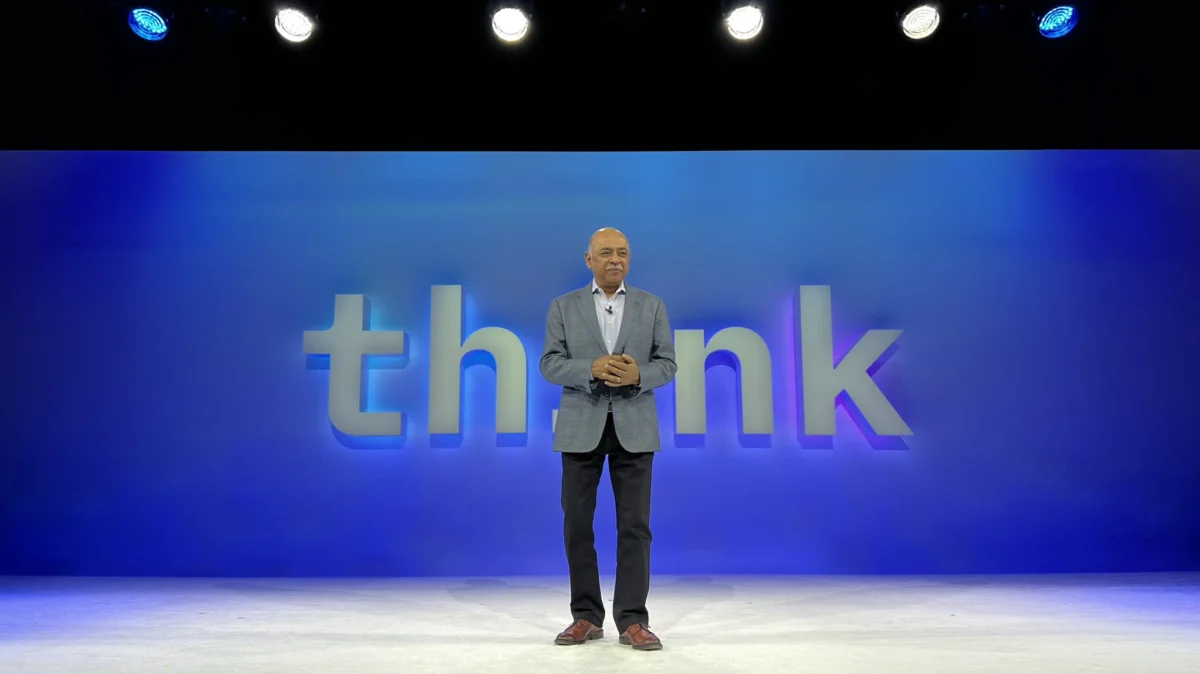
For six years, CEO Arvind Krishna had steered IBM toward a path of stability, leveraging the company’s pivot to hybrid cloud and AI to lift the stock price out of its long-term doldrums. The "AI data center boom" had acted as a rising tide, elevating IBM’s valuation alongside other tech giants. However, the veneer of that stability cracked in mid-July.
In an unprecedented move that signaled deep internal alarm, Krishna and the IBM board broke with corporate convention. Last week, the company issued a "letter to investors" providing preliminary, unvarnished results. The miss was so significant that leadership felt compelled to offer a preview, warning that the "infrastructure" segment—the heart of the IBM engine—had suffered a catastrophic decline.
The market’s reaction was instantaneous and unforgiving. IBM’s stock plummeted 25%, marking the single largest one-day decline in the company’s history. This was not a minor correction; it was a wholesale revaluation of the company’s immediate future. By the time the official earnings call concluded this Wednesday, the company had been forced to lower its full-year growth forecasts, effectively signaling that the pain of the second quarter would reverberate through the remainder of 2026.
Anatomy of a Miss: The Mainframe’s Downward Spiral
To understand why a company generating $2.2 billion in net earnings for the quarter is in crisis, one must look at the "cash cow": the mainframe business. IBM’s mainframe segment is not just a hardware product; it is an ecosystem. The hardware itself acts as a gateway to high-margin, long-term software contracts.
During the quarter, mainframe revenue cratered by 42%. As CFO Jim Kavanaugh explained to investors, this is a cascading problem. For every $1 of mainframe hardware IBM sells, it traditionally generates $3 in high-margin software revenue. When the hardware sales stall, the future software pipeline dries up.
The executive team pointed to a specific, localized issue: "tens" of customers who were slated to upgrade their mainframe systems simply decided to defer. While "tens" of clients may sound insignificant for a global giant, in the world of high-end enterprise computing, these are not off-the-shelf purchases. These systems cost hundreds of thousands, if not millions, of dollars. When these deals evaporate, the impact on the bottom line is immediate and painful.
The AI Paradox: The Same Tide That Lifted the Boat Now Sinks It
Perhaps the most ironic aspect of IBM’s decline is that the very phenomenon driving the tech sector—the massive capital expenditure toward artificial intelligence—is the direct cause of its current shortfall.
CEO Arvind Krishna provided a candid, if painful, explanation for why those "tens" of customers walked away from their IBM upgrade cycles. The enterprise hardware market is currently experiencing a supply-chain-induced inflationary crisis. Prices for critical data center gear and PCs have surged by 15% to 30%, driven by an insatiable global demand for AI-ready components and memory.
When faced with these astronomical cost increases, IT departments had to make a choice. They were forced to reallocate their limited budgets to secure the essential hardware required for AI infrastructure, effectively cannibalizing the budget originally earmarked for mainframe refreshes.
This trend is not unique to IBM. Industry peers such as Dell and HP have been vocal about the "cost of AI," warning shareholders that memory pricing and component shortages are beyond their control, necessitating massive price hikes. Apple has likewise adjusted its pricing models to account for the ballooning costs of hardware production. IBM, it seems, found itself at the back of the queue when customers were forced to choose between the "new" (AI infrastructure) and the "foundational" (the mainframe).
Official Responses and the Defense of the Legacy
Despite the gravity of the situation, the mood on the earnings call was one of defensive optimism. Both Krishna and Kavanaugh insisted that this is a "temporary blip," not a structural death knell for the mainframe.
Krishna’s argument is rooted in the stickiness of the IBM ecosystem. "We see no evidence of clients moving off the mainframe," he asserted, noting that the demand has not disappeared—it has merely been deferred. He pointed to the fact that some of these customers have already returned to the negotiating table this quarter, suggesting that the "pause" was a strategic budgetary maneuver rather than a permanent abandonment of IBM’s technology.
From the perspective of leadership, the mainframe remains the backbone of the global financial, retail, and government sectors. They argue that once the current volatility in hardware pricing stabilizes and the initial scramble for AI-specific compute power cools, those deferred mainframe contracts will materialize. The strategy is to wait out the current economic pressure and rely on the fact that, for many of these enterprises, there is simply no viable alternative to the mainframe architecture.
Implications: A Future Defined by Uncertainty
The implications of this quarter are profound. For shareholders, the 25% drop is a reminder that even the most diversified legacy tech companies are not immune to the volatility of the modern hardware market. For IBM, the challenge is now one of perception. The company must prove that it is not a "legacy player" being slowly displaced by the agile infrastructure requirements of the AI era.
The tech industry has spent decades predicting the death of the mainframe. In the 1980s, the rise of the PC was supposed to kill it. In the 1990s, the client-server model was its projected end. In the 2000s, it was the cloud. Yet, the mainframe persists, consistently evolving to handle modern workloads.
However, this current crisis is different. It is not a technological displacement, but a financial one. If enterprise customers can no longer afford to maintain the "mainframe-plus-software" model alongside their massive investments in AI, IBM faces a significant hurdle in maintaining its margins.
As the industry moves forward, the question remains: is this a temporary realignment of IT budgets, or is it a permanent pivot away from the high-cost, high-reliability systems that have defined IBM for over a century? The market will be watching the next few quarters with intense scrutiny. For now, IBM is in a race against time to prove that its "cash cow" hasn’t run dry, but is merely grazing in a field that has become temporarily overcrowded by the AI frenzy.
The path ahead for Arvind Krishna will require more than just the promise of returning customers; it will require a demonstration that IBM can remain the central nervous system of the enterprise, even as that system undergoes its most expensive and turbulent transformation in decades. Whether the mainframe will survive this latest threat remains to be seen, but for the moment, the market has sent a clear message: in the world of high-stakes technology, past performance is no guarantee of future stability.