The future of brand evolution is currently being written in the aisles of toy stores—or, more accurately, in the home offices and living rooms of adults. As legacy toy companies face a saturated market of digital-native children, they have pivoted toward an unlikely but lucrative demographic: the stressed, overstimulated, and nostalgia-hungry adult.
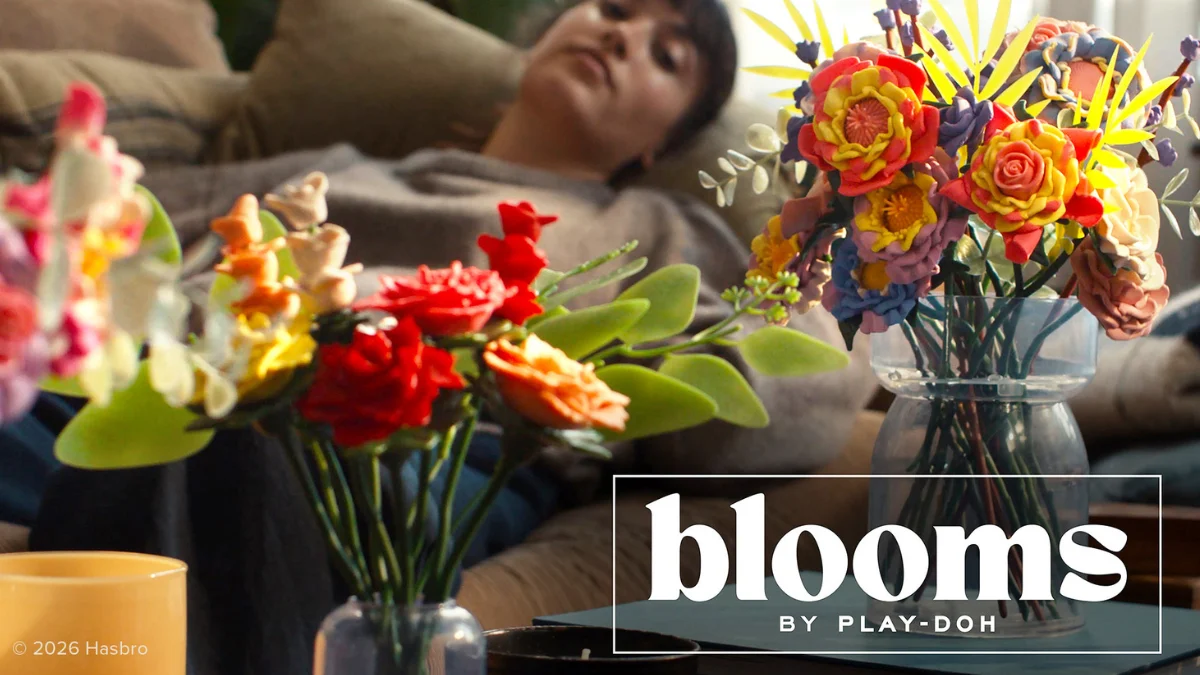
The latest manifestation of this shift is the launch of "Blooms by Play-Doh," a specialty set designed not for a child’s sensory bin, but for an adult’s mantle. The campaign marks a stark departure from the brand’s 1975 roots, where marketing focused on the unbridled, if somewhat abstract, imagination of children. Today, the strategy is clear: toy brands are no longer just selling playtime; they are selling "mindfulness," "analog retreats," and the comfort of the familiar.
The Evolution of Play: A Chronological Retrospective
To understand the magnitude of this shift, one must look at the trajectory of the toy industry over the last half-century.
1975: The Era of Abstract Imagination
In 1975, a quintessential Play-Doh advertisement featured a young boy named Jeff. The ad captured a moment of pure, unadulterated childhood creativity: Jeff had molded a lumpy, blue mass. When asked what it was, he insisted it was "a dog who grew a long nose," despite the creation bearing a striking resemblance to a clumsy elephant. The ad celebrated the process of play, prioritizing the act of creation over the final aesthetic outcome. The target was clear: the parent, who would buy the tub for their child’s development.
2000–2015: The Digital Pivot
As the turn of the millennium approached, the toy industry grappled with the rise of the internet and video games. Brands like LEGO and Hasbro began investing heavily in digital integration, trying to compete with the addictive nature of screens. During this period, the "adult" market was largely confined to "AFOLs" (Adult Fans of LEGO), a niche, self-organized community of collectors.
2020–Present: The "Kidult" Explosion
The COVID-19 pandemic acted as a massive catalyst for the "kidult" trend. Faced with global uncertainty and the isolating nature of remote work, adults began returning to childhood hobbies in record numbers. Companies were quick to notice. Brands like Mattel, LEGO, and Hasbro accelerated the release of sophisticated, display-worthy sets that prioritized aesthetics and stress-relief over traditional play.
Supporting Data: The Rise of the Kidult
The shift toward adult-centric toys is not merely anecdotal; it is backed by robust market data. According to industry analysts, the "kidult" demographic—defined as consumers aged 12 and older—now accounts for a significant portion of toy industry growth.
- Market Share: Data from retail tracking firms indicates that the kidult segment has grown at a double-digit pace annually over the last three years, often outperforming the traditional toy market.
- Price Sensitivity: Unlike parents shopping for children, who are often price-sensitive regarding toys that will eventually be discarded, adult consumers are willing to pay a premium. Sets like the LEGO Botanical Collection or specialty Play-Doh kits command higher price points because they are viewed as home decor or collectible lifestyle items.
- The "Anxiety" Factor: A 2023 survey by the Toy Association revealed that over 60% of adults engaged in "playful" activities (puzzles, coloring, modeling) specifically to manage stress. The "Blooms by Play-Doh" set is explicitly marketed as a creative outlet, leaning into the wellness trend that has permeated every corner of the consumer goods industry.
The Aesthetic Shift: From "Lumpy Dogs" to Botanical Art
The visual language of the "Blooms by Play-Doh" campaign serves as a case study in branding sophistication. The ads feature intricate sculptures: bouquets of orchids, lilacs, and peonies, accented by delicate eucalyptus stems and ferns.
These are not the lumpy creations of 1975. They are curated, artistic, and—crucially—shareable on social media. By moving into the "maker" space, Play-Doh is repositioning itself as a competitor to high-end hobby brands and home decor retailers. This is a deliberate attempt to shed the "messy, ephemeral" reputation of modeling clay and replace it with the "refined, artistic" reputation of an adult craft material.
Official Responses and Strategic Positioning
Industry leaders argue that this shift is a logical evolution of the brand-consumer relationship.
"We recognize that our consumers don’t stop loving our brands when they turn 18," says a spokesperson for the parent company behind the new campaign. "They stop loving the function of the toy, but they maintain a deep, emotional connection to the identity of the brand. By providing products that serve an adult’s need for relaxation and aesthetic fulfillment, we are honoring that lifelong relationship."
Marketing experts note that this is a defensive strategy as much as an offensive one. With the birth rate declining in many developed nations, toy companies cannot rely solely on the next generation of children to sustain revenue growth. Expanding the addressable market to include adults is a necessary hedge against demographic shifts.
Implications: The Long-Term Impact on the Toy Industry
The pivot toward adult-centric products has profound implications for the future of the toy industry.
1. The Redefinition of "Play"
We are witnessing a fundamental shift in how "play" is defined. Historically, play was a developmental necessity for children. Now, play is increasingly viewed as a psychological necessity for adults. This rebranding of play as "mindfulness" or "analog therapy" allows toy companies to enter the multi-billion-dollar wellness market.
2. Design and Engineering Evolution
To capture the adult market, toy companies are changing how they design products. The focus has moved toward:
- Higher Complexity: Sets require more time and precision to build.
- Material Quality: Products look and feel more premium, often featuring better packaging and more durable components.
- Displayability: Products are designed to look good on a bookshelf or desk, moving toys from the playroom to the professional environment.
3. The Digital-Analog Paradox
Ironically, the rise of digital overstimulation is driving the success of these analog products. As adults spend 8–10 hours a day in front of screens, the tactile experience of sculpting, building, or assembling becomes a luxury. The "Blooms by Play-Doh" campaign succeeds because it offers an escape from the screen, not an extension of it.
4. Brand Loyalty and Generational Passing
There is also a powerful cyclical element at play. Adults who engage with these premium sets are likely to share that brand affinity with their own children, creating a multigenerational loyalty loop. By keeping the brand present in the home throughout the parent’s life, companies ensure that when the time comes to buy for the next generation, the brand is already a permanent fixture in the household.
Conclusion
The evolution from a boy named Jeff’s "dog-elephant" to the sophisticated botanical sculptures of the modern adult set is a microcosm of a larger cultural shift. We are living in an era where the boundary between work and play, and between childhood and adulthood, is increasingly porous.
For legacy toy brands, this is a golden opportunity. By positioning their products as tools for mental health, artistic expression, and home decor, they are successfully insulating themselves from the volatility of the youth toy market. While the "Blooms" campaign may seem like a novelty to some, it represents a calculated, long-term commitment to the "kidult" economy—a demographic that is looking for a way to recapture the magic of childhood, one sculpture at a time.
As the industry moves forward, the primary challenge will be to balance this new adult-focused strategy with the core mission of inspiring the next generation of children. However, if the current trajectory is any indication, the toy companies that succeed will be those that realize their brand is no longer just a box on a shelf—it is a lifelong companion for an increasingly stressed-out world.