NEW YORK — Digital marketers balancing multi-channel media budgets have new reason to look closely at Meta’s ecosystem. According to freshly released benchmark data for 2026 from WordStream by LocaliQ, Facebook advertising has entered a period of remarkable cost-efficiency. Advertisers across a diverse array of sectors are enjoying cheaper clicks, elevated click-through rates (CTRs), and stronger overall audience engagement. Meanwhile, average costs per lead (CPL) have remained remarkably steady, giving brands a much-needed financial cushion in an increasingly competitive digital landscape.
The comprehensive report analyzed nearly 1,800 active Facebook advertising campaigns spanning multiple commercial sectors. By evaluating foundational key performance indicators (KPIs)—including click-through rate (CTR), cost per click (CPC), conversion rate (CVR), and cost per lead (CPL) for both traffic- and lead-generation objectives—the data paints a vivid picture of a platform undergoing a major performance evolution.
Main Facts: The 2026 Meta Advertising Landscape
The central takeaway from the 2026 WordStream by LocaliQ benchmark report is that Facebook ads are delivering more value for less capital.
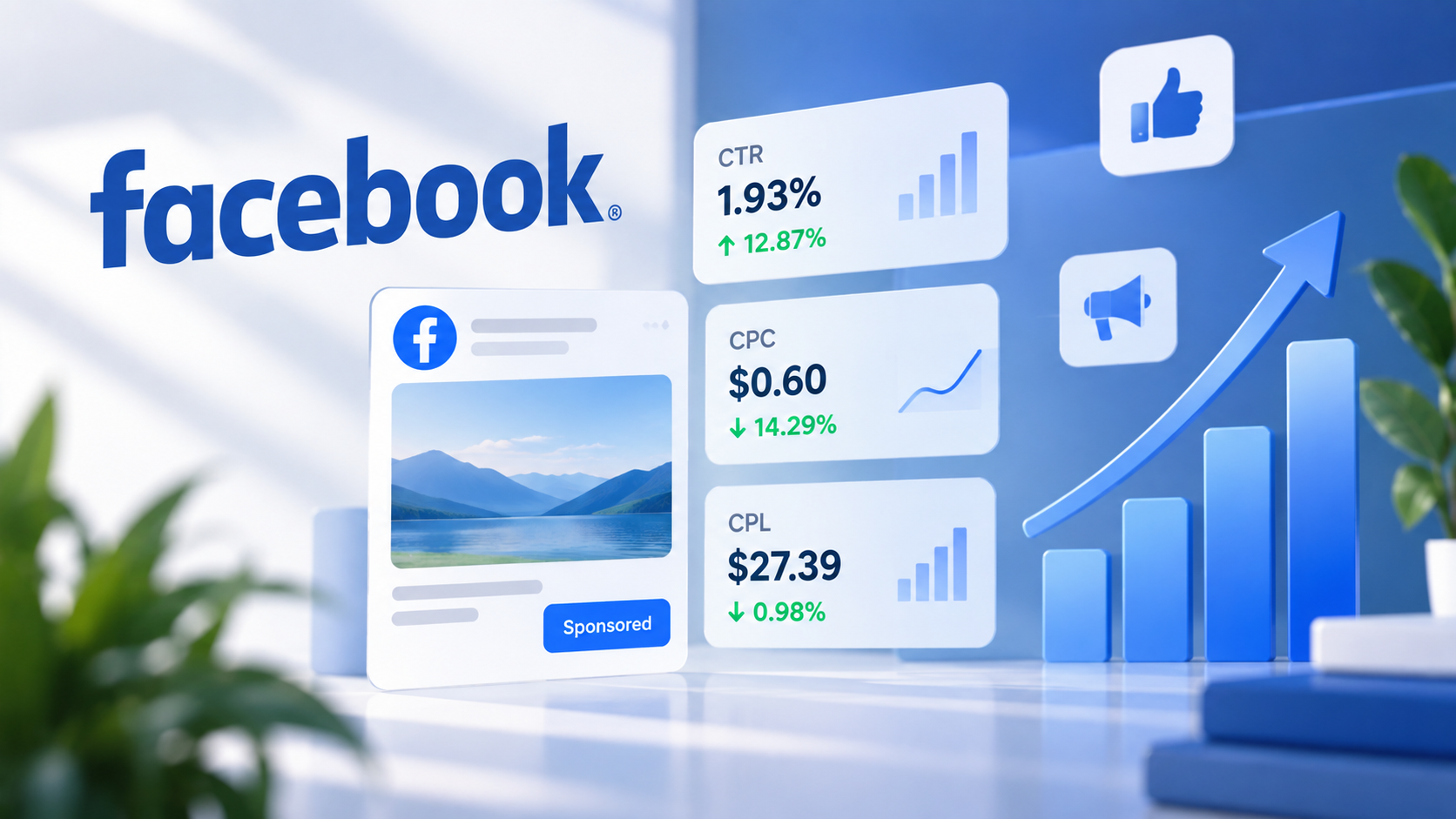
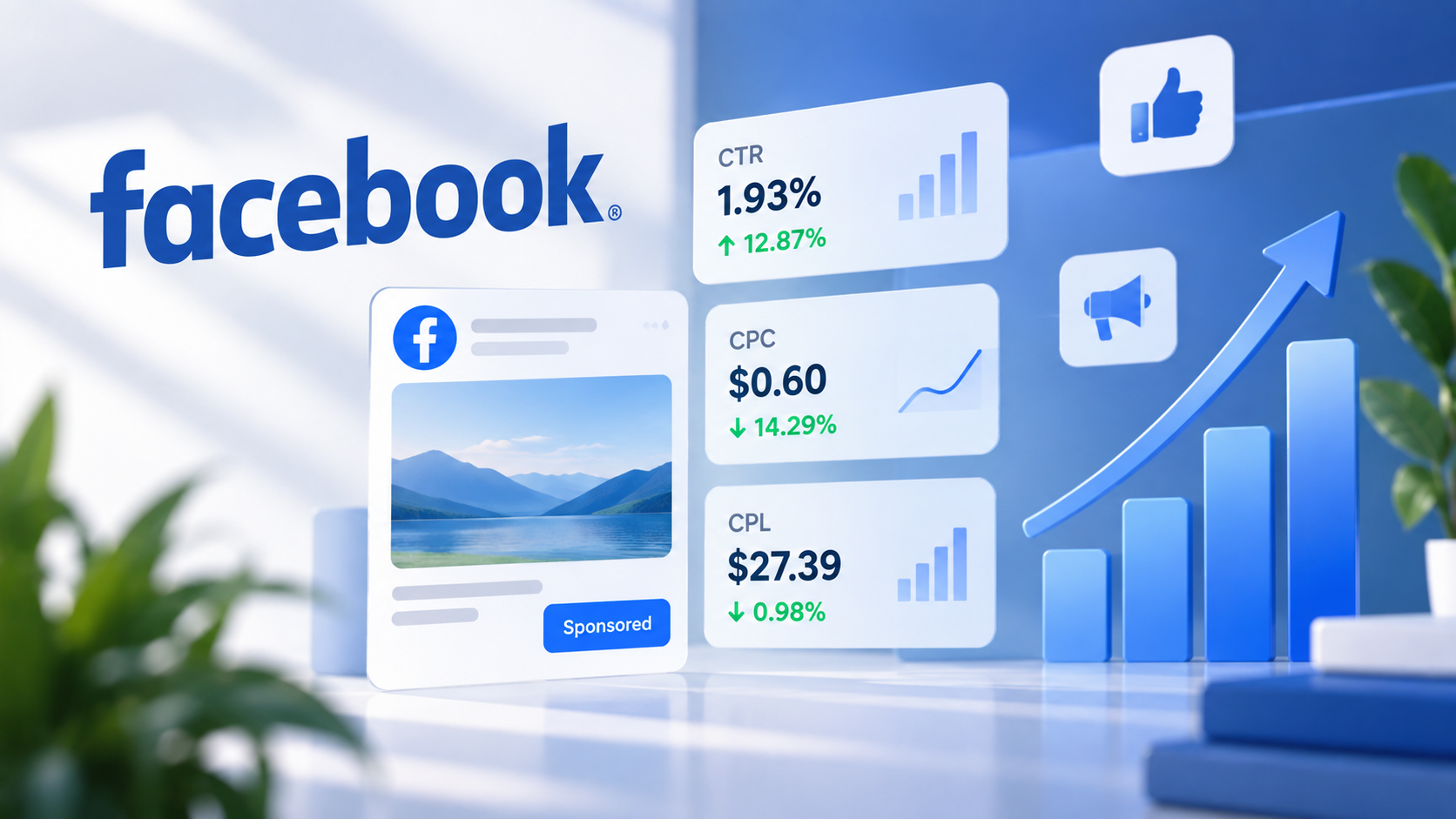
- Traffic Campaign Wins: Traffic-focused campaigns experienced a standout year. Average clicks became roughly 14% cheaper year over year, while average click-through rates (CTRs) climbed by nearly 13%.
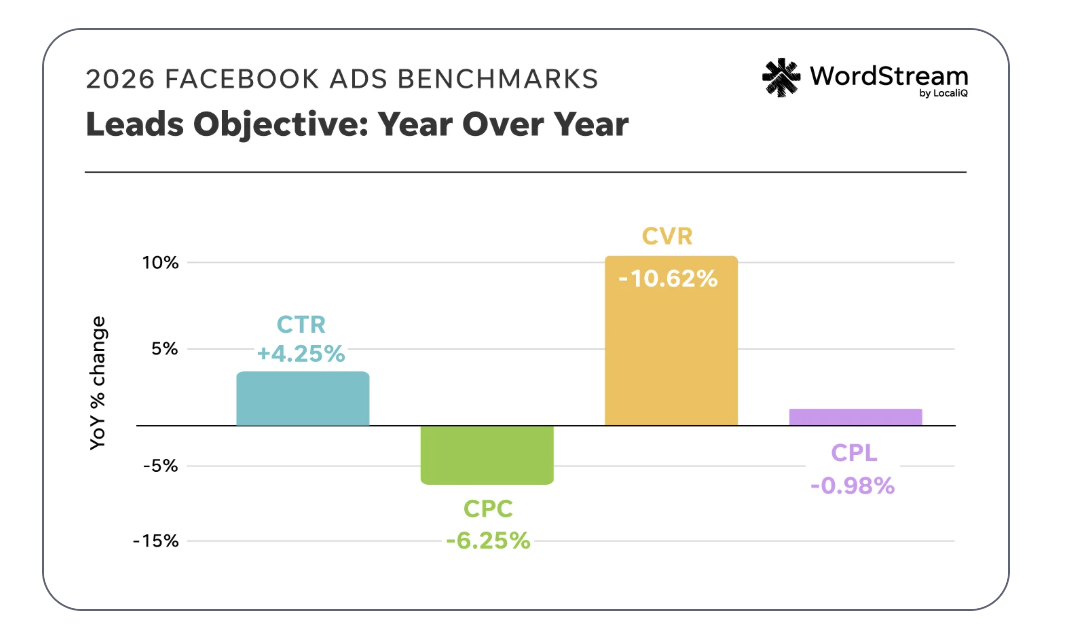
- Lead Campaign Stability: For brands focused on capturing consumer data and generating leads, cost-per-click metrics dropped across the vast majority of industries, while overall average cost-per-lead (CPL) figures remained virtually unchanged.
- The Cross-Channel Contrast: When benchmarked against alternative channels, Meta’s pricing model stands out sharply. Data indicates that Google Ads cost-per-click averages are currently more than double those found on Meta—though digital marketing experts note that Google Search typically captures consumers with a higher, more immediate transactional intent.
- Platform Optimization: Industry analysts attribute these gains to deeper algorithmic refinements by Meta, with advanced machine learning, better automated bidding strategies, and sharper audience targeting working in tandem to squeeze higher performance out of every advertising dollar.
Chronology and Context: How Paid Social Got Here
To understand the significance of the 2026 data, it helps to look backward at the turbulent economic and technical shifts that have defined digital marketing over the past several years.
The Post-IDFA Correction (2021–2023)
When Apple introduced its App Tracking Transparency (ATT) framework and App Store privacy changes (IDFA) in 2021, the digital advertising ecosystem was sent into a tailspin. Advertisers relying on hyper-specific third-party tracking suddenly found their audience segments obscured. Attribution broke down, optimization loops stuttered, and cost per acquisition (CPA) on Meta skyrocketed as the algorithm struggled to find converting users efficiently.
The Pivot to Advantage+ and AI (2024–2025)
In response to privacy regulations and signal loss, Meta aggressively pivoted toward artificial intelligence and automated campaign structures. Tools like Advantage+ Shopping Campaigns and automated lead-generation frameworks forced a paradigm shift. Instead of manual, micro-targeted audience layering, advertisers handed the steering wheel over to Meta’s machine learning models, allowing the algorithm to find buyers based on creative signals rather than explicit demographic breadcrumbs.
The 2026 Efficiency Yield
By 2026, the fruits of this technological evolution are fully realized. The data from WordStream by LocaliQ demonstrates that Meta’s machine learning models have matured. Advertisers are no longer battling structural signal loss; instead, they are riding a wave of hyper-optimized bidding and delivery systems that systematically push down the cost of engagement while maximizing delivery relevance.
Supporting Data: Industry Winners and Losers
While the macroeconomic narrative for Facebook ads is overwhelmingly positive, performance varies significantly depending on the vertical. A granular look at the data reveals stark contrasts between industries that saw costs plummet and those facing rising prices.
Traffic Campaigns: CPC Shifts by Industry
For traffic-focused initiatives, the overwhelming majority of sectors benefited from cheaper real estate.
- The Biggest Improvers (Lowest CPC Growth / Greatest Declines): Real Estate recorded the most dramatic CPC improvement, with average costs plunging 39.56% year over year. Close behind were Restaurants and Food, which saw a 37.50% drop, and Industrial and Commercial sectors, which dropped 37.21%.
- The Outliers (Rising Costs): Only two industries bucked the downward trend to record higher traffic CPCs. Shopping, Collectibles, and Gifts experienced a staggering 73.53% spike in cost per click, while Sports and Recreation saw CPCs rise by 43.90%.
Lead Campaigns: Cost-per-Click Winners
Advertisers running lead-generation campaigns enjoyed widespread relief on click costs.

- Notable Declines: Automotive (For Sale) campaigns witnessed a dramatic 44.17% drop in CPC. Dentists and Dental Services followed closely with a 41.72% decrease, while Health and Fitness advertisers enjoyed a 30.30% reduction in click costs.
- Minimal Inflation: Only two verticals recorded higher lead campaign CPCs: Education and Instruction (up a modest 4.24%) and Sports and Recreation (up 0.93%).
Cost-Per-Lead (CPL) Reality Check
While clicks became cheaper, the ultimate cost to acquire a qualified lead (CPL) varied wildly across different business verticals, reflecting the intrinsic value and competitive nature of individual markets.
- Sectors with Lowest CPL: High-volume, consumer-accessible niches continued to enjoy the most affordable lead acquisition costs.
- Sectors with Highest CPL: Specialized, high-ticket, or heavily regulated industries—such as legal services, high-end financial planning, and specialized B2B software—maintained significantly higher cost-per-lead thresholds, though these figures largely stabilized compared to previous years.
Official Responses and Expert Insights
Industry professionals and thought leaders have weighed in heavily on what these 2026 benchmarks mean for corporate marketing strategies.
Anu Adegbola, Paid Media Editor at Search Engine Land, emphasized the strategic implications for media buyers juggling constrained marketing budgets:
"Facebook advertisers are effectively getting more engagement for less money. Traffic clicks became 14% cheaper while CTR improved nearly 13%, and lead campaigns generated cheaper clicks while keeping average CPL virtually unchanged."
Adegbola noted that this dynamic forces a re-evaluation of how marketing teams allocate funds between paid search and paid social. With Google Ads CPC sitting at more than double Meta’s average, brands that previously sidelined social media in favor of search intent are finding that Meta’s lowered top-of-funnel costs offer an exceptionally cost-effective way to build awareness and feed retargeting funnels.

Representatives from WordStream by LocaliQ echoed these sentiments in their analytical commentary, pointing out that advertisers no longer face a zero-sum game between stretching budgets and driving performance.
"The 2026 numbers suggest advertisers don’t necessarily have to choose between cheaper traffic and better performance: for many Facebook campaigns, they’re getting both," the report stated. The structural improvements in machine learning-driven bidding models have successfully reduced platform friction, ensuring that ad spend translates more directly into measurable user interactions.
Implications for Marketers and Media Planners
The implications of the 2026 WordStream benchmarks stretch across tactical media buying, creative strategy, and cross-channel budget allocation.
1. Rebalancing Paid Search and Paid Social Budgets
For years, digital strategists treated Google Search as the primary engine for high-intent conversions, utilizing Facebook primarily for top-of-funnel brand awareness. However, with Google CPCs remaining stubbornly high—often costing twice as much as a Meta click—the math is changing. Marketers can capture high volumes of engaged traffic on Facebook at a fraction of the cost, making it easier to maintain healthy blended customer acquisition costs (CAC).
2. The Death of Micro-Targeting, the Rise of Creative Diversity
Because Meta’s automated bidding and optimization engines are performing so efficiently, the burden of success has shifted almost entirely from audience micro-segmentation to creative execution. Advertisers must feed the algorithm a diverse portfolio of video assets, user-generated content (UGC), and compelling ad copy. The platform’s AI is now sophisticated enough to match creative variations to the exact users most likely to engage, making creative iteration the single most important lever for campaign success.
3. A Stable Foundation for Lead Generation
For B2B brands, local service providers, and lead-gen heavy verticals, flat CPLs in an inflationary economic climate represent a major win. While general operating costs have risen across the board, the cost to acquire a prospective customer on Facebook has largely held the line. This stability allows growth marketers to forecast customer acquisition pipelines with greater precision and confidence.
Bottom Line
The 2026 benchmark data from WordStream by LocaliQ offers an encouraging roadmap for digital marketers. Facebook advertising has successfully turned a corner, shedding the attribution nightmares of the early post-IDFA years and emerging as a leaner, smarter, and significantly more efficient ecosystem. With cheaper clicks, climbing engagement rates, and steady lead costs, Meta continues to provide brands with ample room to stretch their paid social budgets and drive sustainable growth.