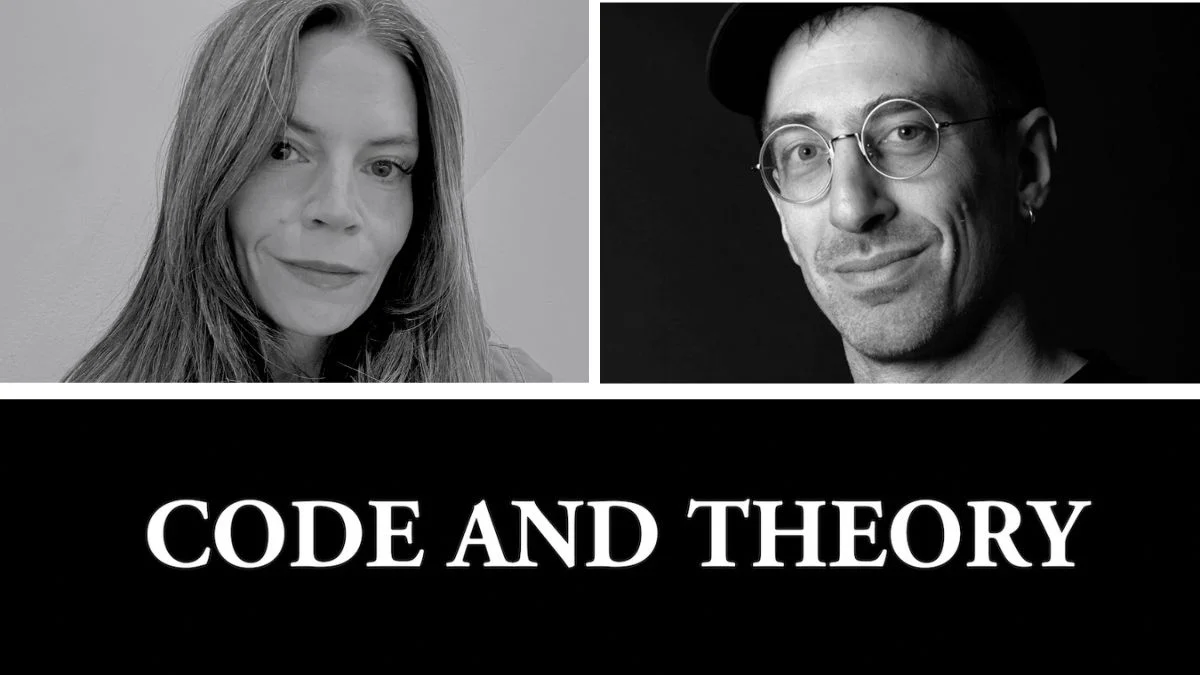
SAN FRANCISCO — The annual Dreamforce convention typically serves as a high-octane celebration of enterprise software, cloud computing, and corporate optimism. However, the opening keynote of this year’s gathering transformed into something far more momentous: a public referendum on the soul and speed of the artificial intelligence revolution.
Before a packed audience of 12,000 technology executives, developers, and industry professionals, two of the most influential figures in the global tech ecosystem engaged in a high-stakes ideological clash. Nvidia CEO Jensen Huang and Anthropic CEO Dario Amodei took the same stage within minutes of each other to deliver diametrically opposed visions for the trajectory of artificial intelligence. The central question dividing them—and increasingly fracturing the tech industry at large—was deceptively simple: Should we hit the accelerator, or slam on the brakes?
Main Facts: A House Divided at the Frontier
The confrontation at Dreamforce brought the simmering industry-wide debate over artificial intelligence governance out into the open. For months, tech policy circles, academic institutions, and corporate boardrooms have debated the existential risks posed by rapidly scaling Large Language Models (LLMs). Yet, these discussions have largely occurred behind closed doors, in academic papers, or via carefully worded corporate blog posts.
The keynote stage in San Francisco shattered that polite veneer.
- The Accelerator: Jensen Huang, head of silicon powerhouse Nvidia—the undisputed hardware engine behind the generative AI boom—argued passionately for unbridled technological acceleration. Huang contended that slowing down AI development is not only impractical but dangerously counterproductive, warning that the technology’s immense potential to solve intractable global problems outweighs theoretical risks.
- The Pacer: Dario Amodei, co-founder and CEO of AI safety-focused lab Anthropic, used the exact same microphone to advocate for deliberate, cautious pacing. Just days after publishing a viral, 3,800-word open letter detailing the perils of unchecked scaling, Amodei warned that humanity is racing blindly toward a technological precipice without adequate guardrails.
This high-profile divergence highlights a profound schism within the artificial intelligence community. On one side are the hardware manufacturers, infrastructure providers, and market disruptors who view speed as a competitive and humanitarian imperative. On the other side are researchers, safety ethicists, and certain AI architects who fear that the race to Artificial General Intelligence (AGI) is outpacing our ability to control, understand, or secure the systems we are creating.
Chronology: How the Rift Erupted
To understand how Dreamforce became the battleground for AI’s existential debate, one must trace the timeline of escalating tensions that preceded the conference.
September 12: The Manifesto for Caution
The ideological groundwork for Amodei’s Dreamforce address was laid days earlier. On September 12, the Anthropic CEO published a comprehensive, 3,800-word treatise online titled "We Must Pace the Frontier." In the essay, Amodei argued that the current trajectory of AI model scaling—driven by exponential increases in compute power, data, and parameter counts—is moving too fast for society, regulatory bodies, and even safety researchers to keep pace.
Amodei’s proposal was not an outright ban or a permanent halt on development, but rather a call for structured pacing. He advocated for coordinated slowdowns among frontier labs, rigorous safety testing protocols, and defensive alignment research designed to ensure that future systems remain aligned with human values before they achieve superintelligence.
The Industry Reaction
Amodei’s manifesto sent shockwaves through Silicon Valley, instantly polarizing industry leadership:
- The Consensus Builders: High-profile figures, including OpenAI CEO Sam Altman and xAI founder Elon Musk, voiced surprising alignment with portions of Amodei’s thesis. Despite their own aggressive push toward AGI, Altman and Musk have frequently warned about long-term existential risks, creating a complex web of shared concern among competitors.
- The Skeptics: Conversely, infrastructure leaders, venture capitalists, and open-source advocates viewed the letter as an attempt by established players to pull up the drawbridge, locking in regulatory moats that could stifle competition and disadvantage smaller startups.
The Dreamforce Showdown
Against this backdrop, the collision at Dreamforce felt inevitable. Amodei reiterated his call for caution to the massive San Francisco audience, framing the rapid, uncontrolled deployment of frontier models as an unnecessary gamble with global stability.
Moments later, Jensen Huang took the stage. Wearing his signature leather jacket, Huang offered a forceful rebuttal, championing the relentless march of technological progress. Rather than a threat to be managed through artificial deceleration, Huang presented AI as an essential tool for human survival and economic expansion, setting the stage for a prolonged war of philosophies that will define the rest of the decade.
Supporting Data: The Engine Driving the Debate
The urgency of both arguments is rooted in hard data. The scale of the artificial intelligence boom is unprecedented in industrial history, characterized by astronomical capital expenditures, exponential compute scaling, and vast societal integration.
The Compute and Capital Explosion
- Infrastructure Spending: Major technology conglomerates—including Microsoft, Google, Amazon, and Meta—are projected to spend upwards of $200 billion combined on AI data centers and hardware infrastructure in the current fiscal cycle alone.
- Nvidia’s Dominance: Jensen Huang’s company remains the indispensable tollbooth for this gold rush. Nvidia’s H100 and Blackwell GPUs have become the standard-issue currency for training frontier models, with demand consistently outstripping supply and driving historic corporate valuations.
- Model Parameter Scaling: Over the past five years, frontier AI models have grown from billions of parameters to hundreds of billions, and now approach the trillion-parameter threshold. Training runs that once required weeks and millions of dollars now demand months and hundreds of millions in compute costs.
The Risk Metrics
Amodei’s push for pacing is similarly backed by emerging data points regarding model capabilities and vulnerabilities:
- Autonomous Capabilities: Recent evaluations of frontier models show emerging abilities in autonomous software engineering, cyber-offensive operations, and biological synthesis guidance.
- The "Black Box" Problem: Despite billions invested in alignment research, computer scientists still lack a mechanistic understanding of how large neural networks arrive at specific conclusions, making behavioral predictability exceptionally difficult to guarantee as systems scale.
Official Responses: Perspectives from the Front Lines
The public debate at Dreamforce has drawn sharp commentary from key stakeholders across the technology ecosystem, illuminating the complex motivations driving both sides of the acceleration divide.
Anthropic’s Stance: Guardrails Before the Abyss
Dario Amodei’s position is rooted in the philosophy of "responsible scaling." Speaking to industry analysts following the event, Anthropic representatives emphasized that caution is not anti-technology; rather, it is pro-survival.
"We are building systems that will eventually surpass human capabilities across every economically valuable domain," Amodei noted in his recent writings. "If we do not deliberately pace our approach to match our safety capabilities, the margin for error shrinks to zero. You do not race a vehicle toward a cliff simply because you have a better engine."
Anthropic argues that voluntary coordination among frontier labs—backed by transparent safety milestones—is essential to prevent a reckless "tragedy of the commons" scenario, where competitive pressures force companies to abandon safety precautions in pursuit of market dominance.
Nvidia’s Stance: Progress as the Ultimate Protector
Jensen Huang countered with a pragmatic, engineering-first philosophy. From Nvidia’s perspective, slowing down innovation is neither feasible on a global scale nor morally defensible given the problems AI can solve.
"The best way to address the risks of technology is to build better technology," Huang argued during his keynote presentation. "The challenges we face in healthcare, climate science, energy generation, and education are too severe to hit the pause button. AI is the instrument that will help us solve these crises."
Huang and other accelerationists argue that attempting to regulate the speed of AI development globally is a geopolitical impossibility. If Western democracies choose to decelerate, state actors or competitors with fewer ethical constraints will simply fill the vacuum, shifting the balance of technological power globally.
Implications: What the Clash Means for the Future of Tech
The public disagreement between Huang and Amodei at Dreamforce marks a watershed moment for the artificial intelligence industry. As the debate moves from theoretical philosophy to boardroom strategy, several long-term implications are beginning to emerge:
1. Regulatory Fragmentation
The open division among industry leaders makes it exceedingly difficult for lawmakers to craft unified policy. While regulators in the European Union and the United States look to industry titans for guidance on compliance frameworks, the stark contrast between Anthropic’s calls for restriction and Nvidia’s demands for freedom will likely lead to fragmented, contentious legislative battles.
2. Strategic Alliances and Market Realignment
The debate is reshaping corporate partnerships. Companies that rely heavily on proprietary infrastructure are closely aligned with Nvidia’s accelerationist agenda, while safety-focused research entities are finding common cause with policymakers seeking stricter oversight. This dynamic could alter how venture capital is deployed, shifting investments away from raw scaling models toward verifiable safety, interpretability, and efficiency tools.
3. The Talent and Research Diaspora
As AI labs grapple internally with the speed-versus-safety dilemma, top-tier research talent is increasingly forced to choose sides. The philosophical divide risks creating a cultural schism within the scientific community, pitting relentless innovation labs against risk-averse alignment organizations.
Conclusion
The Dreamforce keynote will be remembered not merely as a corporate conference event, but as the moment the artificial intelligence industry openly acknowledged its own existential identity crisis. Whether the future belongs to the relentless acceleration championed by Jensen Huang or the measured caution urged by Dario Amodei remains one of the defining questions of the twenty-first century. What is certain, however, is that the debate can no longer be ignored—and the decisions made today will write the script for humanity’s technological tomorrow.