Across the United States, a quiet but profound transformation is reshaping the American landscape. In quiet corners of rural towns and industrial zones of major cities, massive, windowless warehouses are rising. These are the engines of the artificial intelligence revolution—the data centers required to process the vast amounts of information powering modern machine learning.
However, the rapid expansion of this infrastructure is encountering an unexpected hurdle: the citizens living in its shadow. While industry giants promise economic revitalization, high-paying jobs, and a foothold in the digital future, a majority of Americans remain skeptical, citing mounting concerns over energy consumption, environmental degradation, and the strain on local infrastructure.
For activists like Shawmar Pitts, the debate over AI is not merely about server racks and cloud computing; it is a battle for the health and sovereignty of the neighborhood.
The Shadow of Industry: A Personal Reckoning
Shawmar Pitts, a lifelong resident of the Grays Ferry neighborhood in Southwest Philadelphia, has a visceral understanding of what happens when massive industrial interests descend upon a residential area. Growing up, his community was bordered by the Philadelphia Energy Solutions oil refinery—once the largest of its kind on the East Coast.
The facility was a constant, looming presence until a catastrophic explosion in 2019 shuttered its operations for good. But the silence that followed the shutdown did not erase the history of the site. Throughout his childhood, Pitts witnessed family and friends battle chronic health issues. It wasn’t until 2018, when he encountered the environmental justice organization Philly Thrive at a community tabling event, that he began to connect the dots.

"I read the information they had on the table about how living near the refinery affects you," Pitts recounted to TechCrunch. "I’m looking at all the sicknesses on this paper, and I’m like, ‘My mother has this, my sister has that, my next-door neighbor suffers from this’—every house, someone has something on that list. From that point, I was all the way in."
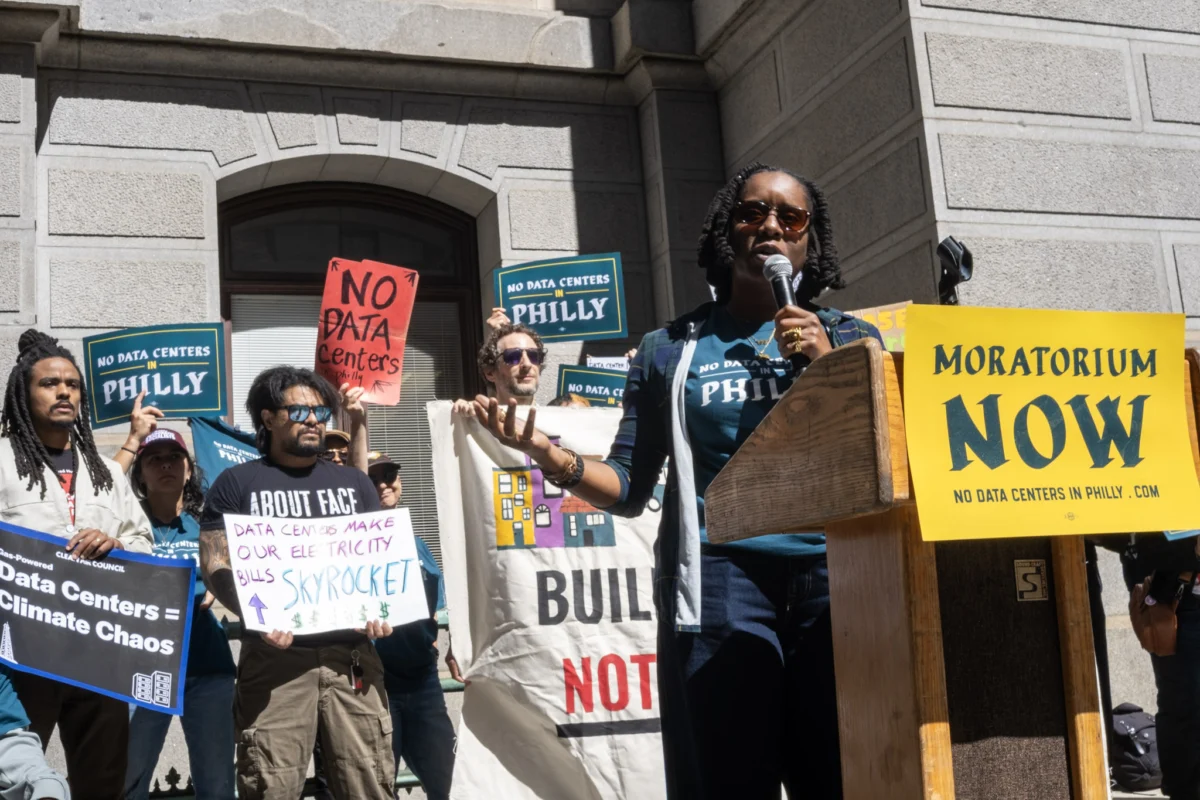
Today, as the managing co-director of Philly Thrive, Pitts is spearheading the "No Data Centers in Philly" campaign. Though formal construction plans have yet to be finalized, the city has identified two prime locations for potential development: one in the Northeast and another in the very neighborhood that defined his childhood struggle.
Chronology of a Growing Conflict
The friction between data center developers and local communities has followed a consistent trajectory across the United States.
- Pre-2020: Data centers were largely viewed as unobtrusive utility assets. They were quiet, provided tax revenue, and required little in the way of public services.
- 2020–2023: As the pandemic accelerated digital transformation, and the subsequent "AI gold rush" arrived, the energy footprint of these facilities surged. Localities began to notice the massive power draws and water usage required for cooling these massive server farms.
- 2024: The public discourse shifted from curiosity to alarm. Reports of grid strain and the repurposing of land for energy-intensive AI processing led to widespread community pushback.
- 2026 (Present): Municipalities including Denver, Indianapolis, Asheville, Charlotte, and Reno have enacted moratoriums. These legislative pauses serve as a "cooling-off" period, allowing local governments to study the long-term impact of the industry on their specific ecosystems.
The most significant recent development occurred in New York, where Governor Kathy Hochul signed an executive order halting the approval of new permits for large-scale data center projects. "Progress shouldn’t arrive with a higher utility bill, deleted water supply, or noise pollution," Hochul stated. "These data centers can only be built, should only be built in places that want them."
Supporting Data: The Cost of the AI Revolution
The pushback is driven by sobering data regarding the sheer scale of the energy demands fueling the AI era. According to recent projections from BloombergNEF, the growth of U.S. data centers is expected to be so explosive that by 2035, the industry will consume more natural gas than Germany and Japan combined.

This represents an enormous escalation in resource consumption—nearly double what the firm projected just nine months ago. While natural gas is often marketed as a "cleaner" fossil fuel, the environmental cost remains high. The combustion of one cubic foot of natural gas releases roughly 60 grams of carbon dioxide. The projected demand increase will result in an additional one million metric tons of greenhouse gas emissions per day.
To put that figure into perspective, this surge in energy demand accounts for roughly 12% of all current U.S. greenhouse gas emissions. Research from Harvard University published in 2021 already links fossil fuel-related air pollution to one in five deaths worldwide—a statistic that community activists fear will only worsen as the appetite for AI compute power grows unchecked.
The "Emergency" Loophole: Why Local Grids Are at Risk
A core fear among residents is that data centers will not only drive up utility costs but also compromise the reliability of the electrical grid.
Annie Fox, an attorney with the Clean Air Council, notes that many planned data centers in Pennsylvania are equipped with hundreds of diesel-powered generators. While these are ostensibly for "emergencies," the reality is often more complex. "The government has already said that the data center should use those [generators] rather than drawing from an overstressed electrical grid during some heat waves," Fox explained.
This creates a vicious cycle: as AI infrastructure contributes to climate change, it causes the very heat waves that force these centers to switch to dirtier, local diesel power, further polluting the surrounding air. For neighborhoods like Grays Ferry, which are already classified as environmental justice communities, this is not just a policy concern—it is a public health crisis.

Official Responses and the Public Outcry
At a rally at Philadelphia’s City Hall on Monday, the mood was defiant. More than 100 residents gathered to voice their opposition to the encroachment of AI infrastructure.
Sonya Sanders, board president of Philly Thrive, delivered a harrowing testimony that resonated with the crowd. Her husband, a long-time Grays Ferry resident who lived in the shadow of the refinery, died of a rare bone cancer in 2020. "In my eyes, they killed him," she told the crowd. "The pollution killed him. I believe he would be here today if he wasn’t silently murdered, because it was the pursuit of profit that killed him."
Her words capture the sentiment of many residents who view the data center industry as a successor to the heavy industrial polluters of the past. Beyond the environmental and health risks, residents also express concerns regarding surveillance and the monopolization of natural resources.
"I’m worried about pollution," said Donna Greenberg, a rally attendee. "I’m worried about surveillance and the fact that they’re going to have access to information they have no business knowing, and I’m concerned that they’re going to be using water and electricity that takes away from the people and the neighborhoods who need it."
Implications: A New Era of Local Governance
The tension between the digital economy and local land use is creating a new blueprint for community activism. The era of silent, unopposed infrastructure development is ending.

- Economic Disillusionment: The promise of "jobs" is increasingly met with skepticism. Modern data centers are highly automated and require few permanent employees once the initial construction phase is complete. Communities are demanding to know whether the tax benefits are worth the long-term utility burden.
- Environmental Justice as a Policy Driver: As seen in Philadelphia, the link between industrial history and current zoning proposals is becoming a powerful tool for activism. Communities with a history of environmental trauma are organizing earlier and with greater intensity.
- The Rise of Moratoriums: City councils are finding that the only way to satisfy public outcry is to press "pause." These moratoriums are forcing developers to come to the table and provide better data on how they intend to mitigate their impact on the grid and local air quality.
As Shawmar Pitts and his peers continue their campaign, the message to industry and government officials is clear: progress cannot come at the expense of human health. The battle for the future of AI will not be won solely in the boardrooms of Silicon Valley, but in the town halls, city council meetings, and neighborhood streets across America.
"I just think that our community standing up and fighting back is tremendous," Pitts concluded. "It takes a lot of effort and a lot of people." As the industry continues to expand, it remains to be seen whether developers will adapt to these community needs or if they will continue to face a rising tide of local resistance that could stall the AI revolution in its tracks.