In a significant update aimed at bolstering publisher visibility and easing administrative overhead, Google has rolled out a suite of enhancements to its Search profiles ecosystem. Designed to bridge the gap between content creators, large media networks, and Google Search and Discover, these latest modifications introduce streamlined management, a dramatic reduction in eligibility barriers, and a refreshed visual interface intended to maximize user engagement.
For digital publishers, media companies, and independent creators, these changes signal a concerted effort by Google to make its ecosystem more accessible and effective. By addressing long-standing pain points—such as the cumbersome nature of managing multiple brand profiles and restrictive subscriber thresholds—Google is positioning Search profiles as an indispensable tool for audience acquisition.
Main Facts: What is Changing in Google Search Profiles?
The latest update to Google Search profiles encompasses three core pillars: account consolidation, lowered barriers to entry, and a complete design overhaul for article presentation.
- Unified Multi-Account Management: Publishers can now claim, verify, and manage Search profiles for multiple sub-brands and subsidiary publications using a single Google login. This replaces the previous, inefficient requirement of switching between distinct Google accounts for every individual brand profile.
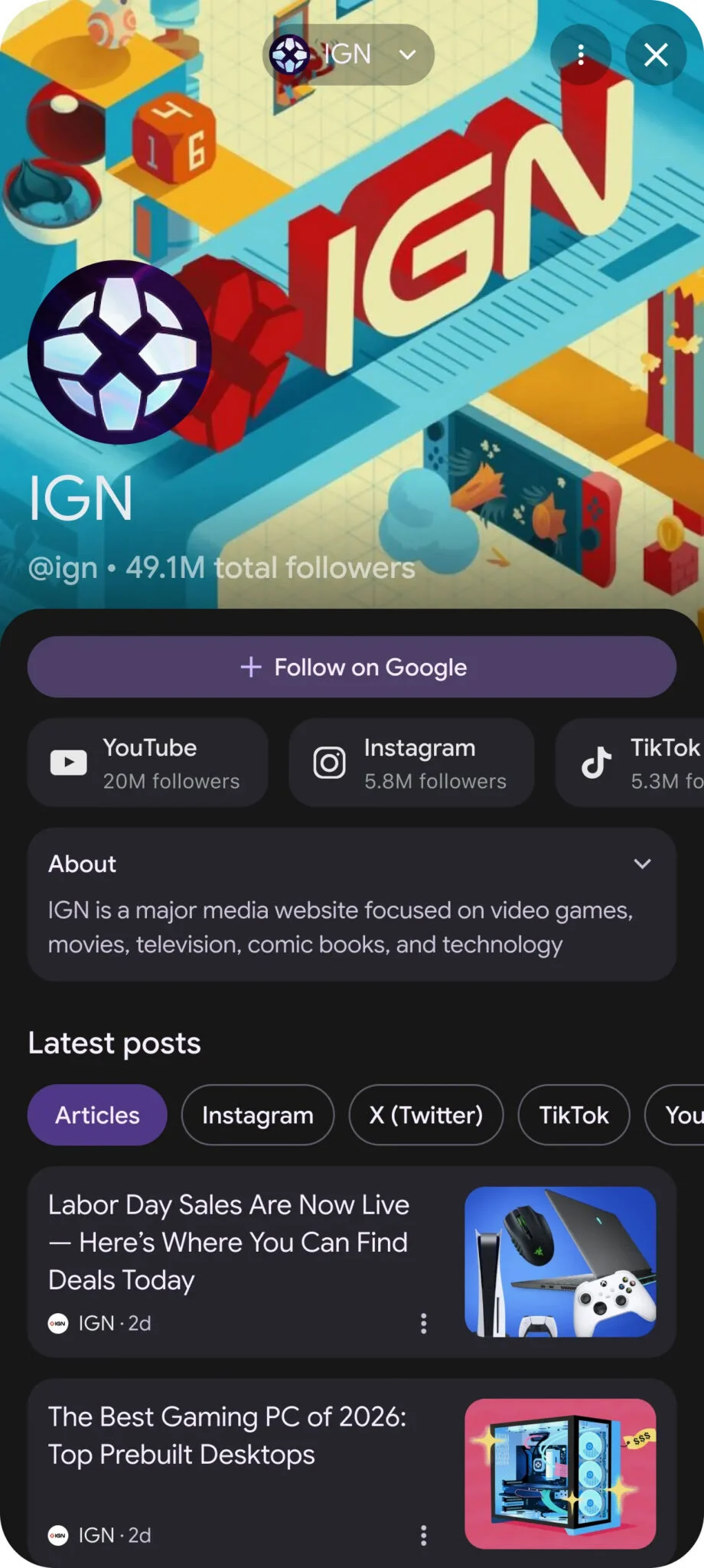
- Drastically Reduced Follower Requirements: Google has slashed the social media and video follower threshold required for profile eligibility. Initially set at an intimidating 100,000 subscribers, and recently lowered to 35,000, the threshold now stands at just 10,000 followers cumulatively across major platforms like YouTube, Instagram, X (formerly Twitter), or TikTok.
- Redesigned Article Displays: Google is introducing a layout refresh specifically engineered to make publisher content more visually compelling. The updates include optimized image thumbnails designed to present articles in their best visual light, alongside increased headline character lengths to give readers more context directly within the feed.
These changes collectively transform how publishers interact with Google’s discovery architecture, offering a cleaner workflow and welcoming a broader tier of mid-sized and niche publications into the fold.
Chronology: The Evolution of Google Search Profiles
To understand the weight of these current updates, it is essential to trace the trajectory of how Google Search profiles have evolved since their inception.

- The Launch Phase: When Google first introduced Search profiles, the feature was positioned as an exclusive tool for established digital media powerhouses. To qualify, creators and publications were mandated to prove a massive digital footprint, requiring a staggering 100,000 subscribers on platforms such as YouTube, Instagram, X, or TikTok. This effectively locked out smaller digital publications and independent journalists.
- The First Concession (One Month Ago): Recognizing that the initial barrier was too steep for a vast segment of the digital publishing community, Google quietly tested the waters by lowering the subscriber requirement down to 35,000 followers. While this opened the door for a wider wave of regional and specialized publishers, industry feedback indicated that further democratization was necessary.
- The Current Expansion (Today): In the latest update communicated to publishers, Google has dropped the threshold even further to 10,000 followers, while simultaneously rolling out multi-account login architecture and a modernized visual design interface. This rapid iteration highlights Google’s eagerness to refine the product based on active publisher adoption and feedback.
Supporting Data: Breaking Down the Metrics
A closer look at the quantitative changes reveals just how drastically Google has shifted its eligibility criteria and structural framework:
- 90% Reduction in Barrier to Entry: Moving from the original 100,000-subscriber mandate down to the current 10,000-follower requirement represents a 90% decrease in the prerequisite audience size. This opens eligibility to thousands of niche blogs, regional news outlets, and growing digital creators.
- Multi-Brand Efficiency: For major publishing houses—such as those operating dozens of lifestyle, tech, or finance sub-brands—the ability to utilize a single login eliminates hours of administrative friction. Previously, managing 10 sub-brands required maintaining and logging into 10 separate Google accounts, creating severe cybersecurity and operational bottlenecks.
- Visual Real Estate Improvements: The newly implemented layout changes expand headline lengths and fine-tune image aspect ratios. In digital publishing, click-through rates (CTR) are heavily influenced by thumbnail quality and headline clarity. Google’s design update ensures that articles displayed via Search profiles retain structural integrity across various mobile and desktop viewports, minimizing awkward image cropping and truncated text.
Official Responses and Ecosystem Context
While Google frequently rolls out algorithmic adjustments without extensive commentary, the search giant has explicitly framed these updates around user discovery and publisher utility.
In official communications shared with the search and publishing community, Google noted that the design updates were specifically engineered to make it “easier for people to discover and dive deeper into your content.” Furthermore, the company emphasized that optimized image thumbnails and longer headlines ensure articles “look their best” when surfaced in competitive search and discovery environments.
Industry analysts have observed that these moves are part of a broader strategy by Google to build stronger, more transparent relationships with content creators amidst a shifting digital landscape heavily influenced by generative AI and changing referral traffic patterns. By making Search profiles easier to manage and more accessible, Google is incentivizing publishers to keep their structured data, branding, and content feeds tightly aligned with Google’s ecosystem.
Implications for Publishers, Marketers, and SEO Professionals
The latest iteration of Google Search profiles carries profound strategic implications for anyone involved in digital publishing, search engine optimization (SEO), and audience development.

1. Democratization of Discovery
By dropping the follower floor to 10,000, Google has effectively democratized a high-value real estate feature. Mid-tier publishers who previously lacked the massive enterprise scale required for elite Google features can now leverage Search profiles to build direct authority, enhance brand recognition, and capture valuable traffic from Google Search and Discover.
2. Streamlined Enterprise Operations
For large-scale media networks, the single-login capability is a massive quality-of-life upgrade. Operations teams can now delegate, monitor, and update Search profiles across entire portfolios of niche sites without running into the authorization walls and credential-sharing risks associated with managing dozens of disconnected Google accounts.
3. Optimization Adjustments for Content Teams
SEO and content teams must now adapt their workflow to account for the new visual display rules. Because Google has increased headline lengths and optimized thumbnail handling, copywriters and visual asset managers must coordinate closely. Ensuring that high-impact keywords fit into the newly expanded headline lengths and providing crisp, uncrowded images will be vital to maximizing the CTR benefits of the redesign.
Looking Ahead
As Google continues to refine Search profiles, publishers are advised to audit their current social media following across YouTube, Instagram, X, and TikTok to verify if they now meet the lowered 10,000-follower threshold. Those who qualify should immediately consolidate their brand architecture under a single login and optimize their imagery and headlines to capitalize on Google’s fresh layout. In an era where organic traffic acquisition is fiercely competitive, these tools offer a vital channel for securing direct mindshare with engaged readers.