For decades, the human-computer relationship has been defined by a physical barrier: the screen. Whether we are tapping on a smartphone, navigating with a mouse, or typing on a keyboard, we have been forced to translate our internal intent into a format that machines can process. But as we approach the next frontier of human-machine symbiosis, the barrier is beginning to dissolve.
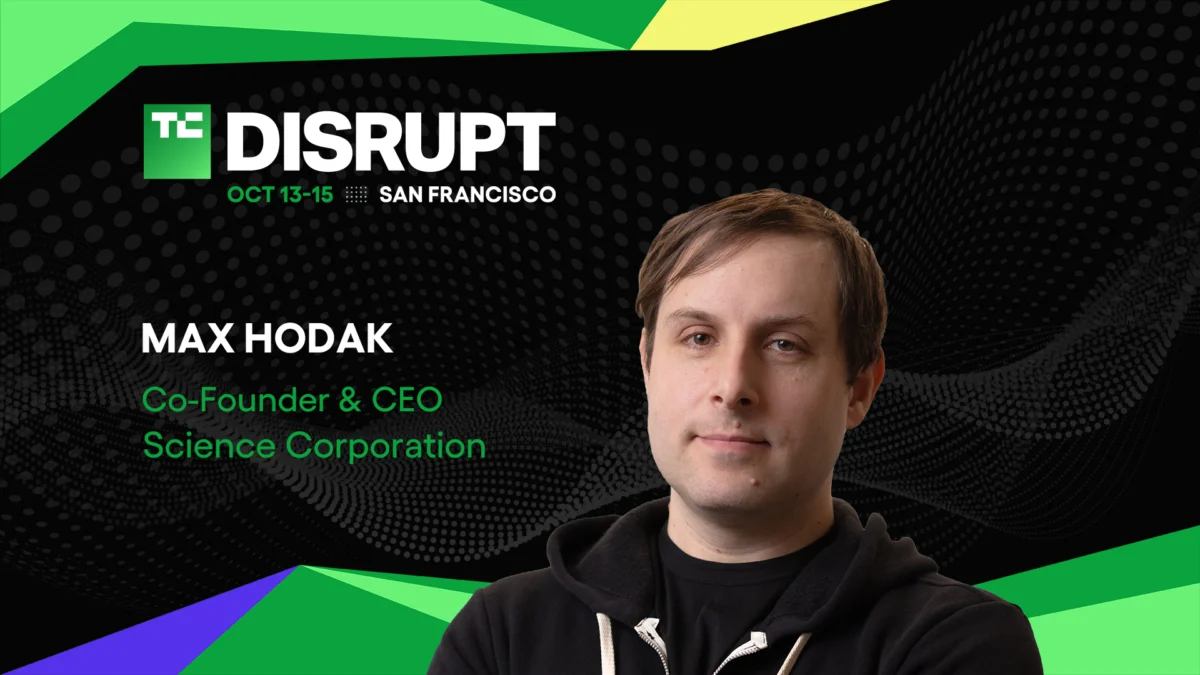
Max Hodak, the visionary CEO of Science Corporation, is leading the charge in this evolution. Having spent years at the forefront of neural engineering, Hodak is now preparing to share his findings on biohybrid brain-computer interfaces (BCIs) with over 10,000 tech leaders, founders, and investors at TechCrunch Disrupt 2026. His session, titled "Beyond Screens," promises to challenge our fundamental assumptions about how we interact with technology, proposing a future where our devices don’t just receive input—they adapt to our neural signals.
The Architect of Interface Evolution
To understand where Max Hodak is going, one must look at where he has been. His career is a masterclass in curiosity and ambition, characterized by a series of calculated risks in the field of biomedical engineering. A self-taught programmer from the age of six, Hodak’s trajectory was solidified during his time at the Duke Pratt School of Engineering. It was there, working in the laboratory of Miguel Nicolelis—a pioneer in the field of brain-machine interfaces—that Hodak first envisioned a world where the human mind and digital architecture could coexist in a fluid, high-bandwidth environment.
His path was not linear. Hodak’s professional journey began with the founding of Transcriptic, a cloud-based robotic laboratory designed to streamline life science research. However, he captured global attention in 2016 when he co-founded Neuralink. As its initial president, Hodak played a pivotal role in shifting the perception of BCIs from the realm of science fiction into the public consciousness. In 2021, he moved on to establish Science Corporation, a venture aimed at pushing the boundaries of neural engineering even further. Today, the company stands as a beacon for those looking to merge advanced biological intervention with cutting-edge computing.
The Chronology of Innovation
The evolution of Science Corporation’s technology has been rapid, moving from theoretical frameworks to tangible medical solutions in a remarkably short window.
- 2021: The Genesis of Science Corp: Founded with a mission to advance neuro-technological capabilities, the company focused on addressing unmet medical needs, specifically in the areas of sensory restoration, cognitive support, and mobility.
- 2023-2025: Rapid Scaling and Capitalization: Through a series of aggressive funding rounds, the company secured $230 million in a Series C round, bringing its valuation to $1.5 billion. This financial backing enabled the company to build a robust team of neurobiologists and engineers.
- 2026: Clinical Breakthroughs: Science Corporation made waves by initiating the first U.S. human trials for its biohybrid interface sensors. This marked a critical transition from laboratory testing to clinical application, proving that the technology could be safely and effectively integrated into the human brain.
The PRIMA Implant: Restoring the Senses
It is crucial to note that Hodak’s work is not purely theoretical. The Science Corp "PRIMA" implant has already yielded life-changing results for patients suffering from severe vision loss. The system utilizes a sophisticated approach: a pair of glasses equipped with a high-resolution camera captures the visual environment, which is then processed and beamed directly onto a chip implanted in the patient’s retina.
This isn’t just about restoration; it is about rewriting the sensory input loop. By bypassing damaged photoreceptors and stimulating the optic nerve directly, Science Corp has effectively "re-wired" the visual system. This success serves as the foundational proof-of-concept for the broader vision Hodak will present at TechCrunch Disrupt: if we can replace a sense, we can eventually replace or enhance any interface.
Supporting Data: The Economic and Clinical Case
The market for brain-computer interfaces is projected to grow exponentially as the population ages and the demand for sophisticated assistive technologies rises. Science Corporation’s $1.5 billion valuation reflects not just the novelty of its tech, but the sheer size of the addressable market.
Beyond sensory restoration, the data suggests that the potential applications for biohybrid interfaces are vast:

- Neurological Treatment: The company is currently exploring ways to utilize brain-implanted sensors to monitor and modulate neural activity to treat Parkinson’s disease and epilepsy.
- Cognitive Enhancement: The sensors are designed to detect early indicators of cognitive decline, potentially offering a therapeutic window that previously did not exist.
- Healing Neural Pathways: By utilizing neuroplasticity, the implants aim to assist in the rehabilitation of damaged brain cells, offering hope for patients with traumatic brain injuries.
The Implications of a Post-Screen World
If the "Beyond Screens" vision comes to fruition, the implications for society are profound. For the startup ecosystem, it implies a fundamental shift in user experience (UX) design. If we no longer require keyboards or touchscreens, the "app" as we know it may disappear.
Rethinking Interaction
The current model of "input-process-output" is slow and cumbersome compared to the speed of human thought. A BCI-driven world would allow for near-instantaneous interaction between a user’s intent and a machine’s execution. This would not only benefit those with disabilities but would eventually transition into the consumer sector, changing how we work, play, and communicate.
The Ethical Landscape
Of course, with such power comes immense responsibility. The integration of technology into the human brain raises critical questions about data privacy, security, and the definition of the "self." At TechCrunch Disrupt 2026, industry leaders will be tasked with discussing how to navigate these ethical minefields. Can we protect the "sanctity of the mind" while also embracing the benefits of augmented neural function? Hodak’s appearance is expected to address these concerns head-on, framing the technology as an empowerment tool rather than a coercive one.
Join the Conversation at TechCrunch Disrupt 2026
The opportunity to hear from one of the most ambitious figures in Silicon Valley is rare. As TechCrunch Disrupt returns to the Moscone West in San Francisco from October 13–15, it will serve as the global hub for these conversations. With over 250 sessions and a dedicated focus on the future of sustainable AI and deep-tech, the event is an essential gathering for anyone looking to understand the next wave of technological disruption.
This year’s programming is particularly dense with AI-centric content across six distinct industry stages. From the ethics of neural integration to the economics of the biotech boom, the event will provide a comprehensive look at the technologies that will define the next two decades.
For those interested in the future of the human experience, securing a pass for Disrupt is more than just attending a conference; it is a chance to witness the blueprint of our next era. With savings of up to $200 available until September 25, the barrier to entry is lower than the barrier between our brains and our machines—though perhaps not for long.
As Max Hodak prepares to step onto the stage, the central question remains: are we ready to move past the screen? The answer will likely dictate the future of human history, and the conversation starts this October in San Francisco.
Secure your spot at TechCrunch Disrupt 2026 today and be part of the dialogue that will shape the next generation of human-machine interaction.