In the rapidly shifting landscape of modern business, marketing teams are under immense pressure to accelerate their output. The industry mantra has become a relentless push for efficiency: draft faster, publish more, and automate the "busywork." However, a growing cohort of industry thought leaders suggests that the obsession with speed may be blinding marketers to a more profound transformation. The real opportunity, they argue, isn’t simply using AI to complete tasks faster—it is using AI to institutionalize expertise by turning human workflows into persistent, autonomous tools.
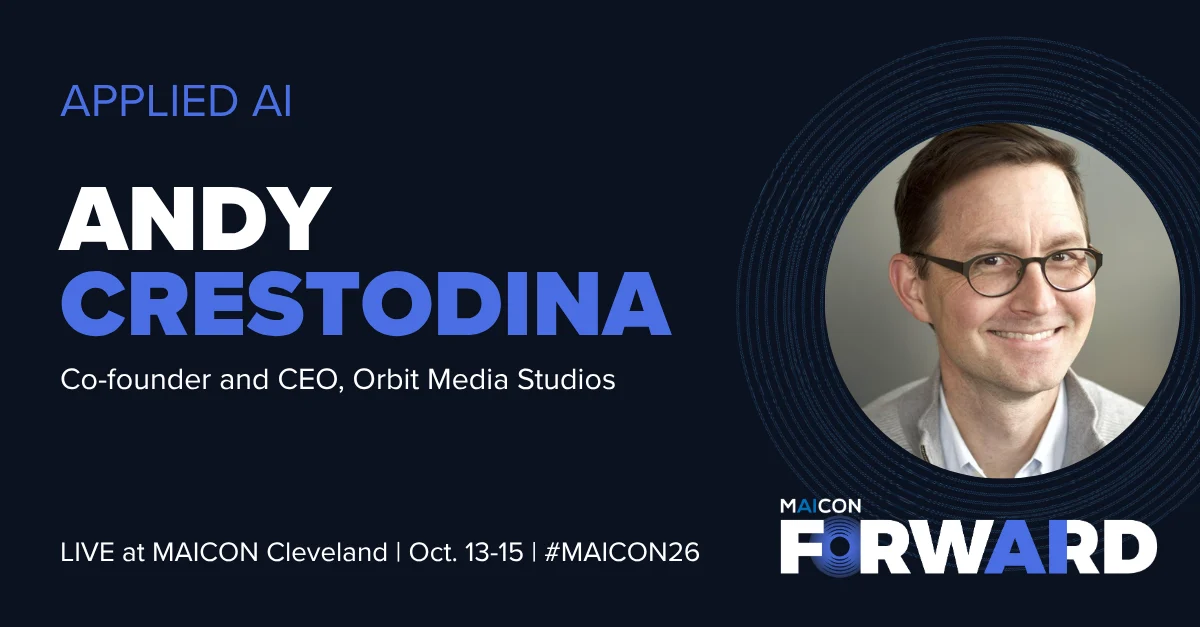
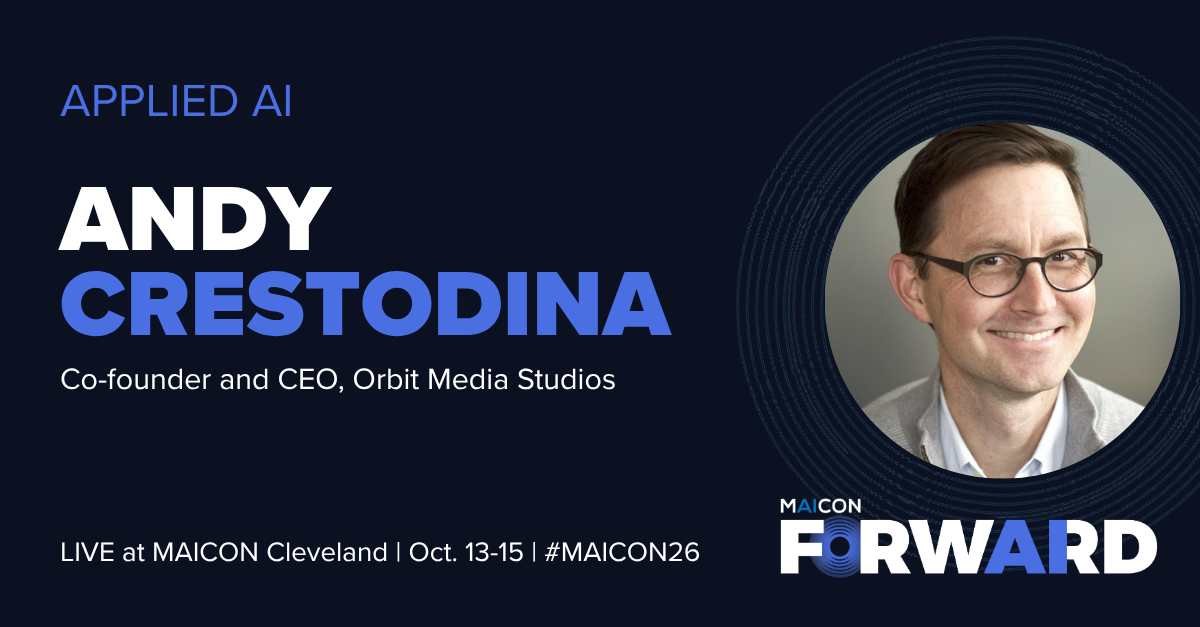
This paradigm shift will take center stage at the Marketing Artificial Intelligence Conference (MAICON) 2026, where Andy Crestodina, Co-founder and CMO of Orbit Media, will deliver a keynote titled, "From Process to Prompt to Automation: How a Marketing Job Becomes a Marketing Tool." His session aims to bridge the gap for marketers who have moved beyond the "experimentation phase" and are now looking to build scalable, high-impact systems.
The Evolution of the Marketing Workflow
For years, the marketing function was defined by manual labor. From content drafting to data analysis and SEO optimization, every task was 100% human-led. As we move into the age of Generative AI, that model is fundamentally breaking.
"The work of marketing has changed," says Crestodina. "Modern marketing workflows evolve in a specific sequence, starting from 100% human execution, moving toward a hybrid model, and eventually reaching a state where the AI handles the bulk of the execution—with humans stepping in only for high-level strategy and final review."
This evolution, however, is not a "plug-and-play" experience. Crestodina emphasizes that effective automation is a product of deliberate, incremental development. "My most powerful assistants evolved gradually," he notes. "I don’t think you can ‘one-shot’ a great AI worker bee. You have to nurture the process, refine the outputs, and build a feedback loop."
The Expert as the Architect
One of the most persistent myths in the AI revolution is that the technology will eventually democratize marketing to the point where domain expertise becomes secondary. Crestodina rejects this premise entirely. In his view, the biggest missed opportunity for marketing departments today is not the selection of a specific Large Language Model (LLM) or software stack; it is the failure to utilize the subject matter experts (SMEs) already present in the organization.
"The best assistants are built by people who already do that job well," Crestodina explains. "The expert at the job is the best suited to evaluate AI’s output, judge it, and make the necessary improvements."
When experts build their own AI tools, they are essentially codifying their professional intuition. AI acts as a "skill-transfer" mechanism, allowing the specialized knowledge of a senior strategist to be replicated by more junior team members. By shifting the focus from "AI as a tool" to "AI as a direct extension of human expertise," organizations can ensure that their automated workflows maintain a level of quality and brand voice that generic AI simply cannot replicate.
English as the New Programming Language
The barrier to entry for building custom marketing tools has effectively evaporated. As Andrej Karpathy, a pioneering figure in the AI space and co-founder of OpenAI, famously observed: "The hot new programming language is English."
Crestodina champions this sentiment, urging marketers to stop viewing themselves as passive consumers of software and start viewing themselves as architects. "Your prompts are code," he says. "They are functions. They are tools. You need to work hard on them, treat them like a product, and iterate based on the outputs you receive."
This transition requires a fundamental change in mindset:
- Stop Chasing Shiny Objects: Instead of constantly hunting for the latest SaaS subscription, focus on building proprietary, internal workflows using the AI models you already have access to.
- Iterate and Test: Treat a prompt like a piece of software. If the output is sub-par, debug the input. If the logic is flawed, refine the instruction set.
- Centralization and Collaboration: Once a prompt achieves a high level of performance, it should not live in a single employee’s chat history. It should be documented, shared, and combined with other prompts to build comprehensive, multi-step workflows.
Implications: The Death of the "One-Off" Mindset
The implications of this shift are profound for marketing leadership. If every team member is empowered to build their own "AI assistant" for their specific role, the organization gains a competitive advantage that is difficult for rivals to replicate.
However, this also creates a management challenge. Without a centralized approach to "Prompt Engineering," organizations risk creating silos of disconnected tools. To scale successfully, companies must develop a culture where AI-driven workflows are audited, improved, and standardized.
Crestodina’s session at MAICON 2026 will address these hurdles directly, providing a roadmap for:
- Workflow Mapping: Identifying which manual processes are actually ripe for automation versus those that require a human touch.
- Building Reusable Assets: Converting deep, specialized knowledge into prompt libraries that can be used by team members of varying skill levels.
- The "Productization" of Tasks: Shifting the team’s psychology from "performing a task" to "maintaining an automated system."
Bridging the Gap: Performance and Strategy
The urgency of this message is underscored by the current state of digital marketing. Crestodina’s career, spanning over 25 years, has been defined by a focus on "Content Chemistry"—the idea that content must be backed by measurable performance and scientific rigor. His observation remains consistent: most company websites fail to consistently drive qualified leads because they lack a systematic, repeatable framework for content creation and distribution.
By adopting an "AI-as-a-tool-builder" approach, marketers can finally address the consistency problem. When the process of creating high-quality content is automated through a well-crafted, expert-led prompt, the output becomes more predictable, more aligned with business goals, and more scalable.
Looking Toward MAICON 2026
As the marketing industry gathers at MAICON 2026, the focus will move beyond the initial hype surrounding ChatGPT and other LLMs. The conversation is maturing. Attendees will hear from over 50 industry leaders who are moving past the "novelty" stage and into the "implementation" stage.
The goal of this year’s conference is to provide the frameworks necessary for leadership to make sense of the chaos. For those who attend, the takeaway will be clear: stop looking for the "magic tool" that will solve your marketing problems. The tool is already here, and it lives in your expertise. Your job is to translate that expertise into the code of the future—the prompt.
As Crestodina puts it, "The only gap between where you are and where you want to be is your own imagination."
For marketing teams, the message is simple: Stop shopping for tools. Start building your own. The future of the profession belongs to those who view their daily work not as a series of chores to be completed, but as a series of systems to be built.
The Marketing Artificial Intelligence Conference (MAICON) 2026 will host leading thinkers, strategists, and practitioners. For those interested in attending, registration options and session schedules are now available through the official Marketing AI Institute portal.