SAN FRANCISCO — In the high-stakes ecosystem of venture capital and startup scaling, boardrooms are constantly searching for the silver bullet that predicts executive triumph or failure. Founders and investors pore over glossy resumes, Ivy League pedigrees, and polished interview performances, looking for indicators of future greatness.
Yet, according to deep longitudinal insights drawn from tracking over 30 venture investments, 10 unicorns, and hundreds of portfolio company board meetings, the most reliable metric for predicting executive survival has nothing to do with pedigree. It comes down to a single, uncomfortable truth: whether that leader still rolls up their sleeves and does the actual work.
Main Facts: The Death of the "Pure Strategist"
For decades, conventional corporate wisdom has preached a distinct gospel of vertical mobility: as leaders ascend to the C-suite or Vice President level, they must graduate from "working in the business" to "working on the business." Executives are told to divest themselves of tactical execution, delegate operational friction downward, and elevate themselves into pure strategy and capital allocation.
According to seasoned investors who have watched this playbook backfire repeatedly, that dogma is fundamentally flawed—particularly for companies scaling before the $250 million to $1 billion Annual Recurring Revenue (ARR) milestones.
Across every major departmental function—revenue, technology, marketing, and customer success—the pattern is identical. Executives who distance themselves from the fundamental mechanics of their discipline lose touch with market realities, misdiagnose structural bottlenecks, become organizational bottlenecks, and ultimately lead their companies toward stagnation or failure. In the modern era, amplified by the rapid proliferation of artificial intelligence, this productivity and insight gap is expanding exponentially.
Chronology: The Anatomy of Executive Decay
To understand how executive failure occurs, one must trace the typical lifecycle of a high-level hire who abandons tactical execution.
Phase 1: The Honeymoon and Delegation (Months 1–6)
A newly appointed C-level executive enters the organization with a strong reputation. Trusted by the founder because of their impressive corporate background, they immediately begin installing "process" and "frameworks." To project high-level leadership, they step back from direct execution. They stop taking sales discovery calls, writing code, drafting copy, or speaking directly to churn-prone accounts.
Phase 2: The Blind Spot Emerges (Months 6–12)
Because the executive is relying entirely on second-hand dashboard reports and middle-management summaries, subtle shifts in the market are missed. Conversion rates begin to dip, feature delivery stalls, pipeline velocity slows, or customer churn ticks upward. Because the leader has not touched the craft recently, they misdiagnose the root cause. They blame "the team" or "market headwinds" rather than identifying nuanced pricing objections, architectural technical debt, or shifting buyer preferences.
Phase 3: The Bottleneck and Decline (Months 12–24)
By the time the macro-metrics reflect the internal decay on standard dashboards, the crisis is already deeply entrenched. Because the executive cannot step into the trenches to demonstrate a fix—whether by personally rescuing a massive enterprise deal, debugging a complex production issue, or running a high-yielding growth experiment—they resort to finger-pointing and heavy-handed micromanagement. Morale plummets, top talent departs, and the board is forced into an expensive, disruptive replacement cycle.
Supporting Data: Functional Breakdowns Across the C-Suite
The empirical evidence from dozens of high-growth technology companies reveals how this phenomenon manifests within specific leadership domains.
1. The CRO Who Doesn’t Sell
The Chief Revenue Officer (CRO) who treats sales leadership strictly as a spectator sport is a ticking time bomb. The best-performing revenue leaders—those capable of scaling a company from $5M to $50M+ ARR—never stop carrying a conceptual bag. They remain active in the CRM, join enterprise discovery calls, and directly negotiate high-stakes contracts.
- The Cost of Detachment: CROs who isolate themselves in forecasting meetings struggle to diagnose why conversion rates fluctuate. Conversely, quota-carrying leaders instantly recognize emerging market objections because they encountered them firsthand three times that very week.
2. The CTO Who Doesn’t Code
The Chief Technology Officer (CTO) who retreats entirely to architectural whiteboards and delegates every line of code to subordinates inevitably loses touch with engineering reality. The most effective technical leaders remain embedded in the codebase multiple times a week.
- The Impact of AI: In the age of AI coding assistants like Cursor and Claude, this hands-on requirement has intensified. A technical executive leveraging modern AI tooling can be exponentially more productive. A CTO who refuses to code has fallen severely behind, unable to accurately gauge why a feature takes three weeks instead of three days, reducing their leadership to superficial complaints that "engineering is slow."
3. The CMO Who Doesn’t Generate Pipeline
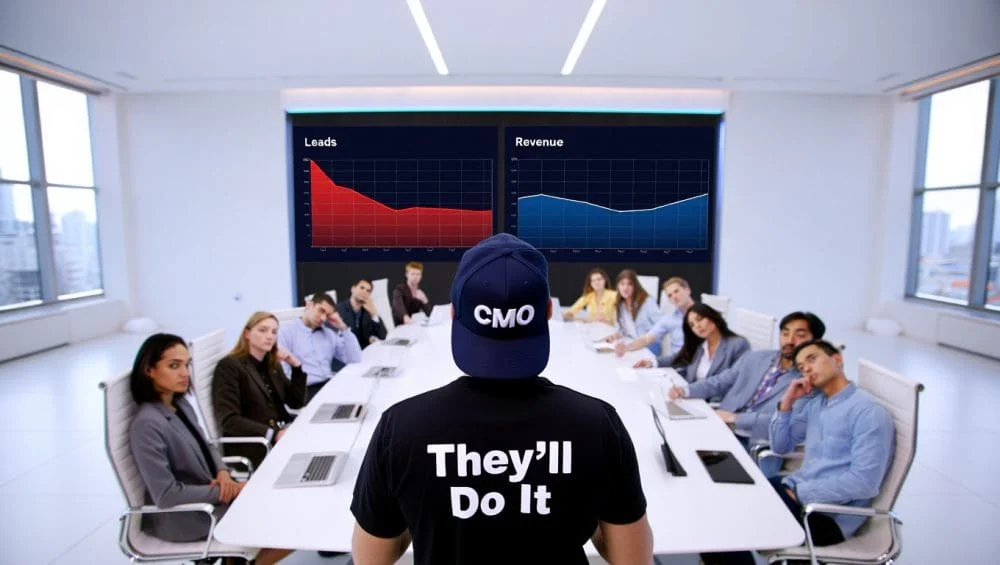
Modern marketing leadership often suffers from an over-indexing on high-level "brand positioning" at the expense of tactical execution. Struggling Chief Marketing Officers (CMOs) delegate all content creation, campaign building, and channel optimization, turning into detached brand theorists. Elite CMOs, by contrast, stay dirty with the tactics: they write copy, run live growth experiments, and build campaigns themselves. Marketing is simply too nuanced and fast-moving to direct effectively from a 30,000-foot altitude.
4. The CCO Who Isn’t Meeting Customers
Customer Success is fundamentally a relationship business, not a reporting exercise. Chief Customer Officers (CCOs) who hide behind spreadsheet dashboards and churn-rate analytics miss the early warning signals of client dissatisfaction. Winning CCOs maintain a rigorous schedule of direct, in-person customer meetings, hearing the unvarnished truth about product flaws or service gaps weeks or months before they register on executive scorecards.
Official Perspectives and Expert Insights
Venture capital veterans who have navigated multiple market cycles emphasize that the conventional advice of "working on the business, not in the business" is frequently misinterpreted by early- to mid-stage companies.
"The conventional wisdom tells us that past $10M or $50M ARR, executives should become pure strategists and capital allocators," notes one seasoned venture investor with a portfolio spanning over 30 companies and more than 10 unicorns. "That is fundamentally wrong for scaling companies. At $50M ARR, a minor two-point decrease in win rates costs a company upwards of $1 million annually. At $100M ARR, that number doubles. You cannot afford to be disconnected from what is actually happening in deals, code, campaigns, and customer conversations."
Industry analysts point out that execution breeds leverage. When a top-tier executive personally closes a landmark deal, writes a foundational piece of code, or builds a breakout marketing campaign, they achieve three distinct outcomes:
- They generate immediate, tangible economic value.
- They set an unassailable performance standard for their teams to emulate.
- They maintain the deep credibility required to effectively coach, mentor, and evaluate junior and mid-level talent.
Implications: Reshaping Hiring Strategies for the AI Era
As the business landscape enters a period of hyper-acceleration driven by generative AI, the divide between operational "doers" and passive "delegators" is widening into a chasm.
For founders, CEOs, and executive search committees, these realizations demand a radical overhaul of the hiring and evaluation playbook. To avoid costly C-suite missteps, organizations must adopt rigorous testing protocols during the recruitment lifecycle:
- In Interviews: Move past rehearsed pedigree questions. Force candidates into live simulations where they must write copy, evaluate a messy sales transcript, debug a product roadmap, or analyze raw customer feedback data in real time.
- In References: Actively probe former peers and subordinates about whether the candidate routinely rolled up their sleeves or if they isolated themselves in high-level slide decks.
- In the First 90 Days: Establish clear expectations that the executive must master the tactical baseline of the organization before delegating it away.
The Verdict
The data from a decade of unicorn scaling is unambiguous. The executives who win—and who guide their companies safely through the perilous waters of hyper-growth—are those who refuse to "graduate" out of the craft.
Whether operating as a CRO, CTO, CMO, or CCO, leadership in modern high-growth enterprises requires a rare duality: the ability to build and lead teams, combined with the unyielding discipline to stay close to the actual work. For hiring managers and executives alike, the message is stark: stay hands-on, or prepare to become obsolete.