Main Facts
The landscape of WordPress security has undergone a seismic shift, fundamentally altering how vulnerabilities are discovered, exploited, and patched. Artificial intelligence has moved the cybersecurity battleground from a traditional contest of human wits to an automated war of computational power.
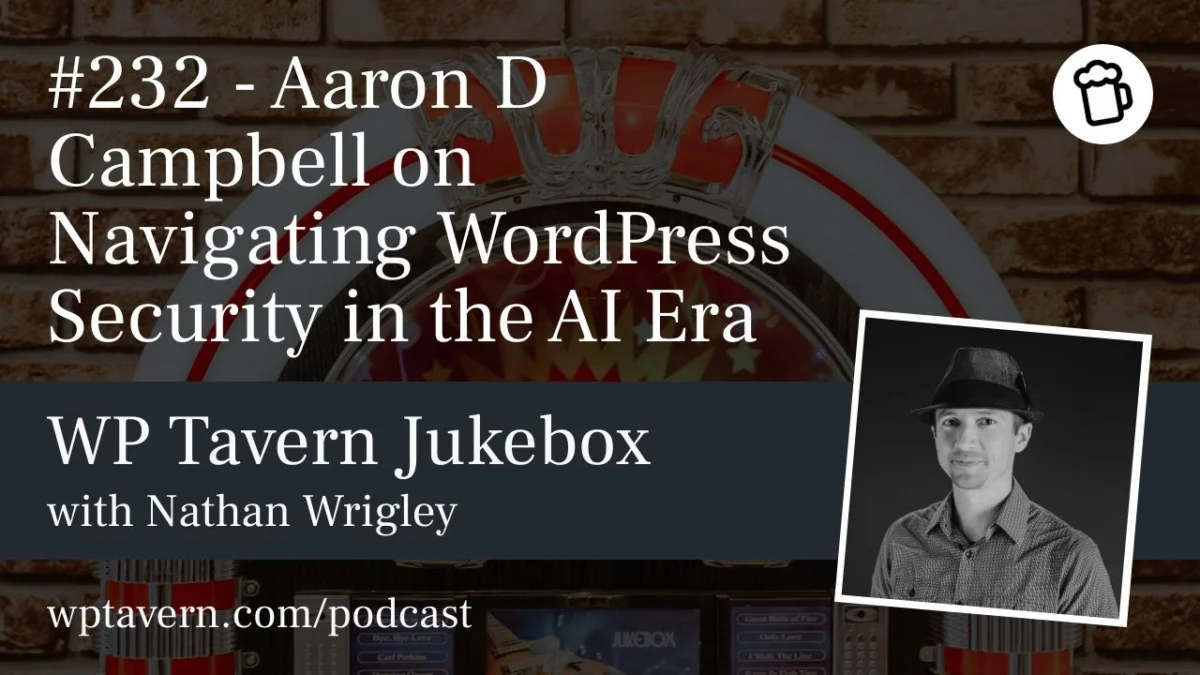
Aaron D. Campbell, a 25-year internet veteran, former leader of the WordPress Security Team, and current Chief Technology/Security stakeholder at Monarx, sat down with WP Tavern’s Nathan Wrigley at WordCamp US to discuss these unprecedented challenges.
According to Campbell, AI agents are now capable of orchestrating complex, multi-layered attacks at machine speed—finding and chaining vulnerabilities that human researchers would likely never conceive. While this presents an overwhelming threat to software managers and end users alike, the WordPress ecosystem is actively pivoting toward automated defenses, cross-industry threat intelligence sharing, and proactive security measures to stay ahead of the curve.
Chronology
To understand the current state of WordPress security, industry experts look back at how the threat model has evolved over the past quarter-century:
- The Pre-AI Era (Early 2000s to ~2020): Security was largely defined by human-driven research. Developers and adversaries alike manually combed through source code, repositories, and server setups. Gaps between vulnerability discoveries and active exploits often spanned weeks or months, giving development teams ample time to issue patches.
- The Rise of Autonomous Agents (~2022–2023): Generative AI and advanced language models began entering the mainstream. Bad actors quickly adopted these tools to automate code analysis, dramatically shrinking the window between disclosure and exploitation down to mere days.
- The Modern Era (2024 and Beyond): The battleground has evolved into "AI versus AI." Adversaries use autonomous agents to chain complex vulnerabilities, executing multi-vector attacks in minutes. In response, security platforms, hosting providers, and the WordPress Security Team have integrated AI-driven testing rigs and rapid-response coordination networks to neutralize threats before they can hit the broader web.
Supporting Data
The scale and speed of modern web attacks present stark metrics for web administrators:
- Footprint Targets: WordPress powers tens of millions of websites globally, making it a primary target for automated scanners. However, popular hosting infrastructures (such as GoDaddy, Newfold Digital, and others) are equally targeted for their vast compute resources.
- The 5-Hour Window: Research from Monarx and Patchstack indicates that for major vulnerabilities, the average window between public disclosure and active exploitation has compressed to approximately five hours.
- Rapid Spikes: During recent high-profile incidents—such as the
wp2shellexploit—monitoring networks registered massive spikes in exploitation attempts within 30 minutes of patch releases. - 11-Page Exploit Chains: Modern AI-assisted vulnerabilities are no longer simple single-line code flaws. Complex reports detailing multi-step, overlapping attack vectors now span upwards of 11 pages of instructions for a single viable exploit.
Official Responses and Ecosystem Adaptations
Faced with automated, 24/7 threats, the WordPress community and its security partners have revamped their defensive strategies.
Cross-Platform Threat Intelligence
Monarx operates a white-label security service deployed across numerous hosting providers. By monitoring files, runtimes, and Web Application Firewall (WAF) layers across different host architectures, the platform can identify novel malware in isolated pockets and automatically deploy global blocks before threats spread industry-wide.
The WordPress Security Team & Private Coordination
The WordPress Security Team has institutionalized rapid-information sharing. When a core or plugin vulnerability is triaged and validated, critical details are disseminated through private channels to major infrastructure players—such as Cloudflare and enterprise hosting providers—allowing them to deploy WAF rules and block rules before public patches are officially pushed out.
"Protect the Shire" and Supply Chain Safeguards
Recent governance innovations, such as the WordPress community’s "Protect the Shire" initiative, introduce deliberate time-bound delays (roughly six hours) on certain plugin updates. While this might seem counterintuitive in an era where milliseconds count, Campbell argues that it provides a vital safeguard against supply chain attacks—preventing malicious actors from quietly slipping backdoors into popular codebases via hijacked developer accounts. Emergency exceptions, however, remain swiftly actionable via the Security Team.
Implications
The integration of artificial intelligence into cybersecurity carries profound implications for developers, site administrators, and the broader web economy:
1. The Shift from Reactive to Proactive Posture
Because autonomous agents never sleep and can exploit newly found vulnerabilities within minutes, traditional reactive patching is no longer sufficient. The security industry must shift toward behavioral monitoring, advanced stack protection, and predictive modeling to anticipate flaws before adversaries discover them.
2. Open Source as a Superior Defense Model
Despite the risk that open-source repositories are transparently scannable by AI-driven adversaries, Campbell maintains that open source remains the superior model. The sheer volume of thousands of legitimate developers, security researchers, and automated testing rigs inspecting the code globally vastly outweighs the adversarial threat, resulting in more secure software built at a rapid pace.
3. Actionable Advice for Everyday Users
For the typical WordPress user who may not possess deep technical or security expertise, survival in the AI era relies on systemic delegation and basic hygiene:
- Enable Auto-Updates: Rely on the collective expertise of the WordPress Security Team by keeping Core, themes, and plugins updated automatically.
- Choose Security-Minded Hosts: Query hosting providers on their layered security practices (such as runtime monitoring and WAF protection) to ensure professional infrastructure-level defense.
- Monitor Compromised Credentials: Utilize services like Have I Been Pwned or dark web monitoring tools. AI agents excel at scraping decades of historical breach data and cross-referencing old passwords against modern accounts; mitigating credential reuse is more critical than ever.
As the cybersecurity landscape continues to blur into complex, AI-driven battlegrounds, the human element remains vital—not as the manual processor of logic, but as the strategic decision-maker guiding the tools that keep the open web safe.