By Michael Stelzner
Founder, Social Media Examiner & AI Business Society
As the artificial intelligence landscape matures, the conversation among business leaders and creators has fundamentally shifted. We are moving rapidly past the era of casual prompting and isolated chat windows. Today, the focus is squarely on structural integration: converting legacy custom assistants into streamlined operational skills, deploying autonomous AI employees to handle multi-step workloads, and digesting a massive wave of platform updates from industry giants like Google and Meta.
This comprehensive briefing explores the mechanics of transitioning from custom GPTs to agile AI skills, insights on training AI workers from veteran automation experts, and a breakdown of the week’s critical industry developments.
Main Facts
The modern generative AI ecosystem is undergoing a architectural overhaul. Major platforms are actively phasing out legacy frameworks—such as traditional custom GPTs and Gemini Gems—in favor of dynamic, slash-command-driven "Skills." This shift allows users to invoke specialized instructions instantly within ongoing conversations.
Simultaneously, industry pioneers are teaching organizations how to graduate from basic task-by-task querying to deploying fully realized "AI employees." These automated systems rely on centralized corporate knowledge bases—often referred to as a "business brain"—to execute complex workflows autonomously.
Parallel to these workflow shifts, major tech providers have rolled out aggressive ecosystem updates:
- Google has expanded Gemini Live into an agentic productivity assistant, introduced professional video controls in Gemini Omni 1.1 Flash, deployed agentic video understanding across its model lineup, launched the advanced speech-to-text model Gemini 3.5 Transcribe, and integrated Google Pics for AI image editing within Workspace.
- Meta has restructured its monetization strategy by rolling out tiered Meta AI Core and Meta AI Premium subscriptions, bundling enhanced generative capabilities with popular social platform perks.
Chronology of Recent Developments
The evolution of generative AI tools has accelerated significantly over recent months, marked by a clear timeline of architectural and product releases:
- Early-to-Mid Phase (The Custom Assistant Era): Platforms popularized custom GPTs and Gemini Gems, allowing users to build specialized chatbots. However, these tools remained siloed, requiring users to navigate away from main workflows to access them.
- The Claude Skills Breakthrough: The introduction of slash-command "Skills" redefined user experience. By typing a simple slash, users could summon specialized functionalities directly inside a conversation, eliminating friction.
- The Platform Shift (Current Quarter): ChatGPT and Gemini began mirroring the streamlined architecture of Skills, prompting a mass migration away from traditional custom GPTs and Gems. Concurrently, experts like Callan Faulkner began widely championing the transition from human-prompted tasks to automated AI employee pipelines.
- Recent Product Drops: Google updated Gemini Live with multi-step voice agent capabilities, released Omni 1.1 Flash with 4K video editing, introduced agentic video understanding, and launched Gemini 3.5 Transcribe alongside Google Pics. Meanwhile, Meta introduced structured AI subscription tiers (Core and Premium) to monetize advanced generation features.
Supporting Data and Technical Metrics
The latest generation of AI infrastructure is not only smarter; it is measurably more efficient. Recent technical benchmarks released by Google and industry case studies highlight significant performance gains:
- Token and Cost Reductions: Google’s new agentic video understanding approach—deployed across Gemini 3.7 Flash, 3.6 Flash, and 3.5 Flash-Lite—allows the models to selectively inspect crucial video moments rather than processing full files at a fixed rate. This architectural shift cuts token usage by up to 88% and operational costs by up to 66%.
- Accuracy Improvements: Despite consuming a fraction of the computing resources, agentic video understanding improves retrieval and analysis accuracy by up to 7%.
- Multilingual and Audio Scaling: Gemini 3.5 Transcribe has been engineered to process audio and adapt to specialized vocabularies across more than 85 languages, handling complex formatting, correction interpretation, and filler-word removal natively.
- Scaling Human Expertise: Industry training frameworks, such as those developed by automation expert Callan Faulkner, have successfully scaled to train over 20,000 businesses in closing the gap between casual AI chat and enterprise-grade autonomous workflows.
Official Responses and Expert Insights
The Mechanics of Migrating to AI Skills
With ChatGPT and Gemini phasing out legacy custom GPTs and Gems, technical workflows require updating. Industry guidelines outline a four-step migration process to future-proof custom assistants:
- Extract Core Assets: Gather existing instructions, knowledge bases, and reference files from legacy custom GPTs or Gems.
- Initialize via Chat: Open the native Skills creation area within the target platform and initiate a new Skill generation process through dialogue.
- Format and Contextualize: Attach reference files, clearly articulate the operational goal, and paste historical instructions. Prompt the AI to reformat the data into a clean, compliant Skill structure.
- Iterate and Test: Run diagnostic tests on the newly minted Skill. Refine the underlying instructions iteratively until the output matches or exceeds previous performance benchmarks.
Bridging the Gap to Autonomous AI Employees
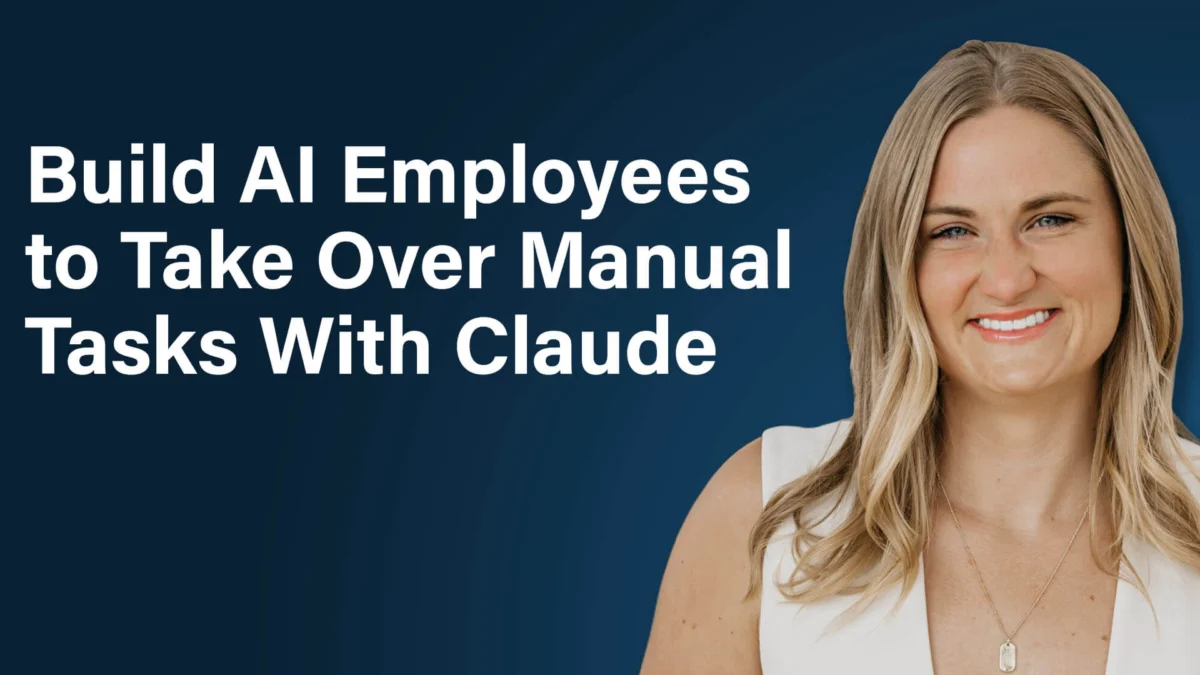
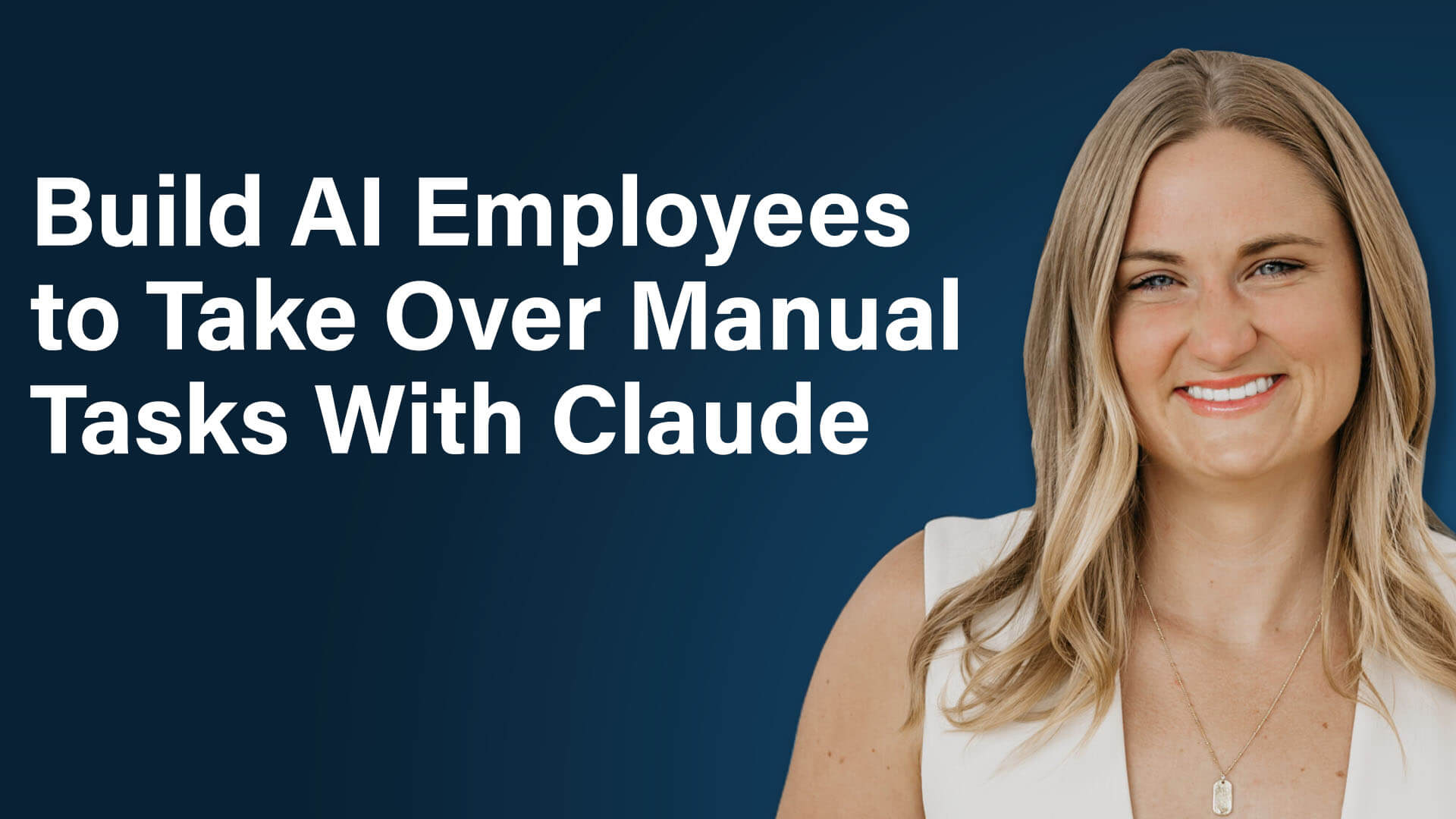
Most organizations report daily AI usage, yet struggle to achieve true operational leverage. Callan Faulkner, founder of The Uncommon Business and creator of the Automate to Accelerate program, emphasizes that chatting with an AI is fundamentally different from building a repeatable system.
"There is a massive gap between chatting with AI and building trained AI employees that actually do the work for you." — Callan Faulkner
Faulkner outlines several non-negotiable pillars required to build functional AI employees:
- The "Business Brain" Prerequisite: An AI cannot perform without localized, authoritative context. Centralized repositories containing brand guidelines, pricing structures, standard operating procedures (SOPs), and historical successes are mandatory. Disorganized cloud storage folders will invariably yield erratic AI outputs.
- The Pipeline Progression: True automation follows a strict trajectory: initial conversation, human-guided interview, skill refinement, and finally, scheduled task automation that operates entirely without human intervention.
- The Persistence Threshold: Building an AI employee that accurately mimics an organization’s distinct brand voice requires rigorous, iterative training. Faulkner notes that many practitioners abandon the process prematurely, failing to invest the necessary time in error correction and prompt refinement.
Platform Innovations: Google and Meta
Google’s recent product announcements signal a definitive push toward agentic ecosystems. By bridging Gemini Live with applications like Gmail, Spark, Daily Brief, and Personal Intelligence, Google is shifting the assistant paradigm from reactive search to proactive coordination.
Furthermore, Google’s integration of professional video controls (scene extensions, first-to-last-frame interpolation, and 4K output) into Gemini Omni 1.1 Flash provides content creators with production-grade multimedia tools.
On the social media monetization front, Meta’s rollout of Meta AI Core and Meta AI Premium subscriptions establishes a clear tiered marketplace for heavy generators. By bundling high-capacity image and video creation tools with platform-specific verifications and support packages across Facebook, Instagram, and WhatsApp, Meta is positioning advanced AI capabilities as an essential utility for modern digital creators and businesses.
Implications for Businesses and Creators
The convergence of Skills architecture, agentic workflows, and modular AI subscriptions carries profound implications for the global business community:
1. Operational Efficiency and Cost Savings
The reduction in token usage and operational overhead—exemplified by Google’s agentic video processing updates—means that deploying heavy multimedia and analytical AI workflows is becoming increasingly cost-effective for small-to-medium enterprises. Companies can execute complex data analysis and media production tasks at a fraction of last year’s computational cost.
2. The Death of the Disorganized Knowledge Base
Organizations can no longer afford fragmented digital workspaces. To successfully train AI employees or deploy robust Skills, companies must audit, clean, and centralize their internal data. Brand voice guidelines, operational playbooks, and historical project files must be structured logically to serve as the foundational "business brain" for automated agents.

3. A Shift in Human Labor Roles
As voice assistants transition into agentic productivity tools (capable of managing inboxes, executing multi-step workflows, and running scheduled tasks autonomously), the role of knowledge workers is pivoting from manual execution to oversight and quality control. Professionals who master the art of training and auditing AI skills will command a distinct competitive advantage.
Summary
The era of treating AI as a mere novelty or a glorified search engine has officially ended. By converting legacy assistants into agile Skills, structuring robust internal knowledge repositories, and leveraging the latest agentic toolsets from Google and Meta, forward-thinking businesses can transition from manual task management to a scalable, automated workforce.