In the rapidly evolving landscape of open-source technology, long-term project survival depends on a simple, vital metric: the continuous onboarding of fresh minds. While much of the tech industry focuses on the latest core updates, software features, and venture capital milestones, a quieter, more profound movement has been taking shape beneath the surface of the WordPress ecosystem. Over the past year, the global WordPress education space has experienced a massive surge in momentum, shifting from grassroots experiments into a structured, highly organized international movement.
Led by dedicated community builders and educational strategists, the WordPress education initiative operates on three core pillars: The WordPress Credits Program, Campus Connect, and Student Clubs. These programs are designed to lower entry barriers, bridge the gap between academia and open source, and ensure that the next generation of developers, designers, and marketers find a welcoming home in the WordPress community.
Main Facts: The Pillars of WordPress Education
The architecture of the WordPress educational ecosystem relies on three distinct yet highly complementary initiatives, each tailored to different age groups, institutional frameworks, and levels of commitment:
- The WordPress Credits Program: A structured contribution-based internship initiative by the WordPress Foundation that pairs higher education students with the global open-source community. Students complete 50 to 150 hours of coursework over an academic semester, earning official university credits while contributing to Make WordPress teams under the guidance of vetted community mentors.
- WordPress Campus Connect: A flexible event series designed for institutions ranging from elementary schools and high schools to local public libraries and vocational training centers. Operating as a lower-barrier entry point, these single or multi-day events introduce learners to the vast capabilities of WordPress beyond basic blogging—covering design, marketing, and web development.
- Student Clubs: A peer-led, sustainable learning model mirroring local meetups. Established within educational campuses following a Campus Connect event, these clubs allow students to gather regularly—typically once or twice a month—to collaborate, learn from curated resources, mentor junior peers, and build real-world skills together.
Chronology: From Organic Experiments to a Global Movement
The modern structure of WordPress education did not emerge overnight; it is the result of years of trial, relationship-building, and localized experimentation.
- 2014–2016 (Laying the Groundwork): Long-time contributors like Maciej Pilarski entered the ecosystem through grassroots volunteering at WordCamp events, paving the way for institutional thinking around community outreach. Meanwhile, the Learn WordPress platform underwent major relaunches, establishing a centralized repository of training materials.
- 2024 (Inception of Campus Connect and Credits): Driven by community organizers like Anand Upadhyay and Pooja, the WordPress Campus Connect concept began taking shape as boots-on-the-ground advocates forged direct ties with local universities. Simultaneously, Isotta launched the pioneering WordPress Credits Program as an experiment at the University of Pisa, onboarding humanity students to prove that open-source contributions could align with academic credits.
- May 2025 (Official Recognition): WordPress Campus Connect officially achieved status as an official WordPress event series, providing a standardized framework for organizers worldwide. At this stage, the Credits Program was operating in a handful of European institutions.
- Late 2025 to Present (Turbocharged Growth): The educational space experienced explosive scaling. The Credits Program expanded rapidly from a handful of universities to 21 institutions globally—reaching as far as Uganda following connections made at major international gatherings. Concurrently, Campus Connect crossed the threshold of 42 completed events across 71 participating institutions, reaching over 5,500 students.
Supporting Data: Measuring the Human Impact
While corporate initiatives often measure success in strictly financial terms or short-term key performance indicators (KPIs), the WordPress educational movement tracks progress through adoption, institutional retention, and community integration:
- 5,500+ Students Reached: Through Campus Connect alone, thousands of learners have been introduced to the platform, with the vast majority successfully building and launching live websites by the end of their sessions.
- 21 Partner Institutions: The Credits Program has officially onboarded 21 higher-education establishments worldwide, bridging traditional academia with open-source collaboration.
- 450 Enrolled Students vs. 75 Graduates: With 450 students globally enrolled in the rigorous Credits Program and 75 successful graduates to date, the initiative focuses on quality mentorship and deep engagement over vanity metrics.
- Spontaneous Community Integration: In regions like Ajmer, India, targeted campus outreach resulted in a 50% student demographic at local Women’s Day events, with student tickets selling out within a single day—shattering organizers’ conservative marketing expectations.
Official Responses: Insights from Initiative Leaders
The success of these programs is deeply tied to the passionate individuals steering them day-to-day. Their insights reveal the underlying philosophy driving the community forward:
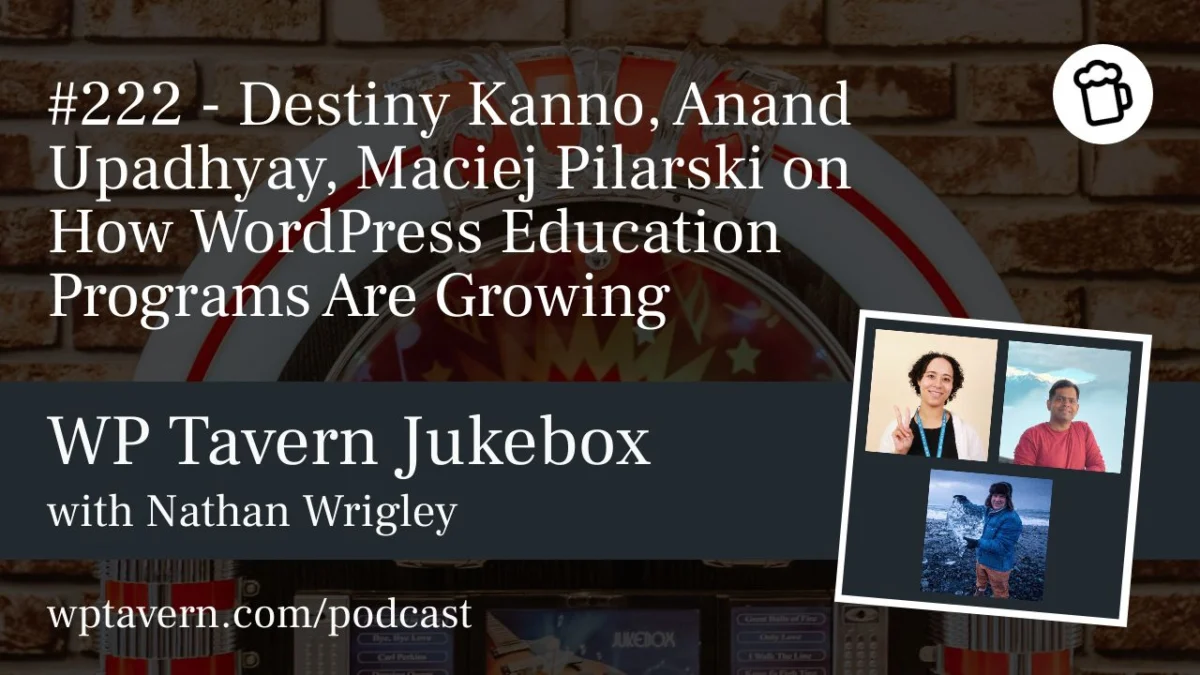
Destiny Kanno, Education Program Manager (sponsored by Automattic):
Kanno emphasizes the importance of lowering organizational barriers to ensure sustainability. Speaking on the evolution of Campus Connect, she noted:
"These programs are spreading like wildfire… We’re trying to convey that WordPress isn’t just a blogging software that I think still a lot of people have a mentality of. There are many ways to utilize it that go beyond that."
Kanno is currently developing the Meetup Activity Library, a resource featuring hands-on facilitation guides and presentation decks designed to empower new, hesitant leaders to run workshops with confidence.
Maciej Pilarski, WordPress Credit Program Administrator:
Pilarski highlights the symbiotic relationship between institutional credits and grassroots contribution:
"These initiatives don’t compete with each other. They support each other… The goal of getting all those educational initiatives going is also to create them in a sustainable way. We’re not pushing for numbers, but growing them in a smart way where we don’t get too many students so we get overwhelmed."
Reflecting on his personal journey, Pilarski underscores that unlocking these educational pathways is about removing the structural roadblocks that young learners often face when trying to find their professional footing.
Anand Upadhyay, Open Source Contributor and Plugin Developer (WPVibes):
Upadhyay points to the long-term cultural transformation happening inside campuses:
"The Student Club is trying to learn how to build websites, how to master the skills of WordPress… The real impact of these programs we will be able to see in the next two or three years, with regular ongoing activities around WordPress in the campus."
Upadhyay stresses that the ultimate victory is creating a self-sustaining ecosystem where campuses no longer need to be taught why WordPress matters, because a vibrant, peer-led community is already thriving internally.
Implications: Securing the Future of Open Source
The rapid expansion of WordPress educational programs carries profound implications for the future of the web publishing ecosystem. For over two decades, the project has relied on an aging demographic of core contributors, agency owners, and long-time community members. Without a deliberate, systematic injection of young talent, the long-term sustainability of the software faces undeniable risks.
By integrating open-source ethics into university curricula, transforming libraries and classrooms into interactive tech hubs through Campus Connect, and empowering student-led clubs, the WordPress community is building an invaluable scaffolding.
Furthermore, these programs are expanding to meet modern technological demands. Recent developments—such as the introduction of AI-focused credentials and hands-on WordPress Playground integration—prove that the curriculum is adapting to keep pace with modern web development standards.
Ultimately, the true metric of success for these initiatives cannot be quantified purely by spreadsheets or attendance tallies. It is measured when a high school student launches their first functional website, when a university humanities major earns academic credit while contributing to core documentation, or when a young adult steps onto a WordCamp stage for the first time, inspired by a local campus meetup. Through "joining hands" across generations and time zones, the WordPress education movement is ensuring that the open-source web remains vibrant, inclusive, and enduring for decades to come.