
By Enterprise Technology Desk
Published September 2026
1. Main Facts
On Wednesday, September 16, 2026—coinciding uncomfortably with the second day of its flagship annual conference, Dreamforce—cloud giant Salesforce suffered a catastrophic, near-global platform outage. The disruption effectively crippled the core infrastructure for millions of enterprise users across North America, Europe, India, and Japan.
According to running incident logs and telemetry compiled by The Register, the outage began at approximately 07:50 UTC, plunging organizations into disarray as critical CRM workflows ground to a halt. It was not until roughly 19:20 UTC—nearly twelve hours later—that Salesforce officially declared the incident resolved.
Post-incident analysis revealed a surprisingly mundane yet devastating root cause: requests had begun stalling on an internal authentication and login service, rapidly exhausting server resources and triggering a cascading cascade of failures across the Core platform.
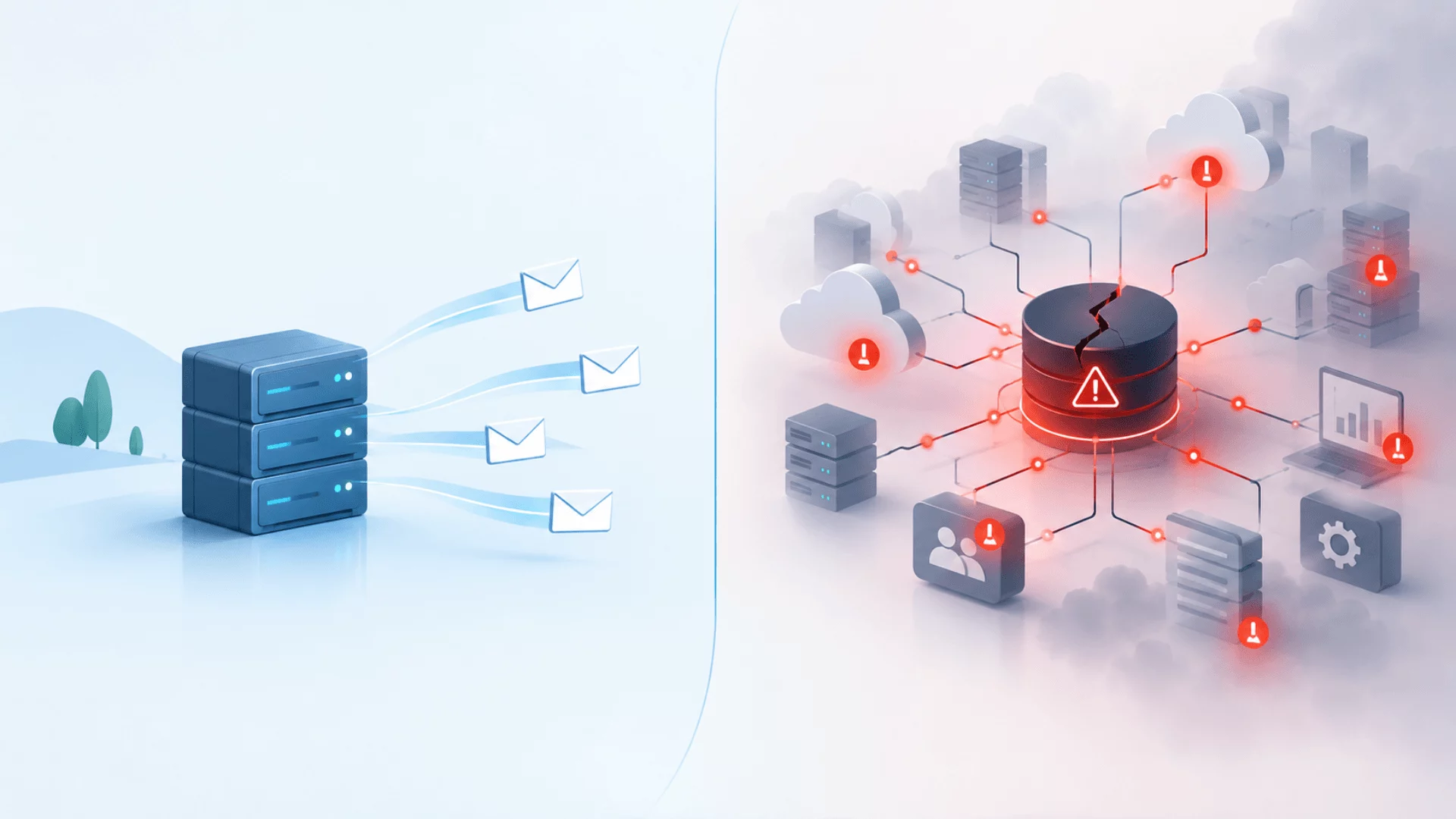
While Sales Cloud, Service Cloud, and core administrative dashboards were knocked offline, the incident cast a revealing spotlight on the complex, legacy-laden architecture of Salesforce’s broader product ecosystem. Most notably, Marketing Cloud Engagement—the enterprise messaging engine inherited from the 2013 acquisition of ExactTarget—remained technically operational throughout the disaster.
However, technology analysts and enterprise risk officers quickly pointed out that platform uptime does not equal business continuity. Because modern digital marketing operations rely heavily on seamless data synchronization with the CRM, the illusion of an untouched marketing apparatus quickly dissolved in the face of severed upstream data feeds, orphaned journey triggers, and post-recovery data synchronization spikes.
2. Chronology of the Incident
The Prelude and Onset (07:50 UTC)
The disruption materialized abruptly in the early hours of Wednesday morning, UTC time, just as global enterprises were shifting into their peak operational hours. According to incident tracking data, anomalies first surfaced around 07:50 UTC, when internal login services began experiencing severe latency and subsequent thread starvation.
As login requests pooled and failed to resolve, server resources across multiple geographical pods were exhausted. Users attempting to authenticate found themselves locked out of their workspaces, while API connections and background integrations began throwing timeout errors.
The Peak of the Crisis (10:00 UTC – 15:00 UTC)
As the European business day reached its afternoon peak and the Americas began logging on for the start of the workday, the scale of the outage became fully apparent. Salesforce’s status dashboards turned a sea of red as administrators reported widespread inability to access core platform functions.
Making matters worse, the outage directly overlapped with the high-profile keynote presentations and announcements at Dreamforce, creating an embarrassing public relations hurdle for Salesforce executives who were simultaneously pitching the platform’s reliability, scalability, and cutting-edge artificial intelligence capabilities.
Mitigation and Phased Recovery (17:00 UTC – 19:20 UTC)
Salesforce engineering teams worked frantically behind the scenes to isolate the rogue login service dependencies, shed non-essential traffic, and systematically restart affected server clusters. By late afternoon, individual instances began staggering back to life.
However, as instances re-entered service, administrators immediately reported secondary anomalies, including stalled background jobs failing to execute as expected and delayed asynchronous processing queues. At 19:20 UTC, Salesforce officially updated its status page, declaring the primary incident resolved—though the operational cleanup for enterprise IT teams had only just begun.
3. Supporting Data and Architectural Insights
To understand why some parts of Salesforce survived the storm while others collapsed, analysts had to examine the underlying architecture—a patchwork of native innovations and legacy acquisitions integrated over decades.
The Legacy Firebreak: Marketing Cloud Engagement
According to Incident 20004433, filed against Salesforce Core services, Marketing Cloud Engagement was listed as fully available throughout the duration of the outage. For email operations teams, this initially sparked a sigh of relief.
The reason for its survival lies purely in its historical lineage. Marketing Cloud Engagement is the direct descendant of ExactTarget, an independent email service provider acquired by Salesforce in 2013. To this day, it runs on a largely segregated infrastructure. Salesforce’s own Trailhead learning documentation explicitly lists this architectural independence as a historical constraint—it sits outside the modern Core. On September 16, however, that architectural isolation acted as an accidental firebreak, insulating the standalone mailing engine from the login service collapse taking down the rest of the enterprise ecosystem.
The Looming Trap of "Marketing Cloud Next"
Salesforce has spent considerable energy steering marketers toward its next-generation platform: Marketing Cloud Next. Unlike its predecessor, Marketing Cloud Next is built natively on the Core platform, utilizing Data 360 as its unified data layer and deeply integrating Agentforce artificial intelligence throughout.
Under this modern paradigm, audience segmentation, journey orchestration, and message dispatching share the exact same foundational infrastructure as Sales Cloud and Service Cloud. While this delivers unprecedented unity and real-time data access during normal operations, it creates a unified failure domain. When Core stalls on an internal dependency like a login service, a marketing product built entirely on Core is left with nowhere else to stand.
The Illusion of Safety: Why Engagement Senders Couldn’t Rest Easy
While Marketing Cloud Engagement’s sending infrastructure technically stayed up, it did not operate in a vacuum. The platform relies heavily on Marketing Cloud Connect to bridge CRM data into the engagement layer, firing automated customer journeys based on real-time CRM events.
With Core unreachable for nearly twelve hours, those triggers had nothing to fire from. Furthermore, critical operational communications—such as programmatic Flow email alerts, customer service case replies, and Experience Cloud password resets—are sent directly from Core itself, meaning those vital touchpoints went dark entirely.
4. Official Responses and Communications
Salesforce’s official communications during and immediately after the incident focused on transparently logging affected regions and assuring customers that engineering resources were deployed around the clock to restore full functionality.
Through its status portals and advisory channels, the company confirmed that the incident was traced back to localized request stalling within internal authentication services, which quickly escalated into a resource exhaustion event.
However, enterprise customers noted a distinct information gap regarding the downstream impacts on integrated applications. While Salesforce acknowledged scattered reports of "scheduled jobs not running as expected" on instances that had come back online, it left individual IT and marketing operations teams largely on their own to audit the integrity of their data, message queues, and automated workflows.
As of press time, Salesforce has been approached for further comment regarding whether Marketing Cloud Next customers experienced absolute delivery stoppages during the peak of the disruption, and what automated safeguards are being implemented to prevent future cascading authentication failures.
5. Business Implications and Actionable Recommendations for Enterprises
The September 16 outage offers a stark reminder that in modern enterprise software, high availability is not a simple binary state. For email senders, CRM administrators, and technology architects, the incident carries profound operational, compliance, and strategic implications.
The Dangers of Post-Recovery Surges
Recovery from a major cloud outage carries its own distinct set of operational risks. Once a platform like Salesforce comes back online, a massive backlog of deferred operations hits the system simultaneously:
- Failed background jobs are automatically retried.
- Delayed database synchronization jobs attempt to catch up.
- Queued customer journey triggers release all at once.
For enterprise email senders, this tidal wave of activity translates directly into volume spikes, server strain, and a significantly heightened risk of duplicate message dispatches. Customers who were meant to receive a single promotional or transactional email during the twelve-hour window risk receiving multiple copies as asynchronous queues flush out.
The Compliance Nightmare: Consent and Unsubscribes
Perhaps the most alarming operational exposure during the outage centers on data governance and customer consent. In many enterprise architectures, opt-out status and subscription preferences are mastered within the CRM.
A ten-hour window in which the CRM is entirely unreachable—while messaging engines continue to operate or hold queued data—creates a dangerous compliance blind spot. An unsubscribe request submitted or processed during the outage window may have failed to propagate to the systems that dictate who receives subsequent marketing or operational emails. Sending messages to opted-out consumers during a recovery surge opens organizations to severe regulatory penalties under laws such as GDPR, CAN-SPAM, and CCPA.
Three Essential Audits for Salesforce Senders
In the wake of the Dreamforce outage, enterprise marketing and IT operations teams are strongly advised to perform three immediate audits:
- Volume Reconciliation: Compare Wednesday’s triggered and deployed email volume against a normal historical baseline for a Wednesday to identify artificial surges, suppressed traffic, or unaccounted-for queue releases.
- Duplicate Check: Scan deployment logs from Wednesday evening and Thursday morning to detect and document any accidental duplicate sends that may have slipped through during the post-recovery queue flush.
- Consent and Preference Audit: Reconcile all unsubscribe requests, preference updates, and opt-out flags captured during the outage window against active CRM consent fields to ensure complete compliance alignment.
Strategic Takeaways for the Future
For organizations currently evaluating or planning a migration to Marketing Cloud Next, this incident must serve as a central case study in architectural risk management.
Salesforce’s pitch for Marketing Cloud Next is undeniably compelling: unified data, seamless artificial intelligence integration, and zero-latency cross-departmental workflows. However, the price of a unified data domain is a shared failure domain. When evaluating enterprise technology stacks, architects must weigh the immense productivity benefits of deep platform native integration against the catastrophic blast radius of a single core login dependency failure. Reliability is no longer just about whether a single product stays online; it is about how the entire digital ecosystem behaves when the foundation shakes.