In the modern digital landscape, the distance between a marketing campaign’s activity and a company’s actual financial health has never been greater. For many organizations, the reliance on superficial metrics—specifically the widely misunderstood "Cost Per Session" (CPS)—has created a dangerous illusion of success. As the industry pivots toward AI-driven advertising models, the misalignment between vanity metrics and corporate profit is not just a strategic error; it is an existential threat to marketing budgets and, by extension, the careers of Chief Marketing Officers (CMOs).
The Illusion of "Cost Per Session"
The professional journey of many marketing leaders is often marred by a fundamental misunderstanding of what constitutes a "metric." A few years ago, during a strategic consulting engagement for a global corporation operating across 75 countries, the disconnect became starkly apparent. When the marketing sub-team presented "Cost Per Session" as their primary success indicator, it signaled a systemic failure.
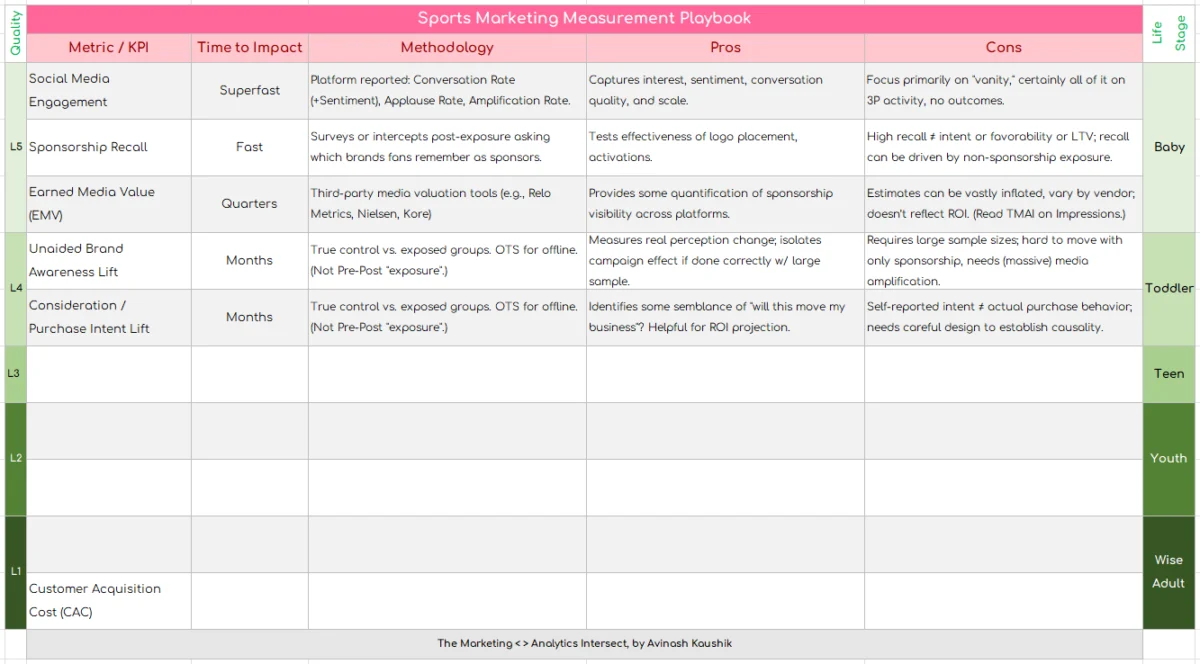
To those with deep experience in analytics, CPS is not a metric of success—it is a metric of consumption. It measures how cheaply a company can shovel traffic toward a landing page, regardless of whether that traffic has any intent to convert. It treats the user as a unit of cost rather than a potential customer. This reliance on "things"—like impressions, views, and sessions—is value-deficient. They provide no insight into the business outcome, yet they are frequently used to justify massive advertising spends.
When a marketing team optimizes for the lowest Cost Per Session, they are essentially optimizing for the lowest quality of engagement. In an era where AI-driven platforms can generate traffic at will, the goal of marketing must shift from mere volume to measurable, incremental business impact.
The Chronology of Measurement Evolution
To understand how we reached this point, we must look at the traditional evolution of marketing reporting. Most organizations start with an Activity View, which tracks engagement metrics like clicks and sessions. This is often where the "vanity" trap is set.
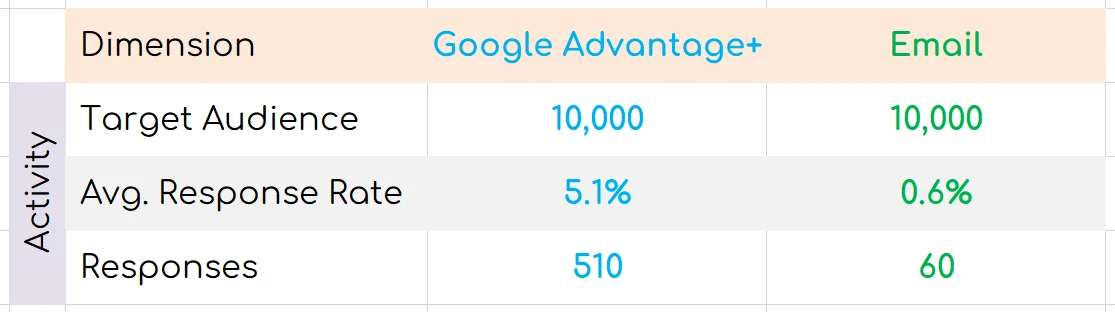
- The Activity Phase: The team reports on Google Advantage+ or similar platforms, celebrating high response rates and massive traffic influxes. At this stage, the focus is on top-of-funnel movement.
- The Outcomes Phase: A more sophisticated organization—or one under the watchful eye of a data-driven CFO—moves to track revenue and conversion rates. This is a critical step, as it connects the "activity" to the "outcome."
- The Accountability Phase: The final, most mature stage involves subtracting the costs of marketing (campaign spend) and the cost of goods sold (COGS) from the revenue generated. This reveals the actual profitability of the marketing effort.
The problem, historically, is that many teams stop at Phase 1 or Phase 2. By failing to reach the Accountability phase, they shield themselves from the uncomfortable truth: that high revenue volume can sometimes mask a net-negative impact on corporate profit.
Supporting Data: The Case for Profitability
Consider a hypothetical scenario comparing two channels: Google Advantage+ and Email Marketing. A standard report might show that Google Advantage+ generates significantly more revenue ($17,000) than Email ($1,200).
However, when you apply an Accountability Framework, the picture flips.
- Google Advantage+: With high campaign costs ($7,000) and associated COGS, the net profit might be as low as $5,000.
- Email Marketing: With minimal overhead, it might yield a lower total revenue but a significantly higher profit margin.
When you calculate the Profit on Investment (POI), the disparity becomes glaring. If a company spends $1,000 to generate $700 in profit, they are effectively paying for the privilege of losing money. Yet, because many organizations prioritize Revenue over Profit, they continue to scale the losing channel. The goal for any modern marketing organization must be to transition from Return on Ad Spend (ROAS)—which ignores the cost of goods—to a true POI model.
Official Guidance: Navigating the AI Shift
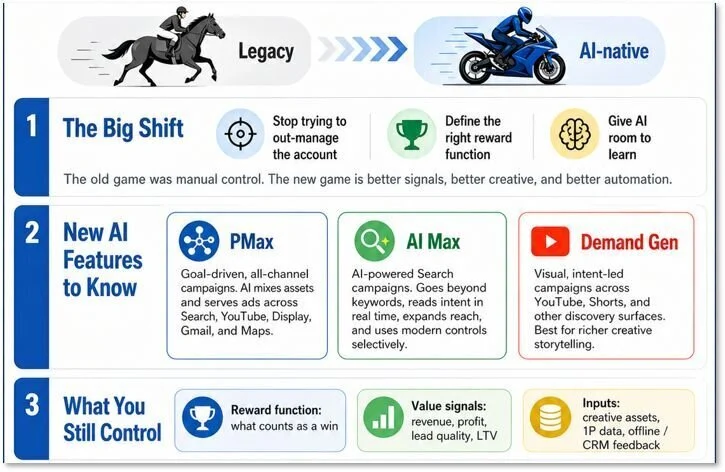
The shift toward AI-powered search (such as Google’s AI Overviews) has fundamentally changed the rules of the game. Google itself has issued guidance explicitly warning marketers against focusing on simple clicks.
In the age of AI search, "clicks" are increasingly being filtered for quality. Users are spending more time on sites because AI-generated contexts provide more relevant, high-intent pathways. Google’s advice is clear: Look beyond the session.
If you continue to optimize for Cost Per Session, you are effectively ignoring the high-intent, high-value traffic that AI platforms are now curating. If the search giant itself is telling you that the "click" is no longer the destination, why are so many marketing departments still treating it as the Holy Grail?
Strategic Implications: How to "Suck Less"
If your organization is trapped in a culture that demands Cost Per Session reporting, you must take immediate steps to "suck less" until you can overhaul your entire measurement strategy.
1. Shift to "Cost Per Non-Bounced Session"
If you cannot eliminate the focus on sessions, at least filter out the noise. A session where the user "bounces" immediately is an unproductive cost. By measuring only non-bounced sessions, you receive a more accurate reflection of what you are actually paying for. This often reveals a much higher, and more sobering, cost-per-acquisition, which can serve as a catalyst for changing internal tactics.
2. The "Stop and Reset" Strategy
If your POI is negative, you must have the courage to pause.
- Stop the Spend: Cut the budget on underperforming AI-driven campaigns immediately. The alarm bells will ring as traffic and revenue drop, but remind the stakeholders that you are prioritizing a recovery in net profit.
- Invite Accountability: Challenge your agencies and internal teams to justify their existence through green POI.
- Adopt an A-B-C Framework: Focus on (A) Identifying available intent, (B) Activating tactics that match that intent, and (C) Utilizing AI features to turbocharge those tactics.
3. Protecting the CMO
The ultimate goal of this rigorous accountability is to protect the CMO from the CFO. When a marketing department can demonstrate that every dollar spent is a dollar invested in profitable growth, the relationship with the CFO changes from adversarial to collaborative. A CFO who sees a clear, transparent, and profitable path for marketing will not just fund the department—they will prioritize it.
Conclusion: The Path Forward
The era of vanity metrics is drawing to a close. As AI continues to commoditize traffic, the value of a marketing professional will no longer be determined by how many "sessions" they can generate, but by how much profit they can extract from the market.
Prioritizing Accountability over Outcomes and Outcomes over Activity is not just a technical change; it is a cultural mandate. It requires difficult conversations, an honest assessment of platform performance, and the bravery to stop spending when the returns are merely nominal. By making this transition, you do more than just improve your marketing department’s performance—you build a career that is resilient to the disruptions of the AI age and indispensable to the future of your organization. Carpe diem.