You have done the heavy lifting. You have agonized over a subject line until it possessed the perfect balance of curiosity and clarity. You have crafted email body copy that resonates with human emotion rather than sounding like a corporate template. You have mapped out the customer journey, automated the triggers, and hit “send” with the quiet confidence of a founder who knows their value proposition is sound.
And then, silence.
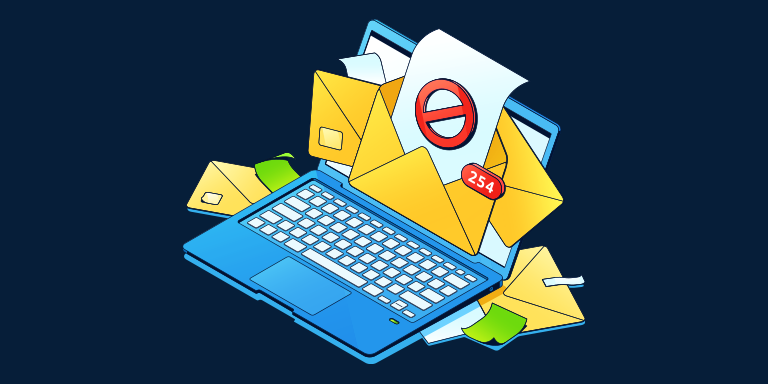
The metrics show your email was “delivered,” but your open rates have cratered. The revenue you projected from your latest campaign has failed to materialize. You haven’t been hacked, and your product hasn’t suddenly become irrelevant. Instead, your message has been intercepted by the invisible gatekeepers of the digital age: the spam filters of Gmail, Yahoo, and Outlook.
Email deliverability is the silent killer of modern e-commerce. It is an issue that operates in the shadows, often remaining undetected until the damage to your sender reputation is profound. In this comprehensive guide, we explore the mechanics of deliverability, the technical mandates you cannot afford to ignore, and the strategic shifts required to ensure your message reaches its destination.
The Core Facts: Delivery vs. Deliverability
To understand why your emails are disappearing, you must first distinguish between delivery and deliverability.
Delivery is a binary state. When an email provider (ESP) confirms an email has been "delivered," it simply means the recipient’s mail server accepted the message. It did not bounce. It was not rejected by a firewall.
Deliverability, however, is a measure of success. It asks: Where did that email actually land? Did it arrive in the primary inbox, or was it shuffled into the Promotions tab, the Updates folder, or the dreaded abyss of the Spam folder?
For e-commerce founders, this distinction is not academic—it is a fiscal reality. If 20% of your list is being filtered into spam, you have effectively lost 20% of your revenue potential. Because this process is automated and often silent, many founders attribute these dips to “low engagement” or “market fatigue,” when the reality is that the subscribers never saw the email to begin with.
The Chronology of an Email’s Journey
To understand why filtering happens, we must track the life cycle of a single send:
- The Handshake: Your ESP sends your message to the recipient’s inbox provider (e.g., Google).
- The Identity Check (Authentication): The provider checks your domain’s "ID." Do you have SPF, DKIM, and DMARC records? If these are missing or misconfigured, the provider assumes you are an impersonator.
- The Reputation Audit: The provider checks your "Credit Score." Has this sender domain been sending spam? Are there high bounce rates? Are users flagging these emails as junk?
- The Content Scan: Advanced AI models scan your HTML structure, your link quality, and your copy. Does this look like a legitimate communication or a mass-market phishing attempt?
- The Final Routing: Based on the aggregate score of the previous four steps, the email is placed in the inbox, the spam folder, or rejected entirely.
The “Credit Score” of the Digital Age: Sender Reputation
In the world of email marketing, your Sender Reputation is everything. It is a dynamic, evolving metric that follows your domain and IP address.
What Influences Your Reputation?
- Bounce Rates: High bounce rates indicate an unmaintained, low-quality list. If you continue sending to addresses that don’t exist, providers will mark you as a negligent sender.
- Spam Complaints: This is the most damaging signal. When a user clicks "Mark as Spam," they are signaling to the provider that you are a nuisance. A high complaint rate is the fastest way to get your domain blacklisted.
- Engagement Signals: Open rates, click-through rates, and, crucially, the "move to inbox" action, act as positive reinforcements for your reputation.
The implications are clear: you cannot "spam" your way to growth. Sending to an unengaged list is not just a waste of time; it is an active assault on your ability to reach your loyal customers in the future.
Technical Mandates: Authentication is Non-Negotiable
If your sender reputation is your credit score, Authentication is your passport. In 2024 and beyond, email providers have tightened their requirements. If your technical setup is lacking, your emails will be flagged as suspicious by default.
The Three Pillars of Authentication
- SPF (Sender Policy Framework): A list of IP addresses authorized to send emails on behalf of your domain. It prevents outsiders from spoofing your address.
- DKIM (DomainKeys Identified Mail): Adds a digital signature to your emails. It proves that the content of the email was not tampered with during transit.
- DMARC (Domain-based Message Authentication, Reporting, and Conformance): This ties SPF and DKIM together. It provides instructions to the receiving server on what to do if an email fails authentication.
Pro Tip: If you are using platforms like Omnisend, these settings are often handled during onboarding. However, do not assume they are active. Spend 15 minutes this week auditing your DNS records. A misconfigured DKIM record is the most common "silent killer" of legitimate marketing campaigns.
List Hygiene: The Unsexy Work of Retention
List hygiene is the most underrated aspect of email marketing. Many founders fall into the "bigger is better" trap, holding onto thousands of inactive subscribers to inflate their list size.
The Reality: A list of 5,000 highly engaged subscribers is infinitely more valuable than a list of 50,000 where 40,000 are inactive.
The Hygiene Audit
- Re-engagement Campaigns: If a subscriber hasn’t opened or clicked in 90 to 180 days, they are dead weight. Launch a re-engagement sequence. If they don’t interact, remove them.
- Double Opt-in: Implementing a confirmation step upon signup may slightly reduce your growth rate, but it ensures that every person on your list actually wants to hear from you. This leads to higher long-term engagement and a cleaner reputation.
- Bounce Suppression: Your ESP should handle hard bounces (non-existent emails) automatically. If yours doesn’t, you need to switch providers immediately.
Content Habits: Why Your Newsletter Gets Flagged
Modern spam filters are sophisticated. They don’t just look for the word "free." They use machine learning to evaluate the "behavioral intent" of your email.
Habits that trigger filters:
- URL Shorteners: Using bit.ly or other public redirectors hides the destination of your links. Spammers love this. Use direct links to your own domain.
- Excessive Images/Low Text: If your email is one giant image with no text, it’s a red flag. Filters need text to understand what you are sending.
- Inconsistent Sending Cadence: If you send 50,000 emails one day and zero for the next three months, you look like a bot. Consistency builds trust.
- Misleading Subject Lines: "Urgent: Your account is locked" when it is actually a sales promotion is a recipe for high spam complaints.
Implications: The Long Game of Deliverability
Deliverability is not a "set it and forget it" task. It is a continuous commitment to quality. The founders who win in the long run are those who treat their email list as a community rather than a commodity.
When you notice a dip in open rates, the knee-jerk reaction is often to write "punchier" subject lines. While that might yield a marginal short-term gain, it ignores the root cause. If your deliverability is compromised, your subject lines don’t matter because the email isn’t even in the room.
Building for the Future
To sustain your business, you must invest in infrastructure. Tools like Omnisend are specifically engineered to handle the complexities of modern deliverability. From automated authentication support to list-cleaning tools that identify "dead" segments, these platforms provide the guardrails necessary to keep your communication channel open.
For those ready to professionalize their email operations, now is the time to audit your technical setup. By prioritizing your sender reputation, cleaning your lists, and respecting your audience’s attention, you move from the spam folder back into the primary inbox—where your customers are actually waiting to hear from you.
Ready to secure your inbox presence? Omnisend offers dedicated deliverability monitoring and infrastructure for growing brands. Foundr readers can receive 50% off their first three months by using the code FOUNDR50 at Omnisend.