In the rapidly shifting landscape of search engine optimization (SEO), the traditional reliance on keyword density and backlink volume is waning. As artificial intelligence and large language models (LLMs) like ChatGPT, Claude, and Google’s Gemini reshape how information is indexed and retrieved, a new paradigm has emerged: Entity Optimization.
In a recent episode of the Niche Pursuits podcast, industry veteran Jason Barnard—founder of Kalicube and a leading expert in entity-based SEO—joined host Spencer Haws to demystify this complex topic. The conversation served as a masterclass for entrepreneurs, personal brands, and businesses looking to future-proof their digital presence by aligning with the way AI systems actually “think.”
The Shift from Keywords to Entities
For over two decades, SEO was largely a game of matching user search queries to specific keyword phrases. If you wanted to rank for "best running shoes," you wrote content about running shoes. However, as search engines have evolved into "Answer Engines," they no longer look for simple string matches. Instead, they look for entities.
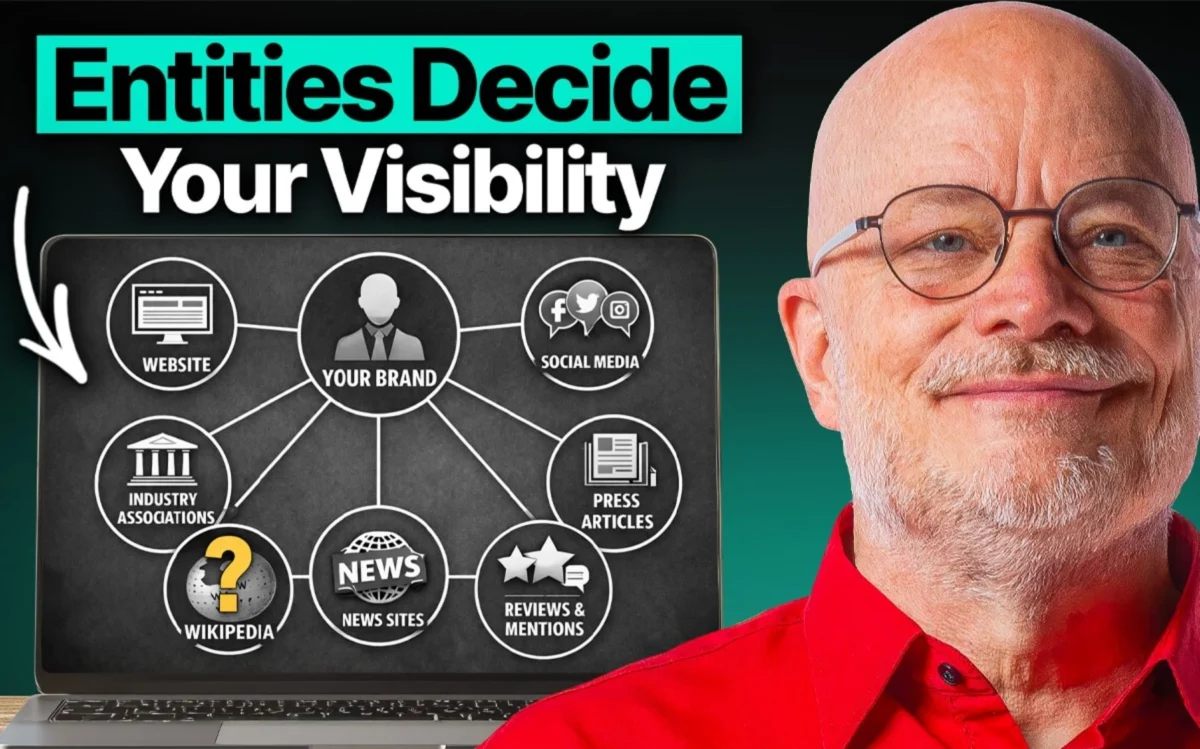
An "entity" is a person, place, organization, or thing that is distinct, unique, and well-defined. When a user queries a search engine today, the engine attempts to identify the entity behind the request and provide an answer based on its understanding of that entity’s relationship to other topics.
"AI does not make assumptions," Barnard explained during the podcast. "It requires explicit, verifiable data to build a knowledge graph of who you are and why you matter."
Chronology of an Entity’s Evolution
The rise of entity optimization did not happen overnight. It is the result of a long-term evolution in search technology:
- The Keyword Era (1998–2010): Search was based on text-matching and simple link-based authority.
- The Knowledge Graph Introduction (2012): Google introduced its Knowledge Graph, signaling a move toward understanding objects rather than just strings of text.
- The Neural Matching & BERT Era (2018–2020): Google began using natural language processing to understand the intent behind search queries, moving closer to human-like comprehension.
- The AI/LLM Revolution (2022–Present): With the integration of LLMs into search, the ability of AI to synthesize vast amounts of data has made "Entity Authority" the single most important factor for ranking, reputation management, and visibility.
The Three Pillars of Entity Optimization: Understandability, Credibility, and Deliverability
Barnard’s framework for success is built on three non-negotiable pillars. To dominate a niche, an entity must satisfy all three:
1. Understandability
If the AI cannot identify who you are, it cannot rank you. This requires clear, concise language on your website. Every entity—whether a business or a personal brand—needs a "primary identity." You must tell the AI exactly what you do and who you serve. This involves schema markup, a robust "About" page, and consistent messaging across all digital assets.
2. Credibility
Once the AI understands who you are, it must determine if you are a reliable source. Credibility is established through third-party validation. If you claim to be an expert in, for example, "sustainable agriculture," the AI looks for citations, mentions on reputable industry sites, and a footprint that confirms your claims.
3. Deliverability
Finally, you must be "deliverable." This means your content must be structured in a way that the AI can easily digest and present to the user. This involves technical optimization, such as ensuring your site is crawlable, your data is structured, and your content directly answers the questions that your specific audience is asking.
Building an Entity: The "Claim, Frame, Prove" Framework
Barnard’s tactical approach for building an entity can be summarized in three steps:

- Claim it: You must take ownership of your digital identity. This includes setting up your Google Knowledge Panel, ensuring your social profiles are consistent, and maintaining a centralized hub for your brand information.
- Frame it: You must define your narrative. What is your unique value proposition? By consistently using specific terminology and linking your brand to relevant industry topics, you "frame" your entity in the eyes of search engines.
- Prove it: This is the most critical step. Barnard warns that empty claims are ignored by AI. You must provide evidence through external references, news mentions, partnerships, and citations. If you claim you are an industry leader, you must provide the proof—in the form of high-quality backlinks and contextual mentions—that the AI can crawl and verify.
Supporting Data: Why Niche Focus Wins
One of the most eye-opening segments of the podcast was the scale of data involved. Barnard noted that his platform, Kalicube, currently tracks 70 million brands. This is significantly larger than the dataset provided by Wikipedia.
"Google has a database 10,000 times larger than Wikipedia," Barnard stated. This implies that while Wikipedia is a trusted source, it is merely a drop in the ocean for modern search engines. Relying on a Wikipedia entry is no longer a "silver bullet" for SEO. Instead, gaining mentions in niche-specific publications, industry newsletters, and trade journals creates a much more robust "Knowledge Graph" footprint.
The strategy, according to Barnard, is to start hyper-niche. By becoming the undisputed authority in a narrow field, you establish the "entity trust" necessary to expand into broader topics later.
Common Pitfalls in Entity Optimization
Even experienced marketers often stumble when transitioning to an entity-first strategy. Barnard highlighted several common mistakes:
- Ignoring Schema Markup: Failing to use JSON-LD structured data to explicitly tell search engines who you are is a missed opportunity.
- Inconsistent Branding: Using different names, logos, or descriptions across platforms creates "identity fragmentation." AI struggles to consolidate this data, resulting in lower authority.
- Lack of External Validation: Assuming that just publishing great content is enough. Without external links and third-party confirmations, the AI lacks the "proof" required to trust your content.
- Chasing Keywords Instead of Topics: Over-optimizing for short-tail keywords rather than providing comprehensive answers to topical questions.
Implications for the Future of Digital Marketing
The shift toward entity-based search has profound implications for the future of digital marketing.
First, Content Quality is No Longer Optional. AI can now evaluate the depth and accuracy of your content. Thin, SEO-stuffed articles are increasingly being de-indexed or buried in favor of content that displays clear, verifiable expertise.
Second, Personal Branding is Now SEO. Because people search for other people, your personal reputation is directly linked to your site’s search performance. Founders, authors, and experts must now treat their personal digital footprint as a critical business asset.
Finally, The Long-Term Play. As Barnard noted, his own success was a decade in the making. Entity optimization is not a "hack" or a quick fix. It is a commitment to building a verifiable, credible, and understandable digital presence that grows in authority over time.
Conclusion: The "Overnight" Success
As the podcast episode concluded, the message was clear: The days of gaming the algorithm with clever tricks are ending. The future of search belongs to those who provide real-world value that is documented, verified, and structured for the machines that power the internet.
Building an authoritative entity is an arduous process that requires patience, consistency, and a deep understanding of how AI interprets the world. However, for those who commit to the "Claim, Frame, Prove" methodology, the rewards are significant. In an age where information is abundant but trust is scarce, being recognized as a verified entity is the ultimate competitive advantage.
For businesses looking to begin their journey into entity optimization, the advice is simple: start with your own backyard. Ensure your digital identity is consistent, your claims are backed by facts, and your expertise is clearly visible to both human readers and the AI systems that connect them to your brand.