In the modern digital economy, the barrier to entry for e-commerce has never been lower, but the difficulty of achieving sustainable scale has arguably never been higher. While thousands of entrepreneurs attempt to break into the "merch" space, few manage to bridge the gap between a hobbyist side hustle and a robust, multi-channel business.
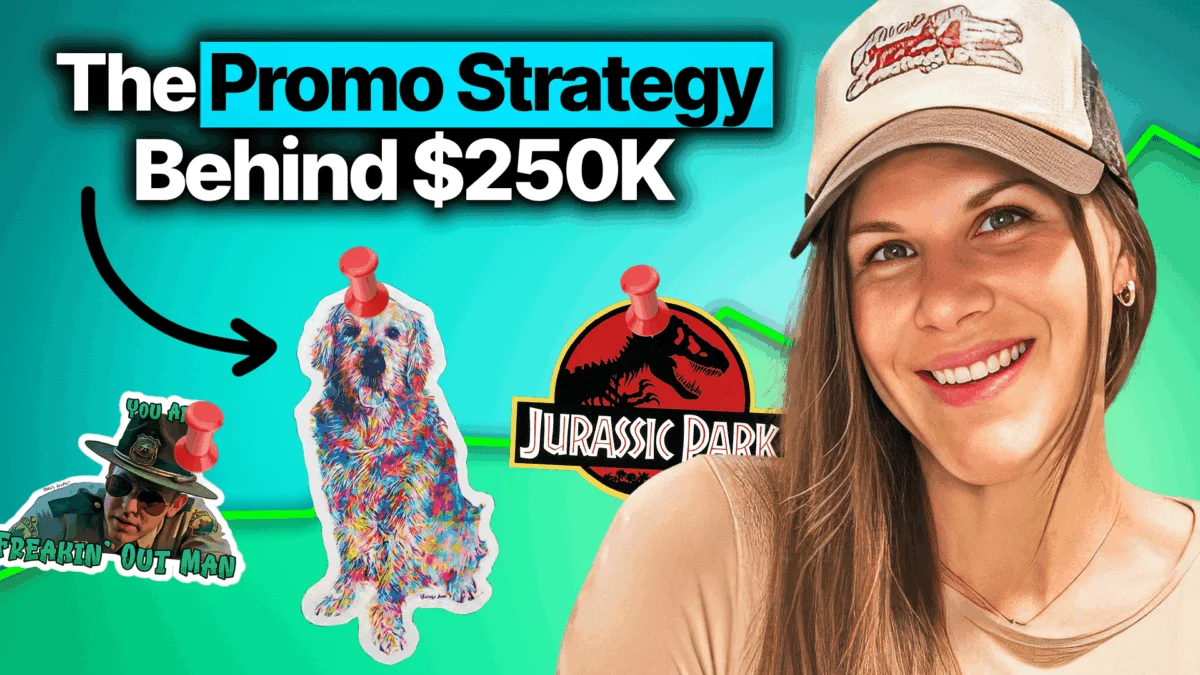
Therese Waechter, the creative force behind Otto’s Grotto, has done exactly that. In a recent appearance on the Niche Pursuits Podcast, Waechter detailed her journey from accidental sticker entrepreneur to the founder of a $250,000-per-year e-commerce powerhouse. Her story is a masterclass in platform diversification, operational pivot-points, and the strategic application of modern automation.
The Chronology of a Scaling Success Story
Accidental Beginnings
Every successful business often begins with a "happy accident." For Waechter, the genesis of Otto’s Grotto was not a calculated plan to dominate the sticker market, but a byproduct of trial and error. Initially, she was experimenting with Amazon FBA (Fulfillment by Amazon) flips and various print-on-demand merch ventures.
The turning point occurred when a single, standout design gained unexpected traction. Recognizing an opportunity, she bundled the design into a sticker format. The immediate positive response from the market signaled that she had tapped into a niche demand. However, the path to $250,000 was far from linear. Early on, she relied heavily on Facebook for traffic, but the fragility of that model was exposed when the platform shut down her account without warning. This "sink or swim" moment forced Waechter to pivot toward more stable, long-term sales channels like Etsy and Amazon, laying the foundation for the resilient brand she operates today.
The In-House Operational Shift
As demand grew, Waechter faced the classic e-commerce dilemma: outsource production and sacrifice margins, or bring operations in-house and sacrifice time. She chose the latter, investing in high-quality printing, laminating, and cutting equipment.
By bringing production in-house, Waechter gained granular control over her product quality and significantly improved her profit margins. This operational shift allowed her to fulfill wholesale orders with a level of agility that competitors relying on third-party print-on-demand services could not match. The ability to control her own shipping timelines and inventory levels was the catalyst that moved the business from a small hobby to a professional, scalable enterprise.
Modernizing through Outsourcing
Having mastered the "hands-on" phase, Waechter is now in the midst of a transition toward semi-passive income. She is currently moving production to vetted trade printers. This is a critical milestone for any entrepreneur; it signifies the transition from being a "maker" to a "business owner." By offloading the physical labor, she can focus on high-level strategy, marketing, and the "vibe coding" that keeps her brand ahead of the curve.
Supporting Data: A Multi-Platform Strategy
A core tenet of Waechter’s success is her refusal to rely on a single marketplace. By diversifying across four primary platforms—Etsy, Amazon, Faire, and her own Shopify storefront—she has insulated her revenue from the volatility of individual platform algorithms.
| Platform | Strategic Role |
|---|---|
| Etsy | The discovery engine; high traffic for unique, aesthetic-driven items. |
| Amazon | The volume play; essential for search-intent-based sales and Prime eligibility. |
| Faire | The wholesale powerhouse; critical for scaling business-to-business (B2B) reach. |
| Shopify | The brand home; captures repeat customers and avoids platform fees. |
Waechter notes that she often directs wholesale leads directly to her website to bypass the 15% commission fees associated with Faire, further optimizing her bottom line.
Implications: The Intersection of AI and Creativity
Perhaps the most contemporary aspect of Waechter’s business is her adoption of "vibe coding"—a term that has garnered significant attention in tech and business circles. Essentially, it involves using AI tools like ChatGPT to write code or build website features that would otherwise require a developer.
While she acknowledges that these AI-driven side projects can sometimes become "distractions," they have undeniably increased her creative throughput. By using AI to solve technical hurdles, she can deploy website updates and marketing assets faster than her competitors. This "scrappy" use of technology allows a lean team to operate with the output of a much larger company.
Strategic Lessons for Sellers
For those looking to replicate her success, Waechter emphasizes that success in 2024 requires a platform-specific mindset.
Amazon: The SEO Battlefield
Amazon is not about "vibes"; it is about data. Waechter stresses the importance of search-term optimization and understanding the specific intent of the Amazon shopper. If you are not appearing in the top results for your target keywords, you are effectively invisible.
Etsy: The Aesthetic Playground
Conversely, Etsy requires a heavy investment in photography and brand identity. It is a visual-first platform where the "story" behind the product often converts just as well as the product itself.
Faire: The B2B Engine
Faire is entirely different. It requires a professional, wholesale-ready approach. For sellers looking to break into retail, Waechter recommends having high-quality, catalog-style photography and a clear, simple wholesale price structure.
Playing the Long Game: Earned Media
One of the more sophisticated strategies in Waechter’s playbook is her approach to PR. She treats "earned media"—features in publications like Business Insider—as a long-term SEO and credibility play. She utilizes services like Qwoted to connect with journalists and participates in group license buys through marketing communities to gain access to premium PR tools like Cision.
This strategy ensures that when customers search for her brand, they are greeted with legitimate press coverage, which builds the social proof necessary to command higher price points.
Conclusion: The Roadmap Ahead
Therese Waechter’s journey with Otto’s Grotto is a testament to the power of the "iterate and scale" methodology. She did not start with a $250,000 budget or a team of experts; she started with a sticker and a willingness to learn.
For the aspiring entrepreneur, the implications are clear:
- Diversify early: Don’t let one platform control your fate.
- Control your margins: Understand when it is time to bring production in-house and when it is time to outsource.
- Embrace the tech: AI is not a threat; it is a force multiplier for those who learn how to wield it.
- Prioritize branding: Even in a commoditized market like stickers, a strong brand identity will win over a generic one.
As Waechter continues to refine her business model, her story serves as a reminder that the "niche" is only as small as your ambition. Whether it is stickers, apparel, or digital assets, the principles of professional e-commerce—algorithmic optimization, operational efficiency, and consistent brand storytelling—remain the keys to building a sustainable, long-term empire.