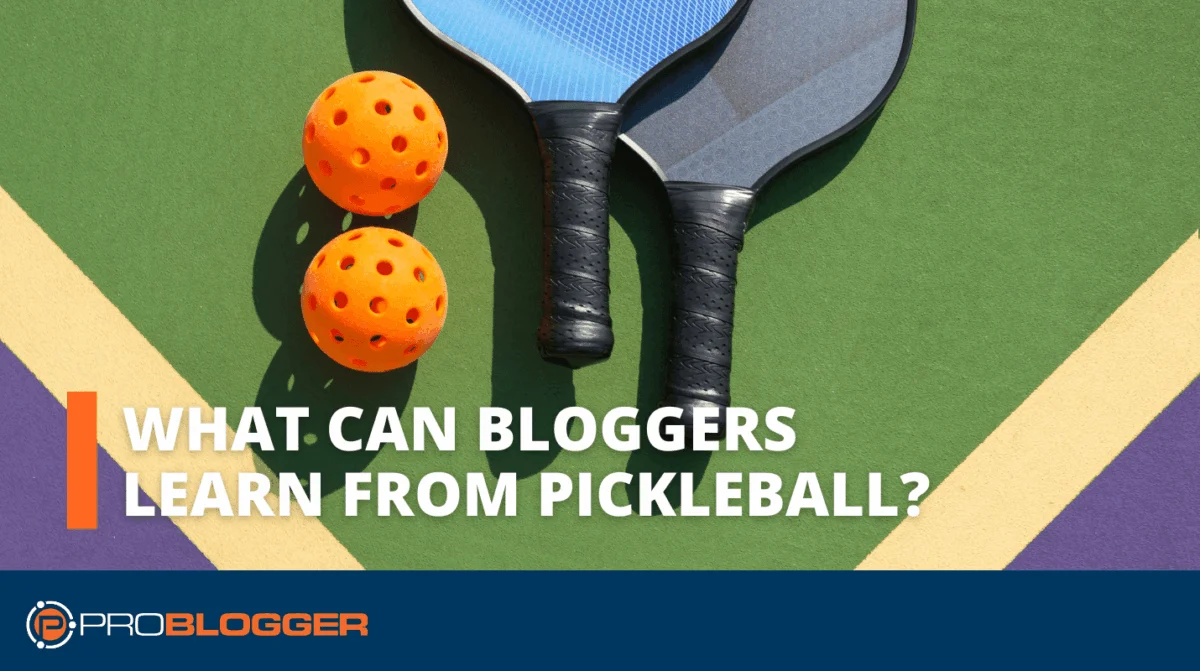
In the quiet corners of Bainbridge Island, Washington, a simple backyard pastime was born in 1965. Nearly six decades later, that same activity—Pickleball—has transformed into an international juggernaut, officially recognized as the fastest-growing sport in the United States. While the connection between a perforated plastic ball and a WordPress dashboard might seem tenuous at first glance, the parallels between the two are striking. Both require a blend of tactical patience, community-building, and an ability to adapt to a rapidly shifting landscape.
For the modern blogger, the "Pickleball Mindset" offers a blueprint for success in an era of digital saturation. By examining the mechanics of the game, content creators can derive actionable strategies that elevate their influence, engagement, and long-term sustainability.
The Chronology of Growth: From Backyard to Global Mainstream
The story of Pickleball is one of organic, grassroots expansion. Conceived by Joel Pritchard, Bill Bell, and Barney McCallum as a way to alleviate the boredom of their families, the game began with a makeshift court and improvised equipment. It took years for the sport to migrate from private driveways to public recreation centers, and eventually, to the professional stage.
This trajectory serves as a masterclass for digital entrepreneurs. A successful blog rarely becomes a "thriving content hub" overnight. It begins as a "blank page"—a singular, modest effort that gains momentum through consistency. Just as the creators of Pickleball had to refine the rules and the equipment to ensure the game was accessible to everyone, bloggers must iterate on their content based on reader feedback. The evolution of a blog, like the growth of a sport, is a process of scaling up from a local niche to a broader audience.
Supporting Data: Why Strategy Outperforms Luck
Data from the Sports & Fitness Industry Association (SFIA) indicates that Pickleball participation has seen a staggering increase of over 150% in the last three years. This growth is not accidental; it is the result of the sport’s inherent accessibility. It is a low-barrier-to-entry activity that rewards technique over brute strength.
In the blogging world, the "barrier to entry" is equally low, but the "barrier to success" is high. Statistics from content marketing firms consistently show that blogs prioritizing high-intent, long-form, and user-centric content outperform "clickbait" strategies by a significant margin.
The "Dink"—a soft, tactical shot in Pickleball designed to control the pace of the game—is the perfect metaphor for high-quality blogging. While many creators are obsessed with "power serves" (viral, high-volume, thin-substance posts), the professional blogger understands the value of the "dink." Simplifying complex information, providing deep dives, and maintaining a consistent, helpful tone are the strategic "dinks" that keep a reader engaged for longer, effectively lowering the bounce rate and increasing domain authority.
Official Perspectives: The Psychology of Engagement
Experts in digital community management often draw comparisons between the "non-volley zone" (the Kitchen) in Pickleball and the boundaries of digital engagement. In Pickleball, stepping into the Kitchen too early is a violation that results in a lost point. For bloggers, this translates to the delicate balance of monetization versus value.
"If you move into the ‘salesy’ zone too quickly, you lose the trust of your audience," notes digital strategist Sarah Jenkins. "The goal is to maintain a position where the reader feels they are in a rally with you. You provide a point, they provide a comment, you respond. That back-and-forth is the lifeblood of a community."
This perspective highlights that the "Sweet Spot" in blogging is found when the creator acts as a facilitator rather than a broadcaster. By hosting Q&As, responding to comments with depth, and fostering social media discourse, a blogger mimics the rally of a high-level Pickleball match. The goal isn’t to win the game instantly; it’s to keep the ball in play as long as possible.

The Anatomy of a "Whiff" and the Importance of Adaptation
Every seasoned athlete understands that a "whiff"—a missed shot—is not a failure; it is data. In the professional Pickleball circuit, players track their unforced errors to identify weaknesses in their footwork or timing.
Bloggers must adopt this same analytical rigor. When a post fails to gain traction or a content series underperforms, it is not a signal to quit; it is an invitation to pivot. Modern SEO tools, heat-mapping software, and analytics dashboards are the "coaching staff" of the blogging world. By analyzing what didn’t resonate, a creator can adjust their "serve"—their headline, their hook, or their call-to-action—for the next post.
The digital landscape is as dynamic as a professional tournament. With the rise of AI-generated content, shifting search engine algorithms, and the dominance of short-form video, the blogger who refuses to adapt is the player who stands frozen on the baseline. Staying informed and flexible—much like a player anticipating their opponent’s next move—is the only way to remain relevant in a crowded marketplace.
Implications: The Strategic Future of Content Creation
What does this mean for the future of blogging? The implication is clear: the era of "quantity over quality" is fading. The success of the Pickleball model proves that when a niche is defined by its accessibility and the genuine enjoyment of its participants, it creates a self-sustaining cycle of growth.
1. Start Small, Scale Smart
Don’t be intimidated by the "big players" in your niche. They started in the backyard, too. Focus on the quality of your "court"—your website speed, your readability, and your user experience.

2. The Power of "Dinking"
Simplify, simplify, simplify. Your ability to distill complex information into actionable advice is your greatest competitive advantage. In a world of noise, clarity is a luxury.
3. Maintain Strategic Positioning
Understand your "non-volley zone." Know when to push for a conversion (a sale or subscription) and when to simply provide value. Your audience will reward you for knowing the difference.
4. Embrace the "Whiff"
Adopt a "growth mindset." View every underperforming piece of content as a diagnostic tool. If you aren’t making mistakes, you aren’t experimenting enough to find what works.
5. Keep Your Eye on the Ball
In the heat of the game, it is easy to get distracted by metrics that don’t matter. Vanity metrics—like follower counts—are often less important than the quality of your community interactions. Keep your focus on your core mission and the needs of your audience.
Conclusion: The Joy of the Game
Ultimately, the most profound lesson Pickleball offers is the importance of "fun." It is a sport played by people of all ages precisely because it is enjoyable. Blogging, while a professional endeavor, often loses its spark when it becomes a joyless grind for traffic.

When you inject passion into your writing, it becomes palpable. Readers can tell the difference between content written to satisfy an algorithm and content written to inform, entertain, or inspire. By embracing the strategy, the community-building, and the sheer joy of the "game," you transform your blog from a mere website into a destination.
So, grab your "paddle"—whether that’s your keyboard, your microphone, or your camera—and step onto the court. The game is evolving, the rally is waiting, and there has never been a better time to serve up something truly great. Your blog might just be the next big hit.