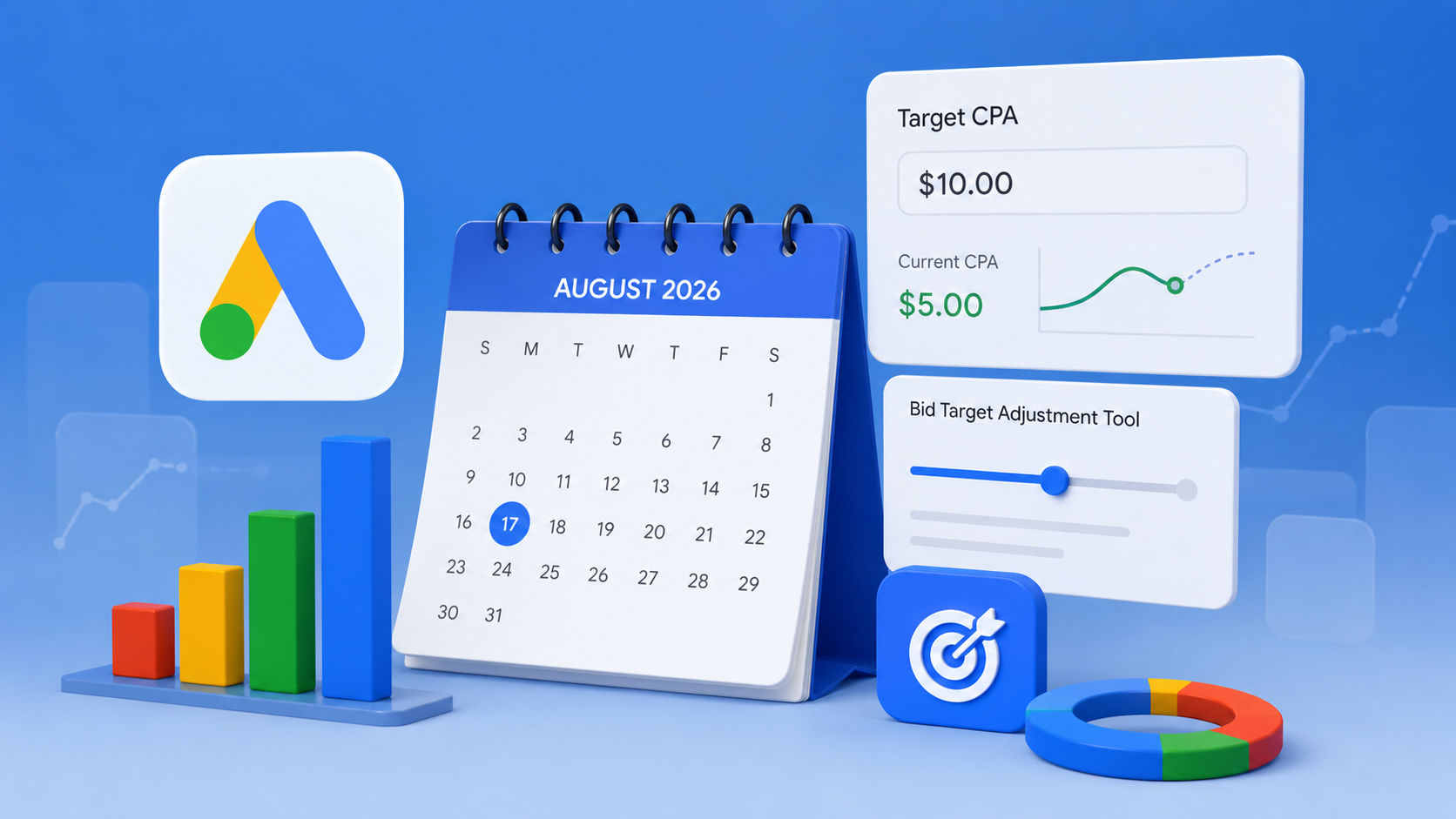
In a move that could significantly alter the performance dynamics and cost structures of digital advertising campaigns worldwide, Google has announced a fundamental shift in how its target-based bidding strategies operate under budget constraints. The tech giant is modifying the algorithmic behavior of automated bidding systems—such as Target Cost Per Acquisition (tCPA) and Target Return on Ad Spend (tROAS)—when campaigns are limited by budget.
Historically, campaigns constrained by budget often delivered performance that bypassed or significantly outperformed their set targets. Under the new update, Google will force these campaigns to align more closely with their configured target metrics. To help advertisers navigate this transition and prevent sudden spikes in acquisition costs, Google is launching a new "Bid Target Adjustment Tool."
This article provides a comprehensive, journalistic analysis of the upcoming change, detailing the core facts, the rollout timeline, the technical mechanics of the shift, industry reactions, and the strategic implications for search engine marketers.
Main Facts: The Core of Google’s Bidding Update
At its core, the update targets a specific, common scenario in Google Ads: campaigns that are flagged as "Limited by budget" but are utilizing target-based automated bidding strategies.
+--------------------------------------------------------------------------+
|                        THE CORE CHANGE AT A GLANCE                       |
+--------------------------------------------------------------------------+
| OLD BEHAVIOR:                                                            |
| Budget-limited campaigns "cherry-pick" cheap conversions, often          |
| outperforming the set Target CPA (e.g., achieving $5 CPA on a $10 target)|
+--------------------------------------------------------------------------+
| NEW BEHAVIOR (Post-August 17):                                           |
| System bids more aggressively up to the configured target, aligning      |
| actual performance closer to the stated target (e.g., rising to $10 CPA) |
+--------------------------------------------------------------------------+
1. Tightening Target Alignment
Google Ads campaigns using Smart Bidding are designed to find the maximum volume of conversions or conversion value at a specified target. However, when a campaign’s daily budget is insufficient to capture all available traffic at that target, the machine learning algorithm naturally prioritizes the cheapest, highest-intent search queries. This "cherry-picking" effect often results in an actual CPA or ROAS that is significantly better than the target set by the advertiser.
Following the update, Google will adjust the algorithm so that budget-constrained campaigns adhere much more strictly to their stated targets. If an advertiser has set a Target CPA of $20 but the campaign has historically achieved a $10 CPA due to budget limitations, the system will adjust its bidding behavior. It will bid more aggressively to bring the actual CPA closer to the $20 target, potentially increasing conversion volume but also raising the average cost per conversion.
2. Introduction of the Bid Target Adjustment Tool
To prevent advertisers from being caught off guard by sudden shifts in campaign efficiency, Google is introducing a diagnostic and preventative utility: the Bid Target Adjustment Tool. This tool is designed to scan advertiser accounts, flag campaigns that are at risk of performance shifts, and allow media buyers to proactively lower their Target CPAs or raise their Target ROAS values to match their actual, historical performance metrics before the algorithm changes take effect.
3. Broad Application Across Smart Bidding
The update primarily impacts campaigns relying on target-based bidding strategies. This includes:
- Target CPA (tCPA): Bidding focused on getting as many conversions as possible at or below your set cost-per-acquisition.
- Target ROAS (tROAS): Bidding focused on maximizing conversion value while maintaining a specific return on ad spend.
- Maximize Conversions with a set Target CPA
- Maximize Conversion Value with a set Target ROAS
Chronology of the Rollout
Google is executing this update in a phased manner to give advertisers sufficient time to audit their accounts, understand the implications, and utilize the new tools.
202X Timeline:
July 6 --------------------------> August 17 --------------------------> Post-August 17
[Bid Target Tool Launches]        [Algorithm Update Active]             [Continuous Monitoring]
Advertisers audit accounts Strict target alignment begins Ongoing budget & target audits- July 6: Launch of the Bid Target Adjustment Tool. Google will make the tool available within the Google Ads platform. Advertisers will also begin seeing notifications and recommendations in their account dashboards flagging affected campaigns.
- July 6 – August 16: The Preparation Window. Advertisers are expected to review their budget-constrained campaigns. Using the Bid Target Adjustment Tool, they can modify their targets to reflect actual historical performance rather than theoretical goals.
- August 17: Official Enforcement and Algorithm Update. The new bidding behavior goes live globally. From this date forward, any budget-constrained campaign using target-based bidding that has not had its targets adjusted will begin transitioning toward its configured targets, altering historical efficiency levels.
Supporting Data & Technical Deep-Dive
To understand why this update is so critical, it is necessary to examine the mathematics of budget-constrained Smart Bidding.
The Mechanics of "Cherry-Picking"
Under the current system, when a campaign is limited by budget, the algorithm operates under a scarcity constraint. If a campaign has a $100 daily budget and a Target CPA of $20, the algorithm could theoretically buy 5 conversions at exactly $20.
However, because the auction pool contains search queries of varying quality and competition levels, the algorithm naturally bids on the lowest-hanging fruit first—such as brand terms, highly specific long-tail queries, or retargeting audiences. As a result, it might secure 10 conversions at $10 each before exhausting the $100 budget.
In this scenario:
- Set Target CPA: $20
- Actual Historical CPA: $10
- Budget Status: Limited
Current Auction Selection (Selective Bidding):
Available Auctions: [ $8 ]  [ $10 ]  [ $12 ]  [ $18 ]  [ $20 ]
System Selects:     [ $8 ]  [ $10 ]  (Budget exhausted; highly efficient)

Post-Update Auction Selection (Target Alignment Bidding):
System adjusts bidding to average out closer to the $20 target.
System Selects:     [ $10 ]  [ $12 ]  [ $18 ]  (Fewer total conversions per dollar spent, but aligns with target)
Under the new update, Google’s algorithm will no longer allow the campaign to rest at a $10 CPA if the target is set to $20. The system will bid more aggressively in auctions, competing for more expensive placements to push the average CPA up toward the $20 target. While this may increase the absolute volume of conversions if the budget is subsequently increased, for a campaign with a fixed, constrained budget, it simply means paying more for fewer or the same number of conversions.
The Math of the Shift
Consider the financial impact on an advertiser who fails to adjust their targets:
| Metric | Pre-Update Scenario | Post-Update (No Target Adjustment) | Post-Update (With Target Adjustment to $10) |
|---|---|---|---|
| Daily Budget | $100 | $100 | $100 |
| Configured Target CPA | $20 | $20 | $10 |
| Actual CPA | $10 | $18 (Approaching Target) | $10 (Preserved Efficiency) |
| Daily Conversions | 10 | 5.5 | 10 |
| Cost Per Conversion | $10 | $18 | $10 |
As demonstrated, failing to act could lead to an approximate 80% increase in Cost Per Acquisition and a corresponding 45% drop in total conversion volume for this hypothetical campaign, purely due to the algorithmic shift.
Official Responses and Industry Context
Google’s Stated Objectives
According to official documentation and statements from Google, the primary driver behind this update is predictability and volatility reduction.

Google asserts that when advertisers adjust their budgets—either increasing or decreasing them—campaigns with discrepancies between actual performance and set targets experience severe performance fluctuations. By forcing the algorithm to adhere strictly to the configured target regardless of budget constraints, Google claims that performance will remain highly stable and predictable when advertisers scale their spend up or down.
In its help center documentation, Google notes:
"This update is designed to help you get more consistent performance and make your target-based bidding strategies more predictable, particularly when you change your budgets."
Industry and PPC Community Reaction
Despite Google’s framing of the update as a stability enhancement, the digital marketing community has reacted with caution and, in some corners, skepticism.
Many independent pay-per-click (PPC) experts point out that this change effectively closes a loophole that allowed savvy advertisers to achieve highly efficient conversions on limited budgets. By forcing actual CPAs up to match configured targets, Google stands to increase its own average cost-per-click (CPC) revenues, as advertisers will be bidding more aggressively in auctions they previously ignored or bid lightly upon.
Industry analysts emphasize that this change represents a continuing trend of Google tightening control over its ad network and reducing the "accidental efficiencies" that advertisers could previously exploit through clever account structuring.
Strategic Implications and Actionable Steps for Advertisers
The August 17th deadline represents a critical threshold for search engine marketers. To protect campaign ROI and prevent budget waste, digital marketing teams should execute a structured response plan.
                   AUDIT & ADJUSTMENT WORKFLOW

   [Step 1: Identify] ---> Find all campaigns labeled "Limited by Budget"
                                    |
                                    v
   [Step 2: Compare]  ---> Compare Actual CPA/ROAS vs. Configured Targets
                                    |
                                    v
   [Step 3: Analyze]  ---> Is Actual CPA significantly lower than Target?
                            /
                         (Yes)                          (No)
                          /
                         v                                 v
   [Step 4: Action] ---> Use Bid Target Tool to      No immediate target
                         lower Target CPA (or        change needed;
                         raise Target ROAS).         monitor budget.
1. Conduct an Immediate Account Audit
Advertisers must identify every campaign in their portfolio that meets two criteria:
- Uses a target-based bidding strategy (tCPA, tROAS, Maximize Conversions with target, Maximize Conversion Value with target).
- Is frequently or permanently flagged as "Limited by budget."
For these campaigns, compare the actual performance (CPA or ROAS) over the last 30 to 90 days against the configured target. If there is a variance of more than 10-15%, these campaigns are highly vulnerable to the upcoming update.
2. Leverage the Bid Target Adjustment Tool
Upon its release on July 6, media buyers should immediately navigate to the Recommendations tab in Google Ads to access the Bid Target Adjustment Tool.
The tool will provide automated recommendations on what the new, adjusted targets should be to preserve current performance levels. Advertisers should review these suggestions carefully. In most cases, if a campaign has been achieving a $12 CPA on a $20 target, the tool will recommend lowering the target to $12 to prevent the algorithm from bidding more aggressively post-August 17.
3. Re-evaluate Budget Allocation
This update highlights the importance of proper budget management in modern search engine marketing. If a campaign is highly profitable and consistently outperforming its targets while being budget-constrained, the best strategic response may not just be adjusting the target downward, but increasing the budget to capture more volume at the highly efficient historical rate.
Conversely, if budgets must remain capped, reducing the target to match historical performance will ensure the algorithm continues to seek out only the most efficient conversions within that restricted budget.
4. Monitor Post-Launch Volatility
Even with proactive adjustments, the transition period around August 17th is likely to introduce temporary volatility as Google’s machine learning models adjust to the new bidding logic. Marketers should set up daily alerts for conversion volume, CPA, and spend anomalies during the last two weeks of August to catch and rectify any negative performance trends immediately.
Conclusion
Google’s upcoming update to budget-constrained target bidding represents a major shift in the mechanics of automated bidding. By forcing campaigns to adhere strictly to stated targets, Google is prioritizing predictability and platform consistency over the "accidental" efficiencies of budget-limited cherry-picking.
For advertisers, the message is clear: the days of setting artificially high target CPAs on restricted budgets to "game" the algorithm are coming to an end. Success in the post-August 17 landscape requires active oversight, swift adoption of the Bid Target Adjustment Tool, and a renewed commitment to aligning bidding targets with actual business realities.