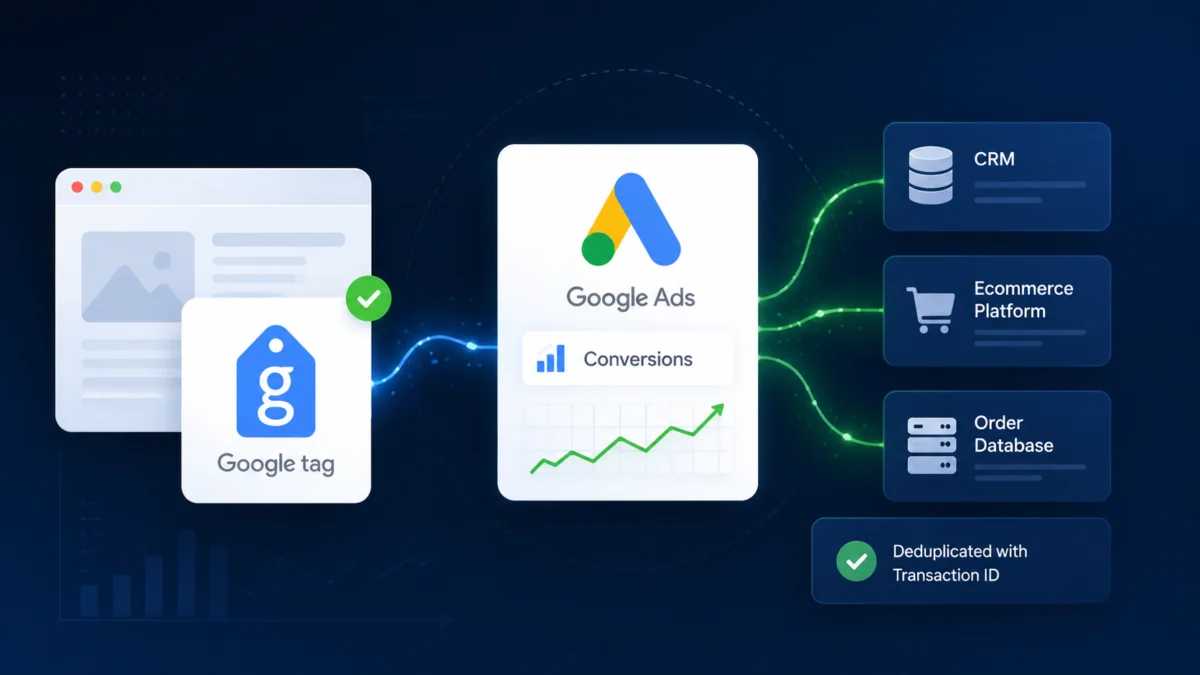
In an era defined by tightening privacy regulations, browser restrictions, and the gradual erosion of traditional tracking mechanisms, digital marketers face unprecedented challenges in measuring campaign performance. To address these measurement gaps, Google Ads has initiated the rollout of a new beta feature designed to fundamentally alter how conversion data is processed.
This beta allows advertisers to connect additional first-party data sources directly to existing website conversion actions. By doing so, marketers can supplement client-side tag-based measurement with robust backend conversion data, creating a unified, hybrid tracking ecosystem.
Executive Summary & Main Facts
The core of Google’s new beta is the integration of traditional web-based tagging with server-side and database-driven data. Historically, advertisers have relied almost exclusively on browser-based tags (such as the Google tag or Google Tag Manager) to record when a user completes an action on a website. However, this method is increasingly prone to data loss.
[User Click] ──> [Google Tag (Client-Side)] ──┐
                                               ├──> [Google Ads Deduplication Engine] ──> [Optimized Smart Bidding]
[Transaction] ─> [CRM/Database (Server-Side)] ─┘
The new feature enables a hybrid approach. Marketers can now attach supplementary data sources—such as Customer Relationship Management (CRM) systems, order databases, and ecommerce platforms—directly to an active website conversion action. This connection is facilitated through Google Ads Data Manager or the Data Manager API.
Rather than replacing existing website tags, this beta is designed to run alongside them. The system ingests data from both the client-side (the browser) and the server-side (the backend database). To prevent duplicate reporting, Google utilizes transaction IDs to automatically reconcile and deduplicate matching records, ensuring that a single conversion is not counted twice.
Chronology: The Road to Hybrid Measurement
The release of this beta marks the latest milestone in a decade-long transition toward privacy-first digital advertising. To understand why this hybrid measurement model is necessary, it is essential to trace the evolution of web tracking and browser privacy controls.
2017: Apple introduces ITP (Safari)
  │
2020: Firefox implements ETP / Apple launches iOS 14.5 (ATT)
  │
2023: Google launches Google Ads Data Manager (Beta)
  │
2024 (Early): Google begins testing third-party cookie restrictions in Chrome
  │
Present: Google Ads rolls out Hybrid Conversion Beta via Data Manager
1. The Era of Browser-Based Dominance (Pre-2017)
For years, digital marketing relied on third-party cookies and simple client-side JavaScript tags. When a user converted, the browser executed a script that sent a ping back to the advertising platform. This system was simple but fragile, relying entirely on the user’s browser behaving predictably and allowing tracking scripts to run uninterrupted.
2. The Rise of Browser Restrictions (2017–2021)
The landscape shifted dramatically with the introduction of Apple’s Intelligent Tracking Prevention (ITP) in Safari in 2017, followed by Mozilla Firefox’s Enhanced Tracking Prevention (ETP). These technologies capped the lifespan of first-party cookies and blocked third-party cookies entirely.
The disruption peaked in 2021 with Apple’s iOS 14.5 update and the App Tracking Transparency (ATT) framework, which required explicit user consent for tracking across apps and websites. Overnight, conversion visibility dropped significantly, leaving advertisers with major blind spots.
3. The Shift to Server-to-Server and First-Party Data (2021–2023)
In response to browser-level blocking, ad platforms began urging advertisers to adopt server-to-server (S2S) tracking. Meta introduced its Conversions API (CAPI), and Google promoted Enhanced Conversions. However, setting up server-side tracking historically required extensive developer resources, custom cloud configurations, and complex API integrations.
4. The Launch of Google Ads Data Manager (Late 2023–Present)
To simplify first-party data integration, Google introduced Google Ads Data Manager. This tool acts as a low-code/no-code middleware, allowing marketers to connect data warehouses (like BigQuery, Snowflake, or Amazon S3) and CRMs (like Salesforce and HubSpot) directly to Google Ads. The newly launched beta represents the next logical step in this journey, allowing these connected backend data sources to directly supplement active website conversion tags in real time.
Supporting Data: The Cost of Signal Loss and the Value of First-Party Data
The business case for adopting hybrid measurement is underscored by industry data regarding signal loss. According to various digital analytics studies, standard client-side tracking tags can miss between 10% and 30% of actual conversions due to a combination of:
- Ad Blockers: Up to 40% of internet users globally utilize ad-blocking software, much of which blocks analytic and tracking scripts by default.
- Privacy-Focused Browsers: Browsers like Brave, Safari, and Firefox impose strict limits on cookie storage, often deleting conversion cookies within 24 hours of an ad click.
- User Opt-Outs: Consent management platforms (cookie banners) have reduced the volume of trackable sessions, particularly in regions governed by GDPR and CCPA/CPRA.
| Cause of Signal Loss | Estimated Impact on Client-Side Tags | Solution Provided by Hybrid Beta |
|---|---|---|
| Ad Blockers & Script Blockers | 10% – 25% data loss | Server-side CRM uploads bypass browser-level script blockers entirely. |
| Shortened Cookie Lifespans (ITP) | High drop-off for long sales cycles (>7 days) | Backend databases preserve user purchase history indefinitely, matching conversions via offline identifiers. |
| Accidental Page Refreshes / Double Loads | Duplicate conversion reporting | Google’s deduplication engine uses Transaction IDs to ensure accurate, single-count reporting. |
When conversion data is incomplete, Google’s machine learning algorithms—such as Smart Bidding (Target CPA and Target ROAS)—operate on flawed inputs. Under-reporting conversions leads to artificially inflated Cost-Per-Acquisition (CPA) metrics, causing bidding algorithms to unnecessarily scale back campaigns that are actually performing well. By feeding complete backend data back into the system, advertisers provide the algorithms with the volume and accuracy of data required to optimize bidding strategies effectively.
How It Works: Technical Architecture and Deduplication
The mechanics of this beta rely on a dual-input pipeline. When a conversion occurs on an advertiser’s website, two parallel actions can take place:

- The Client-Side Path: The Google tag fires in the user’s browser, capturing immediate interaction data, such as page URLs, referrer data, and basic event details.
- The Server-Side Path: The transaction is recorded directly in the advertiser’s CRM, ecommerce database, or ERP system. This backend record contains definitive transaction data, including the precise order value, currency, and customer details.
   [User Website Conversion]
         │            │
         ▼            ▼
   (Google Tag)   (CRM/Database)
         │            │
         ▼            ▼
   [Transaction ID: 98765]
         │            │
         └─────┬──────┘
               ▼
   [Deduplication Engine]
               │
               ▼
     Single True Conversion Recorded
Through Google Ads Data Manager, the backend record is uploaded and matched with the tag-based event.
The Critical Role of Deduplication
A major technical challenge of running dual-tracking pipelines is the risk of double-counting. If both the website tag and the CRM upload report the same purchase, the ad platform would normally record two conversions, skewing campaign ROI.
To prevent this, Google mandates the use of a Transaction ID (a unique alphanumeric string generated by the advertiser’s website at the time of purchase).
- When the website tag fires, it sends the Transaction ID to Google Ads.
- When the backend database uploads the conversion data, it includes the same Transaction ID.
- Google Ads matches the two identical IDs within the same conversion action, discards the duplicate record, and retains the most complete set of data (enriching the tag data with the verified values from the backend).
Data Requirements for Uploads
For the system to successfully match and process supplementary data, advertisers must adhere to strict data requirements. Every upload must contain:
- Transaction ID: The unique identifier matching the website tag’s ID.
- Attribution Identifier: Advertisers must provide at least one key identifier to link the conversion back to an ad interaction. This can be:
- Hashed customer information (such as email addresses or phone numbers, obfuscated using the SHA-256 hashing algorithm).
- A Google Click Identifier (GCLID) or Enhanced Attribution ID.
- Currency and Value Consistency: Uploaded conversion values must match the currency format used by the website tags to prevent reporting discrepancies.
Implementation Guidelines and Official Recommendations
Google has issued specific guidance for advertisers participating in the beta to ensure data integrity and maximize the performance of their bidding models.
Recommended Setup: Supplement, Do Not Duplicate
Google strongly advises advertisers to add the supplementary data source to an existing website conversion action, rather than creating a separate, new conversion action.
Creating a new, parallel conversion action can cause the bidding algorithms to double-count conversions across campaign goals during the transition phase. By appending the data source to an existing action, the system seamlessly merges the incoming streams, preserving historical data and maintaining bidding stability.
Recommended Setup:
[Existing Conversion Action] <── [Google Tag] + [CRM Data Source]

Not Recommended Setup:
[Conversion Action A (Tag)] ──> Optimizing Bidding
[Conversion Action B (CRM)] ──> (Causes Bidding Instability/Double-Counting)
Supported and Unsupported Environments
The beta is currently designed for specific environments and has clear boundaries regarding its applicability.
- Supported Configurations: The beta is strictly limited to website conversion actions that utilize direct Google tag implementations or Google Tag Manager (GTM).
- Unsupported Configurations: The feature is not currently available for:
- App-based conversion actions (such as Firebase integrations).
- Offline-only conversion imports that do not originate from a web-based tag.
- Store sales or phone call conversions.
Best Practices for Data Syncing
Google recommends that advertisers configure their data uploads to occur as close to real-time as possible. Frequent uploads (ideally automated daily or hourly syncs via the Data Manager API) ensure that Smart Bidding algorithms receive fresh data, allowing them to adjust bids dynamically based on accurate performance trends.
Strategic Implications for the Marketing Landscape
The launch of this hybrid conversion beta reflects a broader industry shift toward server-to-server (S2S) dominance and the democratization of advanced data engineering for everyday marketers.
1. Parity with Competitors
With this update, Google is closing the gap with competitor platforms like Meta, whose Conversions API (CAPI) has long allowed for a similar hybrid setup (combining Pixel and Server events with deduplication). TikTok and Pinterest have also deployed similar dual-ingestion systems. Google’s integration of this capability directly into the user-friendly Google Ads Data Manager UI lowers the technical barrier to entry, allowing mid-sized brands to deploy sophisticated tracking setups that previously required enterprise-grade engineering.
2. Preparing for a Cookie-Minimized Future
While Google has adjusted its timeline and approach to phasing out third-party cookies in Chrome, the broader trend toward user privacy remains unchanged. Regulatory pressures (such as GDPR, CCPA, and upcoming state-level laws in the US) make first-party, consent-compliant backend data the only reliable foundation for long-term digital measurement. By establishing a direct pipeline from CRMs to Google Ads, brands can insulate their measurement frameworks from future browser-level policy changes.
3. Improving Bidding Efficiency and ROI
Ultimately, the primary beneficiary of this beta is the advertiser’s bottom line. By reclaiming lost conversion signals, companies can expect:
- More accurate attribution, showing which campaigns and creative assets actually drive revenue.
- Lower CPAs over time, as machine learning algorithms optimize targeting based on complete data sets.
- Better alignment between digital ad metrics and actual business outcomes (such as verified sales in a CRM vs. unverified clicks on a website).
As the digital advertising ecosystem continues to adapt to privacy constraints, features like Google’s hybrid conversion beta will likely transition from experimental tools to baseline requirements for competitive search and performance marketing campaigns.