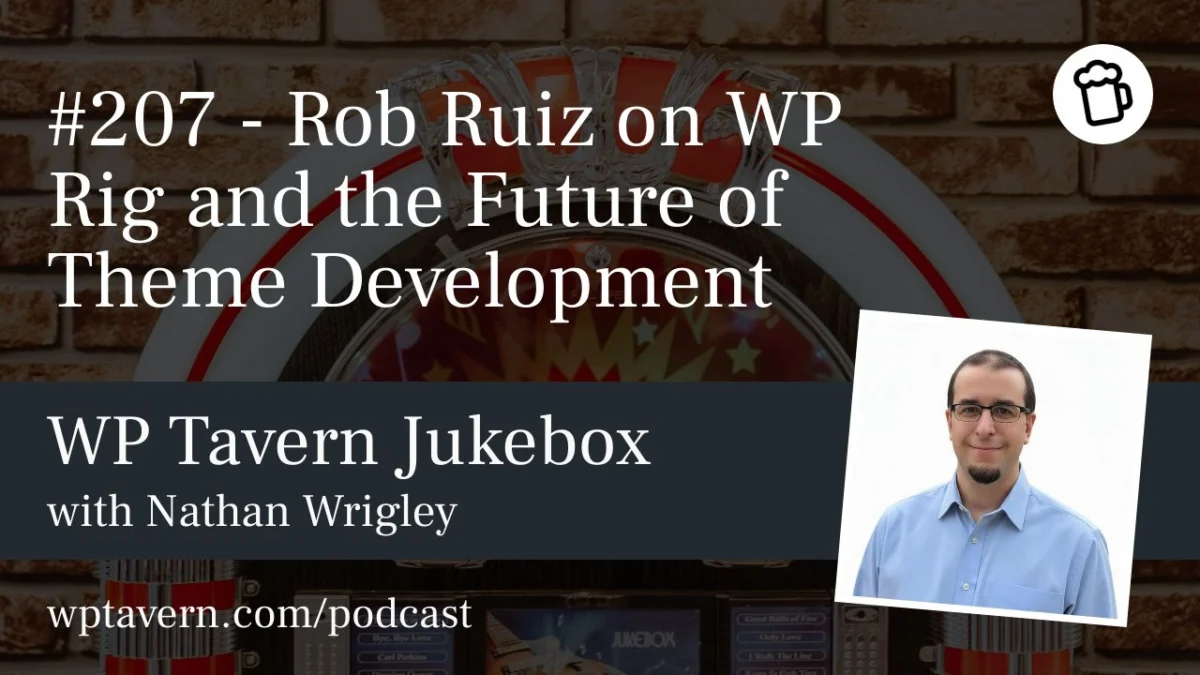
In the rapidly evolving landscape of WordPress, the chasm between "no-code" site builders and professional-grade engineering is widening. While visual page builders have democratized web creation, they often leave users trapped within the limitations of their own interfaces. For those looking to transcend these boundaries, WP Rig has emerged as a critical bridge. Recently, WP Tavern’s Jukebox Podcast featured Rob Ruiz, the project’s current custodian, to discuss how this open-source toolkit is empowering a new generation of developers to master the nuts and bolts of the web.
The Evolution of a Developer’s Toolkit
WP Rig is more than a simple starter theme; it is a comprehensive development framework designed to provide a modern, best-practice-driven environment for WordPress professionals. The project, which is free and open-source, integrates industry-standard tools like Composer and Node.js to streamline workflows, enforce coding standards, and enable the use of cutting-edge CSS features—even those not yet fully adopted by every browser.
For many, the appeal of WP Rig lies in its minimal footprint. Unlike bloated frameworks that force developers to learn proprietary templating languages, WP Rig adheres strictly to WordPress conventions while providing the scaffolding necessary to build performant, custom themes from scratch.
A Journey from User to Maintainer
Rob Ruiz’s involvement with the project is a classic story of open-source serendipity. Having transitioned from a design background into software architecture, Ruiz found himself searching for a framework that balanced power with simplicity. After discovering WP Rig, he was struck by its alignment with WordPress Core and its built-in automated testing for best practices.
Following an announcement on WP Tavern regarding the search for new maintainers, Ruiz joined a community call. His enthusiasm and technical aptitude soon led him to become the project’s sole custodian, a role he has held for several years, navigating the project through its most significant transitions.
The Case for "The Code-First Approach"
The modern WordPress ecosystem is often defined by the "Admin-first" paradigm. While this is efficient for quick deployments, it carries hidden long-term costs. Ruiz argues that relying solely on page builders can lead to a "database-first" dependency, where every design choice is stored as serialized data rather than clean, manageable code.
The Problem of Ultimate Control
When a site is built entirely through a GUI, global changes become labor-intensive. If a developer needs to update a design pattern across a site, they must manually adjust every instance. By contrast, a theme-level approach using WP Rig allows for:
- Centralized Configuration: Global changes are made once in the stylesheet or template, propagating across the entire site.
- Future-Proofing: Code-based themes are not at the mercy of a page builder’s proprietary update schedule.
- Performance: Avoiding the "bloat" often associated with drag-and-drop builders results in faster load times and cleaner DOM structures.
Ruiz emphasizes that while page builders are excellent for getting started, they shouldn’t be the final destination for those seeking professional mastery. "Coding will always be the best way to exercise control," he notes. By using a framework like WP Rig, developers can "nibble" at the code, learning HTML, CSS, and JavaScript in manageable, incremental steps.
Navigating the Shift to Full Site Editing (FSE)
The arrival of Block-Based themes and Full Site Editing (FSE) sent shockwaves through the theme development community. For many, it felt like the traditional way of building themes was being rendered obsolete. Ruiz admits to initial skepticism, but he has since pivoted to embrace the change, viewing it as a catalyst for innovation.
Supporting Multiple Paradigms
WP Rig is now designed to be platform-agnostic, supporting classic, hybrid, and block-based themes. Through custom command-line interface (CLI) commands, developers can scaffold their project to match their preferred paradigm.
- Classic Themes: Ideal for traditional PHP-based site architecture.
- Hybrid Themes: Offering a bridge between legacy files and modern block patterns.
- Block-Based Themes: Fully utilizing the Gutenberg editor for site-wide design.
This flexibility is crucial. WP Rig now includes a full block-authoring experience, allowing developers to create custom blocks directly within their themes. While some argue that blocks belong strictly in plugins, Ruiz advocates for a more pragmatic approach: if a feature is intrinsic to the theme’s design, it should live within the theme.
The Educational Mission of Version 3.0
The release of WP Rig version 3.0 marks a significant milestone in the project’s history. Recognizing that previous versions had become slightly sluggish compared to modern tools like Vite, Ruiz led a massive overhaul. The new version is faster, leaner, and more capable than its predecessors.
The "Guardrails" of Quality
A major selling point of WP Rig is its baked-in quality control. The framework includes:
- PHP Coding Standards (WPCS): Automatically checks code against the official WordPress standards.
- PostCSS Integration: Enables the use of future-facing CSS, which is automatically compiled into browser-compatible code.
- Build Processes: Uses modern tools like
esbuildandLightning CSSto ensure the final output is highly optimized.
These features serve as "guardrails" for developers. They catch errors before they occur and ensure that if a developer ever decides to submit their theme to the WordPress.org repository, they have already adhered to the rigorous requirements set by the community.
Implications for the Future of WordPress
As the web becomes more standardized, the need for contributors to the WordPress project is becoming more urgent. Ruiz warns that if the number of contributors declines, the platform’s progress will inevitably slow. The "tinkerer" mentality—the drive to take things apart and understand how they work—is the lifeblood of the WordPress community.
Sustaining the Community
While the community around WP Rig is currently small, it is highly focused. Ruiz is actively encouraging new contributors to join via the project’s Discord server and GitHub repository. The goal is to create a space where developers can learn, share, and ultimately give back to the Core WordPress project.
For those interested in joining the conversation, the resources are readily available at wprig.io. Whether you are a beginner looking to understand your first line of CSS or an experienced agency lead looking to unify your team’s development practices, the project offers a structured path forward.
Conclusion
WP Rig stands as a testament to the enduring power of open-source collaboration. By providing a professional-grade framework that doesn’t sacrifice educational value for convenience, it empowers users to reclaim ownership of their digital presence. In a world of proprietary "walled gardens," tools like WP Rig ensure that the open web remains accessible, customizable, and, above all, in the hands of the people who build it. As Ruiz continues to shepherd the project, the focus remains clear: providing the tools, the guardrails, and the community to turn every WordPress user into a potential contributor.