The WordPress ecosystem, long recognized for its democratization of the web, is currently undergoing a profound shift. While the project has always been rooted in a culture of sharing and documentation, the last twelve months have witnessed the formalization and rapid acceleration of a multi-pronged educational strategy. This shift is designed to do more than just teach users how to build a website; it is an effort to secure the future of the open-source project by integrating it into the global academic fabric.
At the heart of this movement are three core pillars: the WordPress Credits Program, WordPress Campus Connect, and the nascent but rapidly growing Student Clubs. These initiatives, championed by a dedicated group of community leaders, are transforming how the next generation interacts with open-source technology.
The Architecture of Learning: Understanding the Initiatives
To understand the scope of this educational push, one must distinguish between the three distinct, yet interconnected, programs currently driving student engagement.
1. The WordPress Credits Program
The Credits Program is the most formal of the three, specifically designed for higher education. It acts as an internship-style bridge between university students and the global open-source community. Students can earn official academic credit by contributing to the WordPress project.
The program is structured into two tracks: a 50-hour course and a 150-hour intensive, typically completed over a full academic semester. Participants are paired with vetted mentors who guide them through the "Make WordPress" contributor workflows, allowing students to apply their skills in areas ranging from core development to polyglots and documentation. Upon completion, students receive a certificate signed by the Executive Director of the WordPress Foundation and a verified badge on their WordPress.org profile, effectively creating a tangible, professional portfolio for their future careers.
2. WordPress Campus Connect
While the Credits Program focuses on formal academic pathways, WordPress Campus Connect is designed to be barrier-free and inclusive. It is an official event series that can be hosted at any educational institution—from elementary schools and high schools to local community libraries.
These events act as an "entry point" to the WordPress world. They are flexible, often occurring as one-off workshops or multi-day intensive sessions, designed to show students—and faculty—that WordPress is a versatile career tool for marketers, designers, and developers alike, rather than just a simple blogging platform.
3. Student Clubs
If Campus Connect is the "spark," Student Clubs are the "fuel." These are student-led, peer-to-peer learning groups that operate on school campuses year-round. Following the model of community meetups, these clubs provide a space for students to hold regular sessions, organize hackathons, and mentor their peers. They turn the one-time excitement of a Campus Connect event into a sustainable, ongoing ecosystem of learning.
A Chronology of Rapid Growth
The urgency of this educational push was formalized in late 2025, when community leaders began identifying a need to consolidate overlapping efforts and provide a clear roadmap for contributors.
- September 2025: Initial discussions highlighted the confusion surrounding various, disconnected education initiatives. Leaders recognized that while passion was high, the organizational framework was fragmented.
- May 2025: WordPress Campus Connect was officially launched as an official WordPress event series.
- Late 2025 to Early 2026: A period of "turbocharging" occurred. The number of institutions participating in the Credits Program saw a sharp upward trajectory, jumping from six to 21 universities in a matter of months, including the project’s first institutional partnership in Africa (Uganda).
- Present Day: The initiatives have reached a point of maturity where they are being integrated into the "flagship" experiences of the community, such as the dedicated education tracks and contributor tables planned for WordCamp Europe.
Supporting Data: By the Numbers
The scale of this effort is beginning to reflect in the project’s data, suggesting that the "virtuous cycle" of these programs is yielding tangible results.
Since becoming an official event series in May 2025, WordPress Campus Connect has hosted 42 completed events, reaching 71 participating institutions and engaging over 5,500 students.
Regarding the Credits Program, there are currently 450 students enrolled globally, with 75 successful graduates to date. Perhaps most significantly, these numbers are not merely representative of a one-time effort; they represent a "multiplier effect." In many instances, the educational outreach has resulted in record-breaking ticket sales for local WordCamps, with one recent event in Ajmer, India, reporting that 50% of its tickets were purchased by students who had been introduced to WordPress through these very programs.
Official Perspectives: The Human Element
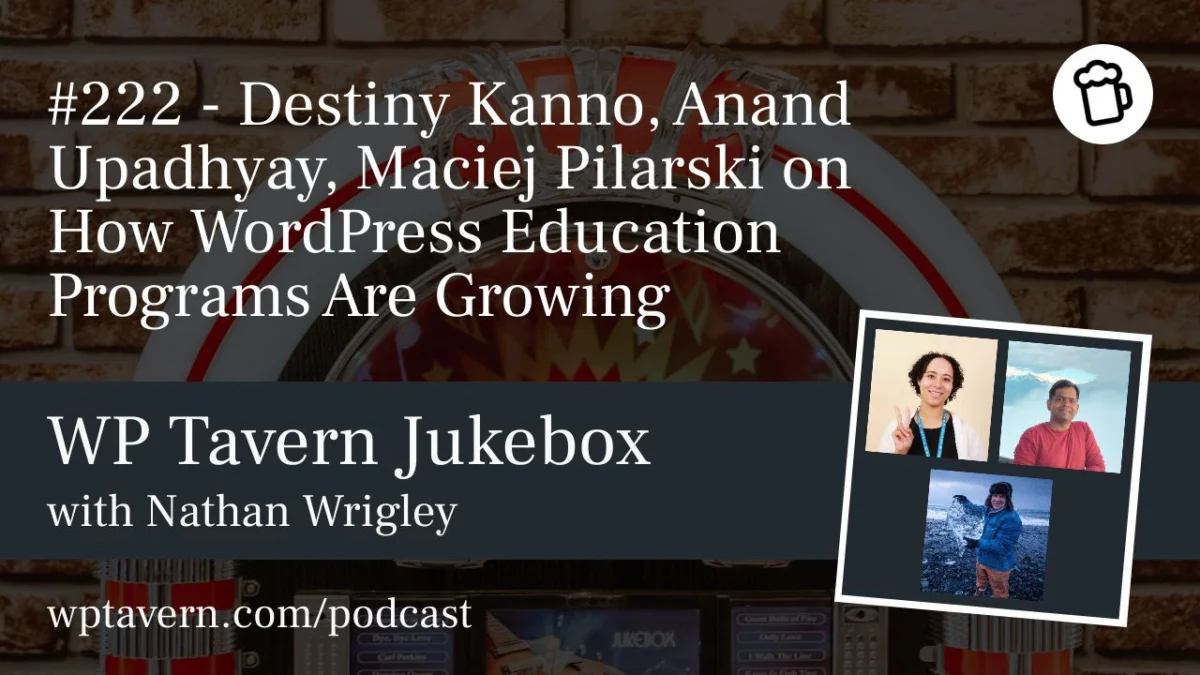
The leadership team driving these initiatives—Destiny Kanno, Anand Upadhyay, and Maciej Pilarski—emphasizes that the goal is not just to inflate user statistics, but to build a sustainable future for the open-source movement.
"We are not pushing for numbers, but growing in a smart way," says Maciej Pilarski, who manages the Credits Program. "We need to ensure we have enough mentors to accommodate students and enough facilitators to scale the program. We are building the next generation of contributors who will bring fresh, modern perspectives to the community."
Destiny Kanno, an education program manager sponsored by Automattic, highlights the role of resource libraries in this scaling process. "We are developing the ‘Meetup Activity Library,’ which provides facilitation guides and presentation decks. It removes the barrier for someone who might be terrified of standing in front of a group. We provide the tools, they provide the passion."
Anand Upadhyay, who leads the integration of Student Clubs, notes that the success of these programs is defined by their longevity. "The real metric is when a faculty coordinator calls me to ask how to keep students engaged during the summer break. That is when you know the fire has been lit."
Strategic Implications: Ensuring the Future of WordPress
The broader implication of this educational surge is the mitigation of a long-standing risk within the WordPress community: the "graying" of its contributor base. By focusing on younger demographics, the project is proactively addressing the need for a continuous influx of new talent to replace those who eventually cycle out of active contribution.
Furthermore, these programs are fostering a deeper understanding of open-source ethics. As students progress through these tracks, they learn not just how to code or design, but how to collaborate across time zones and cultural boundaries. This ensures that the next generation of WordPress users enters the workforce with a collaborative, community-first mindset.
As the program continues to integrate with flagship events, and as new initiatives like the "AI Leaders Credential" are developed to address emerging technologies, the educational wing of WordPress is no longer a peripheral activity. It has become a central strategic pillar, ensuring that as the web continues to evolve, the WordPress community remains as dynamic and vibrant as the technology it produces.
For the listener or reader interested in the future of the web, the message from the leadership is clear: the scaffolding is in place, the resources are ready, and the opportunity to get involved—by organizing a club, mentoring a student, or simply advocating for these programs at a local institution—has never been more accessible.