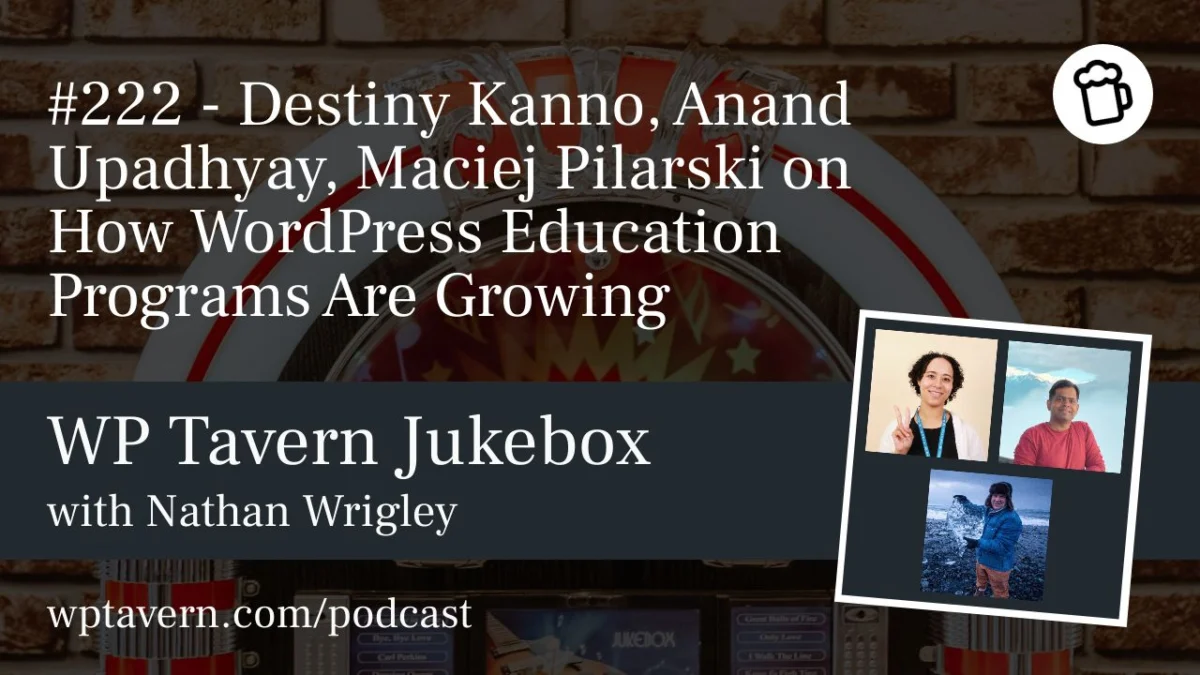
The WordPress ecosystem, long defined by its vast network of developers, designers, and marketers, is currently undergoing a structural transformation. At the heart of this shift is a concerted, global effort to institutionalize WordPress education. From university lecture halls in Italy to public libraries in Uganda and student-led clubs in India, the WordPress community is building a sustainable pedagogical infrastructure designed to secure the platform’s future while empowering the next generation of digital creators.
This movement is spearheaded by a trio of dedicated leaders—Destiny Kanno, Anand Upadhyay, and Maciej Pilarski—who are orchestrating a multi-faceted approach to education. By bridging the gap between open-source contribution and academic accreditation, these initiatives are moving beyond casual tutorials to create a structured pipeline for new talent.
The Pillars of WordPress Education
The current educational landscape is anchored by three primary initiatives, each designed to address a different level of learner engagement and institutional requirement.
1. The WordPress Credits Program
The Credits Program serves as the high-water mark for academic integration. It is a formal, contribution-based internship initiative by the WordPress Foundation that allows higher education students to earn academic credit for their work within the open-source community.
Students enrolled in the program typically commit to a 50-hour or 150-hour curriculum, which spans a full academic semester. The journey is divided into three distinct phases: onboarding into the global open-source ecosystem, selecting a specific contribution area (such as Core, Polyglots, or Documentation), and a final capstone project. Throughout this journey, students are paired with vetted community mentors who provide guidance and professional support. Upon completion, students receive a certificate signed by the WordPress Foundation’s Executive Director and gain a verified history of contributions on their WordPress.org profiles.
2. WordPress Campus Connect
While the Credits Program focuses on formal university partnerships, Campus Connect is the movement’s mobile, agile arm. It is designed to be barrier-free, hosting workshops at any location where learning occurs—be it a high school, a vocational center, or a local library.
Campus Connect events act as the "on-ramp" for many students. By hosting one-off or short-term workshops, organizers introduce participants to the possibilities of WordPress—not just as a blogging tool, but as a robust platform for marketing, design, and development. Since its formal inception in May 2025, the program has achieved remarkable reach, facilitating 42 events across 71 institutions and impacting over 5,500 students.
3. Student Clubs
Student Clubs provide the necessary continuity to keep momentum alive once a workshop concludes. Similar to local community meetups, these clubs are organized by students, for students. They serve as a decentralized learning environment where peer-to-peer knowledge sharing replaces traditional top-down instruction. Whether it’s conducting "speed-build" challenges, hosting guest webinars with international experts, or teaching foundational skills to incoming cohorts, these clubs foster leadership and sustainable engagement at the institutional level.
A Chronology of Growth
The evolution of these programs has been nothing short of "turbocharged" over the past year. In September 2025, the conversation around these initiatives was characterized by a sense of discovery—an effort to map out overlapping programs and resolve naming conflicts. Fast-forward to the present, and the landscape has matured into a cohesive ecosystem.
The growth has been exponential. Maciej Pilarski notes that in late 2024, the Credits Program was operational in just six universities. Today, that number has surged to 21, including the program’s first African institution in Uganda, established following a strategic connection at WordCamp Asia. Similarly, the "Meetup Activity Library"—a project currently under development by Destiny Kanno—is poised to provide facilitators with pre-made kits, presentation decks, and guides, further lowering the barrier to entry for new organizers worldwide.
Supporting Data and Scaling Success
Success in the WordPress education space is rarely measured by traditional corporate KPIs. Instead, the leaders view success through the lens of institutional adoption and long-term community retention.
- Institutional Buy-in: A primary metric is the frequency of repeat partnerships. When universities invite the program back for subsequent semesters, it validates the pedagogical value of the initiative.
- The Multiplier Effect: Faculty and educators are increasingly transitioning from observers to active participants, organizing their own events and fostering internal sustainability.
- Event Impact: During a recent International Women’s Day event in Ajmer, India, 50% of the attendees were students—a direct result of the Campus Connect outreach, which saw tickets sell out within a single day.
- Graduation Metrics: With 450 students currently enrolled in the Credits Program and 75 graduates already active, the foundation is successfully cultivating a new generation of contributors who bring fresh, diverse perspectives to the platform.
Official Perspectives: Building the Next Generation
The shift toward prioritizing education has received significant backing from the highest levels of the WordPress organization, including Executive Director Mary Hubbard. This high-level advocacy has allowed for the formalization of these programs, transforming them from localized experiments into global standards.
"What brought us here might not move us forward," says Maciej Pilarski. "These new students will bring a fresh perspective on how they want the community to function." This sentiment is echoed by Anand Upadhyay, who emphasizes that the ultimate goal is to create a balanced ecosystem. "If we keep focusing only on contribution but discard the growth of new users, we aren’t going to win. We need a balance."
The programs also serve as a crucial intervention against the aging demographic of the current WordPress workforce. By exposing students to the ethics of open source and the collaborative nature of the community, these initiatives are actively building the "scaffolding" required for the project to survive and thrive over the next two decades.
Implications for the Future
The implications of this educational push are profound. By integrating WordPress into academic curricula, the community is effectively positioning the platform as a foundational skill for the modern digital economy.
The AI Integration
As the tech landscape shifts, these educational programs are evolving in real-time. The development of an "AI Leaders Credential" within the education framework demonstrates that the WordPress community is not just teaching legacy skills; it is preparing students to navigate the future of artificial intelligence within the context of open-source development.
A Call to Action
The leaders of these initiatives are issuing an open invitation to the wider community. The "Education Buzz Report," distributed monthly, aims to keep the community informed of these wins, while upcoming educational tracks at flagship events like WordCamp Europe underscore that education is no longer a peripheral activity—it is now a central pillar of the WordPress identity.
As these programs continue to scale, the focus remains on the individual student. Whether it is a teenager discovering the power of their first live website or a university student finding their career path through open-source mentorship, the goal is simple: to make the barrier to entry as low as possible and the path to success as clear as possible.
For those interested in getting involved, the path is open. Through local meetups, campus connections, or mentoring, the community is inviting everyone to "join hands" in securing the future of the world’s most popular CMS. As Destiny Kanno, Anand Upadhyay, and Maciej Pilarski have demonstrated, the most meaningful way to spend time in the WordPress space is to ensure that the door remains open for those who will walk through it next.