In the modern digital landscape, the inbox has become the most contested real estate in the consumer’s life. Every morning, subscribers are met with a barrage of promotional noise, brand updates, and solicitation. For business owners and marketers, the challenge is no longer just about hitting "send"—it is about ensuring that what you send actually resonates.
The era of "spray and pray" email marketing—the practice of blasting a singular, generic newsletter to an entire database—is officially over. In its place, 2025 demands a surgical approach: Audience Segmentation.
By breaking a subscriber list into granular, targeted groups based on specific behaviors, interests, and lifecycle stages, businesses are finally moving away from intrusive noise and toward meaningful engagement. For the modern founder, segmentation is not just an optional tactic; it is a fundamental business necessity.
The Core Concept: Defining Audience Segmentation
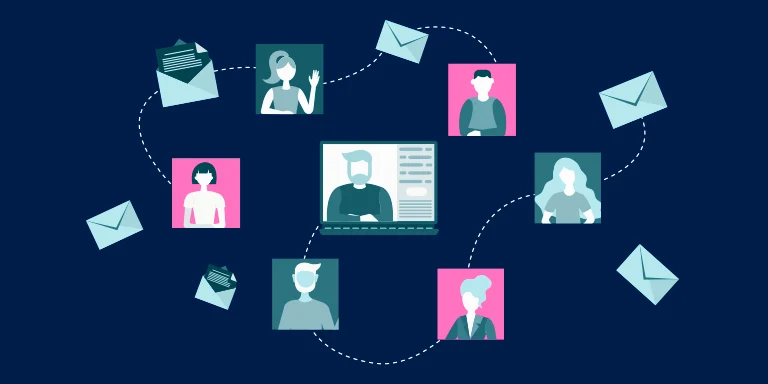
At its simplest, audience segmentation is the art of delivering the right message to the right person at the exact right moment. Instead of treating a list as a monolithic block of email addresses, segmentation treats every subscriber as an individual with unique needs.
This practice involves partitioning your audience based on several key data points:
- Behavioral Data: Actions taken (or not taken) on your website or within previous emails.
- Demographic Data: Age, location, or industry.
- Psychographic Data: Personal interests, values, and lifestyle preferences.
- Transactional Data: Purchase history, frequency, and average order value.
When a brand masters this, the customer experience transforms. Imagine entering a boutique where the proprietor greets you by name, recalls your previous purchase, and directs you to an item that perfectly complements what you already own. That is the gold standard of digital commerce, and it is precisely what high-level segmentation achieves in the inbox.
The Chronology of Email Evolution
To understand why segmentation is now critical, one must look at the trajectory of email marketing over the last decade.
2015–2018: The Volume Era. Brands prioritized list size above all else. The goal was to accumulate as many email addresses as possible, with little regard for the quality or relevance of the content sent to them.
2019–2022: The Compliance Era. With the introduction of GDPR and CCPA, the focus shifted toward data privacy and consent. Marketers had to justify their presence in the inbox, leading to a temporary "pruning" of lists.
2023–2025: The Relevance Era. Today, the consumer is more skeptical than ever. With AI-driven content generation flooding the web, the "human touch"—personalized, relevant, and timely communication—has become the ultimate competitive advantage. Segmentation is the engine of this new era.
Supporting Data: The Case for Precision
The numbers are unequivocal: generic emails are effectively "dead on arrival." According to the Omnisend 2025 Email Marketing Report, the discrepancy between generic blasts and automated, segmented campaigns is stark. While the average open rate across all industries hovers at 26.6%, automated, behavior-triggered emails—which rely heavily on segmentation—achieve an impressive 40.55% open rate.
The implications for revenue are equally profound. Segmentation reduces the "churn" rate, as subscribers are far less likely to mark emails as spam when the content is consistently relevant to their personal interests. By ignoring segmentation, a brand is essentially inviting its audience to unsubscribe, effectively burning the marketing budget on low-conversion efforts.
The Five Pillars of Effective Segmentation
For the time-starved founder, the prospect of segmenting a list can feel overwhelming. However, you do not need a team of data scientists to see results. You only need to focus on these five essential segments:
1. The New Subscriber Welcome
The first impression is the only one that counts. New subscribers are "warm" leads who have just signaled interest in your brand. Avoid the urge to sell immediately. Instead, use this segment to build trust. A three-part welcome flow—covering your brand story, educational content, and a gentle incentive—establishes a relationship that outlasts a single transaction.
2. The Post-Purchase Nurture
A sale is not the finish line; it is the starting point. By segmenting customers who have already purchased, you can provide "post-purchase validation." If a customer buys a piece of high-end equipment, your email should be filled with tutorials, maintenance tips, or complementary accessories. This increases customer lifetime value (CLV) and turns one-time buyers into loyalists.
3. The Abandoned Cart Rescue
Cart abandonment is a universal pain point in e-commerce. These users are "high-intent"—they wanted your product enough to add it to their cart. A well-timed, automated email—perhaps offering free shipping or a time-sensitive reminder—can convert a lost sale into a win, often with minimal manual effort.
4. The Re-engagement Campaign
Every list contains "cold" subscribers. Instead of deleting them, segment them into a "win-back" group. These individuals might simply need a nudge. A targeted campaign that highlights new arrivals or a "we miss you" incentive can reignite dormant interest.
5. The VIP Inner Circle
Your most valuable customers deserve special treatment. By identifying users who have a high purchase frequency or a high total spend, you can offer them early access to product launches or exclusive, private Q&A sessions. This fosters a sense of belonging, which is the cornerstone of long-term brand advocacy.
The Implications: Why Strategy Outweighs Tech
The primary implication of this shift is that strategy must precede technology. While platforms like Omnisend offer sophisticated, no-code tools to execute these strategies, the technology is merely a vehicle. The "brains" of the operation—the decision to treat a customer like a person rather than a number—must come from the business owner.
When a brand successfully segments its audience, it stops being a nuisance and starts being a resource. This shift reduces the "cost per acquisition" because you are not wasting money sending emails that don’t get opened. It increases the "customer lifetime value" because you are constantly presenting relevant, high-value offers to people who actually want them.
Implementing the System
How does a business owner begin? It starts with a four-step framework:
- Choose the Right Infrastructure: Utilize platforms specifically designed for e-commerce, such as Omnisend, which allow for real-time behavioral tracking without the need for custom coding.
- Focus on Behavior: Start by segmenting based on actions. Did they open an email? Did they click a link? Did they abandon a cart? These are more predictive than static data like location.
- Automate for Scale: Once a segment is identified, build an automated flow. This ensures that the message is delivered the moment the user triggers the behavior, rather than waiting for you to manually hit "send."
- Iterate and Refine: Treat every segment as an experiment. If a "new subscriber" flow isn’t converting, look at your subject lines or your content. Segmentation is a living system that requires periodic check-ins.
Conclusion: A New Standard for Success
As we look toward the remainder of 2025 and beyond, the brands that win will be the ones that prioritize connection over collection. The noise in the inbox is not going away; if anything, it will increase. The only way to cut through that noise is to ensure that your message is tailored, timely, and deeply relevant to the person on the other end of the screen.
Segmentation is the difference between being a digital nuisance and a welcomed guest. By applying these strategies, founders can stop wasting resources on generic blasts and start building a sustainable, high-converting revenue stream, one targeted email at a time.
For those looking to streamline their email marketing and implement these segments today, Omnisend offers a robust solution for growth-focused businesses. Foundr readers can access an exclusive 50% discount for their first three months by using the code FOUNDR50 at checkout. Click here to activate your account and start segmenting your audience today.