As WordPress approaches its third decade of dominance, the platform finds itself at a pivotal crossroads. No longer just a blogging tool, the ecosystem is currently undergoing a radical transformation driven by artificial intelligence. At the heart of this evolution is Elementor, the powerhouse page builder that now powers over 13% of the entire web.
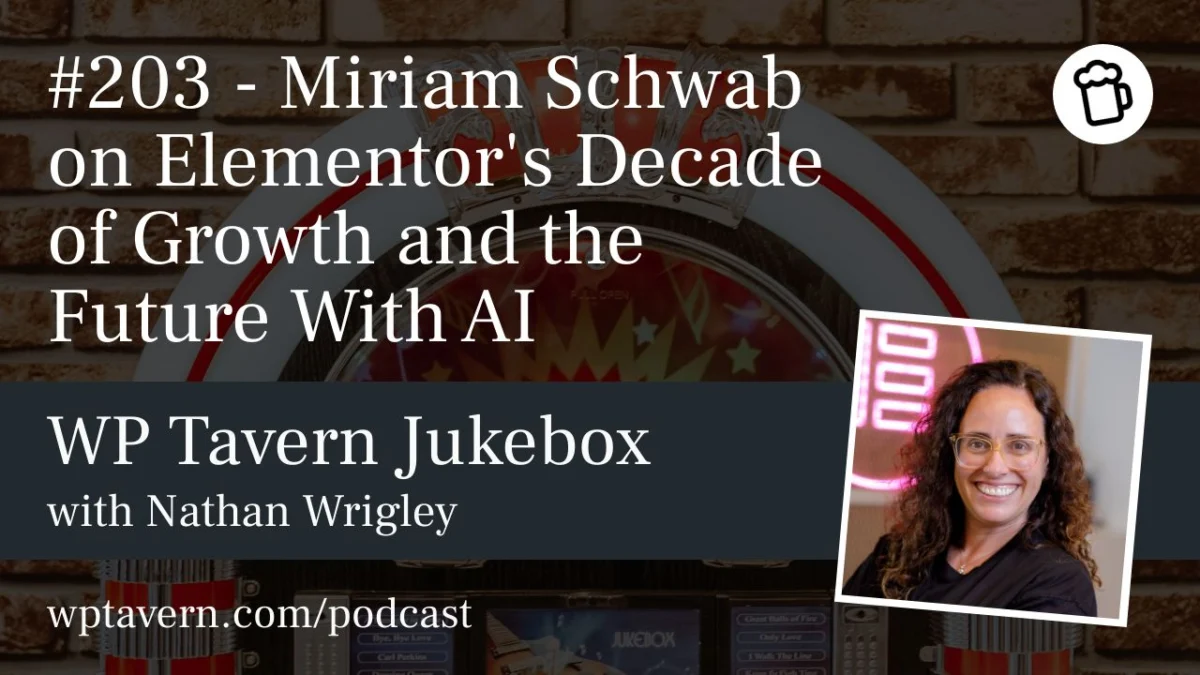
In a recent episode of the WP Tavern Jukebox podcast, Miriam Schwab, Head of WordPress at Elementor, sat down with host Nathan Wrigley to discuss the company’s meteoric rise, its strategic pivot toward agentic AI, and how it plans to keep the WordPress ecosystem relevant in an era of rapid technological disruption.
A Legacy of Growth: The Elementor Phenomenon
To understand Elementor’s future, one must appreciate its past. Founded nearly a decade ago, Elementor disrupted the WordPress landscape by offering a sophisticated, high-performance page builder with a generous free tier. This strategy didn’t just capture market share; it fundamentally changed how users interacted with the WordPress dashboard.
"Elementor’s adoption continues to grow," Schwab explains. "For the third year running, Elementor was named the Top Content Management System by W3Techs, beating out Wix, Shopify, and even WordPress itself in terms of growth trajectory."
The numbers are staggering. According to W3Techs data cited by Schwab, Elementor began 2025 with 11.7% of the internet under its belt and ended the year at 13.1%. In an industry where market saturation is a constant threat, Elementor added approximately 3.5 million new sites in a single year. This growth poses a unique challenge: balancing aggressive innovation with the ironclad requirement for backward compatibility. With a codebase ten years in the making, the team is now rolling out "Version 4," an architectural overhaul designed to modernize the platform while ensuring that millions of existing, unique "snowflake" websites remain stable.
The AI Pivot: From Content Generation to Agentic Workflows
The conversation quickly shifted to the industry’s obsession: Artificial Intelligence. For Elementor, AI is not merely a feature to be bolted onto the editor; it is a fundamental pillar of their future strategy.
The Three-Pronged Approach
Elementor is tackling AI through three distinct layers:
- In-Editor Assistance: This includes the "standard" expectations—AI-driven image generation, text copywriting, and HTML/CSS generation directly within the builder.
- Angie (Agentic AI): Perhaps the most significant development, Angie is a standalone plugin that brings agentic capabilities to the entire WordPress ecosystem. Unlike simple chatbots, Angie is designed to perform actions—managing users, scheduling posts, or adjusting WooCommerce settings—across the entire admin interface.
- Site Planner: This tool guides users through a conversational process to build a website from the ground up. It functions as a digital architect, asking pertinent questions to develop a site brief before generating a wireframe that can be exported into any hosting environment.
The Power of the Abilities API
A major point of discussion was the WordPress Abilities API. For years, developers struggled with fragmented ways of allowing external tools to interact with the WordPress core. The Abilities API represents a standardized "doorway" for AI agents to understand what a site is capable of—whether that is creating a custom post type, updating a meta field, or modifying a taxonomy.
Schwab revealed that Elementor’s team had been building their own tools for Angie well before the official Abilities API was finalized. They successfully exposed roughly 200 WordPress and WooCommerce functions to their AI. Now, the goal is to sync these internal developments with the official core API to ensure a unified, standard future for all WordPress-powered AI agents.
"It standardizes things in a way that is good for development and the AI future," Schwab noted. "It means that the way AI interfaces with WordPress is straightforward enough that, regardless of what the LLMs end up doing, we can still interact with a 20-year-old platform."
The Human-in-the-Loop: Redefining Professional Value
With AI capable of wireframing sites in minutes and performing complex administrative tasks, a burning question remains: What happens to the web professional?
Schwab remains optimistic, arguing that AI shifts the value proposition from "tinkering" to "directing." The role of the web developer is evolving into that of a producer or strategist. The "blank canvas" syndrome that often paralyzes clients is being solved by tools like the Site Planner, which allows professionals to present a 90% complete wireframe to a client in a fraction of the time it previously took.
"The quality of the results will be dependent on the skillset of the user—not the skill of knowing how to prompt, but the skill of knowing what an excellent website should be," she says.
However, this transition is not without its perils. Schwab admitted to testing Angie to its limits, at one point accidentally getting herself locked out of her own site. This experience prompted the Elementor team to implement rigorous guardrails, ensuring that AI agents cannot execute destructive changes without explicit user verification and "human-in-the-loop" confirmations.
Ensuring Accessibility in the AI Age
One of the most critical aspects of the discussion was the impact of AI on web accessibility. There is a common misconception that AI can make a site "accessible" by magic. Schwab is quick to clarify that AI requires tools and specific direction to meet WCAG (Web Content Accessibility Guidelines) standards.
To address this, Elementor has invested in the Ally plugin—a tool that scans websites for accessibility issues and, crucially, offers automated AI-driven solutions to remediate those errors. By making this plugin available to the wider WordPress community, not just Elementor users, they are aiming to raise the baseline for accessibility across the entire internet.
Looking Toward 2026: A New Era of Innovation
As the podcast concluded, the tone was one of cautious excitement. The year 2026 is viewed by the Elementor team as a period of inevitable, yet necessary, chaos. The rapid pace of model updates and the emergence of new AI capabilities mean that the roadmap for WordPress is being rewritten in real-time.
For the WordPress ecosystem, the "AI moment" has effectively revitalized its relevance. By opening the doors to AI agents, the platform has secured its position as a modern, flexible foundation for the next decade of web development.
"AI takes innovation to a whole other level," Schwab concluded. "It makes innovation more accessible. We are going to see some amazing things released over the course of 2026, not just by Elementor, but by the community, that will make WordPress… wow."
The journey from a simple CMS to an AI-augmented platform is complex, fraught with technical debt and high expectations, but if the last decade is any indication, Elementor is poised to remain at the helm of that transition. Whether through Angie, the evolving Site Planner, or continued contributions to the core, the message is clear: the future of WordPress is not just about writing code; it’s about managing the intelligence that does.