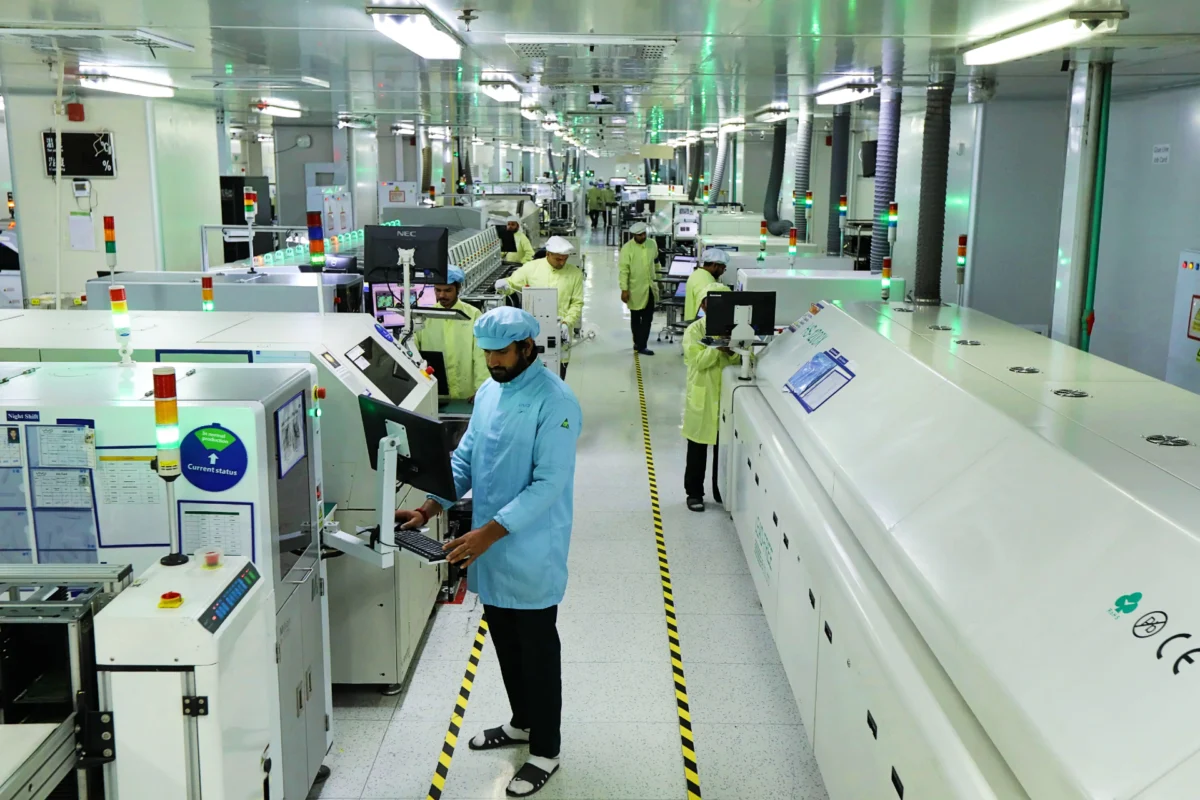
In a significant reinforcement of India’s burgeoning role as a global technology powerhouse, Amazon announced on Thursday a monumental commitment to invest an additional $13 billion into its Indian operations through 2030. This latest capital infusion, finalized following a high-level meeting between Amazon CEO Andy Jassy and Indian Prime Minister Narendra Modi in New Delhi, underscores the e-commerce giant’s pivot toward consolidating its cloud computing dominance and accelerating its artificial intelligence infrastructure across the subcontinent.
The investment is specifically earmarked to scale the capacity of Amazon Web Services (AWS) data centers in the strategic technology hubs of Mumbai and Hyderabad. By fortifying its digital backbone, Amazon aims to capture the rapidly expanding demand for localized AI workloads, ensuring it remains the primary cloud provider for both the Indian startup ecosystem and global enterprises seeking to operate within the region.
The Chronology of Commitment: A Strategic Accumulation
Amazon’s latest pledge is not an isolated event but rather the third major financial commitment in as many years, signaling a long-term, multi-generational bet on the Indian economy.
- 2023: The Foundation. Following a pivotal summit between Jassy and Modi in 2023, Amazon unveiled a massive $15 billion investment plan slated through 2030. This figure included a dedicated $12.7 billion allocation specifically for AWS infrastructure, highlighting the company’s focus on cloud services as its primary growth engine in the country.
- December 2025: The Acceleration. As the global AI arms race intensified, Amazon returned to the table with an additional $35 billion commitment. This move signaled a shift in strategy, transitioning from standard cloud expansion to the heavy-duty infrastructure required for generative AI and machine learning.
- June 2026: The AI Expansion. The current $13 billion injection brings Amazon’s cumulative investment commitments in India to a staggering $48 billion.
While the company has not provided a granular breakdown of how these funds will be distributed across its retail, logistics, and cloud divisions, industry analysts note that such long-term commitments typically encompass a mix of capital expenditures (CapEx)—such as data center construction and hardware procurement—and operating expenditures (OpEx) required to sustain such massive digital footprints.
The AI Gold Rush: Why India?
Amazon’s aggressive posture is a direct response to a broader, global shift in corporate strategy. India has effectively positioned itself as the "world’s back office" for AI, attracting unprecedented levels of capital from the technology sector’s "Big Three."
Microsoft, a fierce competitor in the cloud space, announced in December 2025 its own $17.5 billion investment plan for India through 2029. Shortly before that, in October 2025, Google pledged $15 billion toward building a robust AI hub and secondary data center infrastructure. These announcements represent a collective admission by the world’s most powerful tech firms: the physical geography of the internet is shifting, and India is the chosen terrain for the next decade of AI development.
The influx is not limited to software giants. Heavy industry and global infrastructure funds are flocking to India to build the "pipes" of the AI age. Notable commitments include:
- AirTrunk (Australia): A $30 billion pledge to build 5GW of AI-ready data center capacity.
- CPP Investments (Canada): A significant capital injection into the Indian data center market to capitalize on the AI-fueled boom.
- Domestic Titans: Indian conglomerates have also entered the fray, with the Adani Group pledging $100 billion and Reliance Industries unveiling a $110 billion investment plan, both focused on high-density AI data centers and green energy integration.
Government Incentives and Policy Tailwinds
The rapid pace of these investments is largely attributed to the proactive policy environment cultivated by New Delhi. The Indian government has aggressively courted global cloud providers, recognizing that hosting AI infrastructure locally is a matter of national economic security.
A key driver of this trend is the government’s recent policy shift offering tax exemptions for foreign cloud providers on services sold to international clients, provided the underlying workloads are processed within Indian borders. By incentivizing the export of AI computing services, India is transforming from a consumer of tech services into a global hub for compute-as-a-service. This "zero-tax through 2047" incentive has effectively de-risked the massive capital outlays required for data center construction, turning India into the most attractive jurisdiction for hyperscalers globally.
Beyond the Cloud: The Retail and Logistics War
While the headlines are dominated by AI and cloud infrastructure, Amazon is simultaneously doubling down on its traditional bread-and-butter business in India: e-commerce.
The company is currently executing a massive expansion of its logistics network, with plans to open over 20 new fulfillment centers and more than 100 last-mile delivery stations in the coming year. This physical expansion is critical as Amazon prepares to escalate its presence in the "quick commerce" sector—a highly competitive arena where delivery speeds are measured in minutes rather than days.
Amazon’s move to expand its "Amazon Now" quick-commerce service to over 300 cities is a clear challenge to domestic and international rivals. The company faces stiff competition from Blinkit (owned by Zomato), Swiggy’s Instamart, Zepto, and Walmart-backed Flipkart. The rivalry is reaching a fever pitch; Flipkart recently announced plans to open 1,500 micro-fulfillment centers across the country by the end of 2026. This "war of the minutes" is driving a massive logistical overhaul across India, benefiting consumers but placing immense pressure on the operational efficiency of all involved parties.
Implications: A Transformative Decade
The implications of Amazon’s $48 billion commitment are profound.
- Job Creation and Skill Development: The construction of data centers and the scaling of a national logistics network will create hundreds of thousands of jobs, ranging from high-skilled AI engineering roles to blue-collar logistics and supply chain management.
- Digital Sovereignty: As more data is processed locally, India gains greater control over its digital landscape. This reduces latency for Indian businesses and keeps critical information within national borders, aligning with the government’s "Digital India" vision.
- Economic Multiplier Effect: For every dollar invested in data center infrastructure, there is an expected multiplier effect on the broader economy. Small and medium enterprises (SMEs) will gain access to the same high-end computing power previously reserved for Fortune 500 companies, democratizing access to AI-driven tools.
- Market Consolidation: With Amazon, Google, and Microsoft pouring billions into the country, the barrier to entry for smaller, domestic cloud providers is rising. This may lead to a market dominated by a few global "hyperscalers," necessitating careful regulatory oversight to maintain competitive pricing and fair access for smaller tech startups.
Conclusion
Amazon’s decision to commit an additional $13 billion is more than just a capital allocation; it is a declaration of intent. As India continues to reform its regulatory landscape and modernize its digital infrastructure, the nation is successfully positioning itself as the primary engine room for the next phase of the global AI revolution. Whether this massive investment leads to a sustainable, competitive ecosystem or a landscape dominated by a few global titans remains to be seen, but one thing is certain: the center of gravity for the world’s digital future is moving decisively toward India.
The next five years will be the definitive testing ground for these commitments, as the world watches whether the reality of India’s tech infrastructure can meet the massive, multi-billion-dollar expectations of the global tech elite.