In a move that could reshape campaign strategies for e-commerce marketers, Google has quietly rolled out a major update to its Standard Shopping campaigns. Advertisers can now access the "Maximize Conversion Value" bidding strategy without being forced to set a mandatory Target Return on Ad Spend (tROAS) constraint.
This update represents a significant shift in the balance of power between highly automated "black-box" campaign types like Performance Max (PMax) and more traditional, controllable campaign structures like Standard Shopping. By removing the tROAS requirement, Google is effectively democratizing its most advanced value-based bidding (VBB) algorithms, allowing search engine marketers (SEMs) to leverage machine learning while retaining the granular controls, transparency, and search term visibility that Standard Shopping campaigns uniquely provide.
Main Facts
At its core, this update introduces a critical functional change to Google Ads’ bidding architecture:
- The Uncoupling of Value Bidding and tROAS: Previously, if an advertiser running a Standard Shopping campaign wanted to optimize for revenue or conversion value rather than sheer conversion volume, they were required to utilize a Target ROAS bidding strategy. Under the new rollout, advertisers can select "Maximize Conversion Value" as a standalone, budget-constrained bidding strategy.
- A Bid for Greater Flexibility: The newly available option allows Google’s bidding algorithms to dynamically adjust bids to capture the maximum possible transaction value within a campaign’s daily budget, without being restricted by a rigid, predefined efficiency target (ROAS).
- Closure of the Feature Gap: Historically, one of the primary selling points of Google’s flagship automated campaign type, Performance Max, was its exclusive, unconstrained access to advanced value-based bidding. This update narrows the feature gap between the two campaign types, offering a viable alternative to advertisers who prefer manual control over automated asset distribution.
- The End of a Common Workaround: For years, advanced search marketers have used "feed-only" Performance Max campaigns—campaigns stripped of text, image, and video assets—solely to gain access to Google’s unconstrained Maximize Conversion Value bidding. This update largely renders that complex workaround obsolete.
- Discovery: The platform update was first spotted and documented by performance marketing specialist Yash Mandlesha, who shared screenshots of the new interface option on LinkedIn, sparking widespread discussion across the global pay-per-click (PPC) community.
Chronology: The Evolution of Google Shopping Bidding
To understand the significance of this update, it is necessary to examine the historical trajectory of Google’s e-commerce advertising products over the last decade.
[Pre-2018: Manual Era] ──► [2018-2021: Smart Shopping] ──► [2021-2024: PMax & The "Feed-Only" Hack] ──► [Present: Feature Convergence]
   (Manual/eCPC Bidding)      (Automated Black-Box)          (Forced Multi-Channel & Asset Workarounds)    (VBB in Standard Shopping)
The Era of Manual and Enhanced CPC (Pre-2018)
In the early days of Google Product Listing Ads (PLAs), which later became Standard Shopping, management was highly manual. Advertisers set specific bids for individual products or product groups, using negative keywords to sculpt traffic and relying on bid adjustments for devices, demographics, and audiences. While time-consuming, this era offered total transparency.
The Rise of Smart Shopping (2018–2021)
In 2018, Google introduced Smart Shopping campaigns. This marked Google’s first major push toward fully automated retail campaigns, combining Shopping ads with display, remarketing, and Gmail placements. Smart Shopping relied heavily on machine learning and introduced value-based bidding options, though it stripped away search query data and negative keyword controls.
The Performance Max Hegemony and the "Feed-Only" Workaround (2021–2024)
In late 2021, Google began transitioning Smart Shopping into Performance Max (PMax). PMax expanded automation across Google’s entire inventory, including YouTube, Discover, Gmail, Maps, Search, and Display.
While PMax delivered strong performance for many, it drew criticism from enterprise advertisers and agencies due to its lack of transparency, forced asset creation (which often resulted in low-quality AI-generated video and text ads), and the inability to easily exclude search terms.
To bypass these limitations while still leveraging Google’s superior value-based bidding algorithms, the PPC community engineered the "feed-only" PMax campaign. By creating a PMax campaign without uploading any creative assets (images, videos, or headlines), the campaign was forced to run strictly as a Shopping campaign. This workaround allowed advertisers to access "Maximize Conversion Value" bidding without a tROAS constraint, mimicking a Standard Shopping campaign but with PMax’s algorithmic advantages.
The Present Day: Feature Convergence (Late 2024–Present)
By introducing "Maximize Conversion Value" without a tROAS constraint directly into Standard Shopping, Google has brought its bidding capabilities full circle. Marketers no longer have to choose between the transparency of Standard Shopping and the advanced bidding flexibility of Performance Max.
Supporting Data and Technical Deep Dive
To appreciate why this update is a milestone for performance marketers, we must look at the mechanics of Value-Based Bidding (VBB) and how it differs from traditional volume-based bidding.
Volume-Based Bidding vs. Value-Based Bidding
| Bidding Strategy | Primary Objective | Algorithmic Focus | Ideal Use Case |
|---|---|---|---|
| Maximize Conversions | Maximize the total number of transactions. | Treats a $10 purchase and a $1,000 purchase with equal weight. | Lead generation; clearing low-cost inventory. |
| Maximize Conversion Value | Maximize the total revenue or margin generated. | Prioritizes users predicted to buy high-ticket items or larger baskets. | E-commerce with highly variable cart values. |
Under the previous Standard Shopping framework, if an advertiser wanted to use "Maximize Conversion Value," they had to check a box to "Set a target ROAS."
For example, if an advertiser set a Target ROAS of 400%, the algorithm would only bid on auctions where it predicted a 4:1 return. While safe, this constraint often limited scale. If the algorithm could not find enough high-probability auctions to meet that exact target, campaign spend would drop sharply, leaving valuable revenue on the table.

[Traditional Standard Shopping] ──► Requires Target ROAS ──► Algorithmic constraint (May restrict volume)
[New Standard Shopping Option]  ──► Uncapped Max Value   ──► Algorithm bids freely to capture maximum revenue within daily budget
By removing the tROAS constraint, the algorithm can now operate with a single directive: spend the daily budget to return the absolute highest conversion value possible. This is highly beneficial in several scenarios:
- High-Season Sales Events: During promotional events like Black Friday, Cyber Monday, or seasonal clearances, maximizing absolute revenue quickly is often more important than maintaining a strict ROAS.
- New Product Launches: When introducing new inventory with no historical conversion data, setting an arbitrary tROAS can choke campaign delivery. An unconstrained "Maximize Conversion Value" strategy allows the campaign to gather data and find its baseline.
- Aggressive Market Penetration: Brands looking to capture market share can leverage this setting to maximize top-line revenue growth within a fixed budget.
Community Reactions and Industry Sentiment
While Google has not released a formal press release regarding this rollout, the update has quickly generated discussion within the search marketing community.
Yash Mandlesha, the performance marketer who first spotted the feature, highlighted that this update addresses a long-standing pain point for advertisers who felt pressured to adopt Performance Max simply to access modern bidding features.
Many independent PPC practitioners and agency executives have expressed optimism, viewing the update as a rare win for advertiser control. For years, the prevailing sentiment in the industry was that Google was actively deprecating Standard Shopping to force adoption of the highly automated PMax, which gives Google more control over inventory distribution across its ad networks.
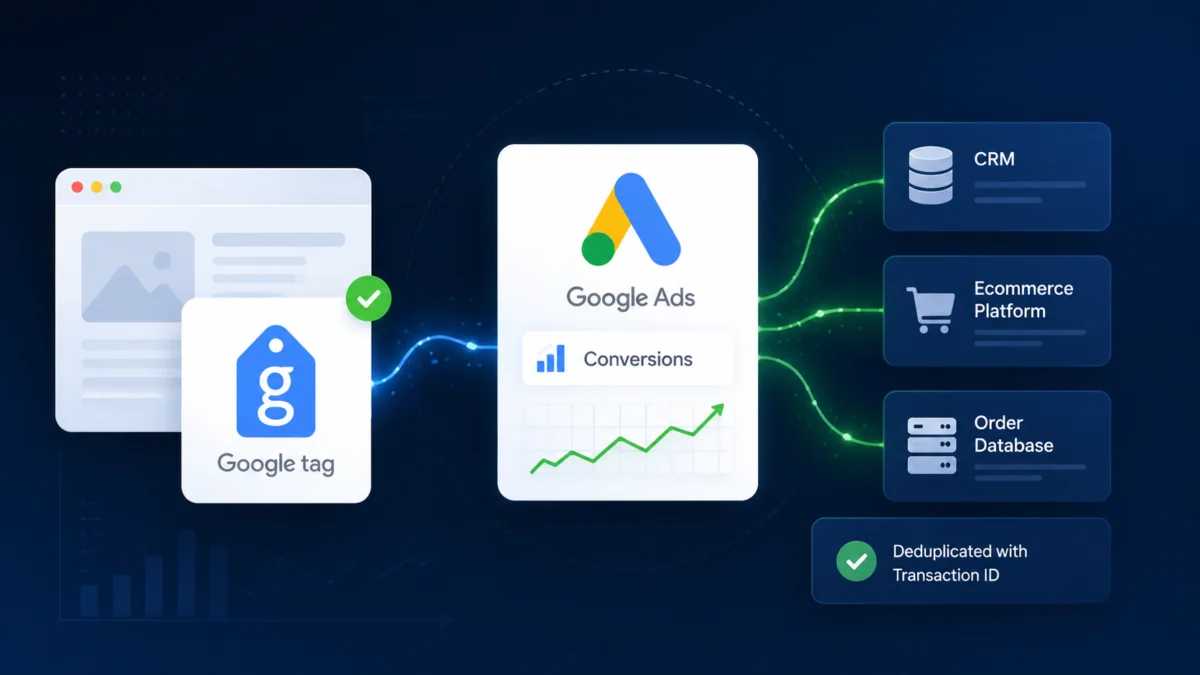
However, some industry veterans urge caution. Commenters on LinkedIn and PPC-focused forums have noted that while the bidding strategy is now available, its success depends on the quality of conversion data fed into the system. Without robust conversion tracking—such as Google’s Enhanced Conversions or first-party cart data—a value-based bidding strategy can struggle to optimize effectively.
Implications for Advertisers and the PPC Landscape
The introduction of unconstrained Maximize Conversion Value bidding to Standard Shopping campaigns has several strategic implications for retail brands and digital marketing agencies.
1. Structural Simplification and the Decline of "Feed-Only" PMax
For many accounts, campaign structures are set to become much cleaner. Marketers who previously maintained complex "feed-only" PMax campaigns alongside Standard Shopping campaigns to balance control and performance can now consolidate their efforts. This consolidation reduces account clutter, prevents internal bidding competition, and simplifies reporting.
2. A Resurgence of Standard Shopping
This update is expected to spark a resurgence in Standard Shopping adoption, particularly among mid-to-large e-commerce brands that require tight control over brand safety and search term queries.
Standard Shopping allows advertisers to:
- Apply negative keyword lists to prevent bidding on low-intent or brand-damaging search queries.
- See exactly which search terms triggered their product ads.
- Adjust campaign priorities (Low, Medium, High) to funnel traffic strategically based on inventory levels or margins.
With value-based bidding now fully integrated, the incentive to migrate entirely to PMax is greatly diminished for brands that value this level of control.
3. Improved Testing and Experimentation
Advertisers can now run clean A/B tests to compare the efficiency of Standard Shopping against Performance Max. Using Google Ads Experiments, media buyers can split traffic between a Standard Shopping campaign utilizing "Maximize Conversion Value" and a PMax campaign utilizing the same strategy. This allows brands to isolate whether PMax’s additional placements (YouTube, Display, Discover) actually drive incremental revenue, or if they merely cannibalize high-intent search traffic that could be captured more cheaply via Standard Shopping.
4. Strategic Recommendations for E-Commerce Brands
To take advantage of this update, marketers should consider the following steps:
- Evaluate Current Workarounds: Review existing "feed-only" PMax campaigns. Assess whether transitioning those budgets back into a Standard Shopping campaign with Maximize Conversion Value bidding yields better search term control without sacrificing revenue.
- Establish Robust Conversion Value Tracking: Ensure that your Google Ads pixel is accurately reporting transaction values. If your business models profit margins rather than top-line revenue, consider implementing Profit-First Bidding by passing gross profit margins as the conversion value instead of raw revenue.
- Implement Budget Caps Wisely: Because an unconstrained "Maximize Conversion Value" strategy is designed to spend your entire daily budget, ensure your campaign budgets are set to comfortable levels to avoid unexpected spend spikes.