
Digital advertisers are locked in an increasingly costly arms race against malicious actors. According to data from Juniper Research, global losses due to ad fraud are projected to reach a staggering $172 billion annually by 2028. While ad fraud affects the entire digital ecosystem, it is particularly destructive in highly competitive industries characterized by high cost-per-click (CPC) rates. In these niches, malicious clicks can quickly drain an advertiser’s daily budget, rendering search engine marketing unsustainable.
When traditional defenses—including third-party monitoring software and official Google support channels—fail to stop the bleed, marketers are forced to innovate. Recently, search engine marketing experts pioneered a counterintuitive strategy: leveraging Google’s own predefined audience data to filter out fraudulent traffic. By restricting search campaigns exclusively to users who fit within Google-defined audience profiles, advertisers have successfully cut invalid clicks by 50%, restoring profitability to campaigns previously decimated by fraud.
Main Facts: The Battle Against Invisible Traffic
The efficacy of this strategy was demonstrated in a real-world case study involving an agency client operating in the highly competitive book editing and ghostwriting sector. In this vertical, search terms carry high transactional intent, and CPCs are premium.
Despite targeting highly relevant, high-intent keywords, the client’s campaigns suffered from dismal conversion rates. An audit of the account revealed unmistakable patterns of click fraud. The traffic behavior did not match the actions of genuine prospective clients; instead, it bore the hallmarks of coordinated, automated, or competitor-driven invalid click activity designed to exhaust the client’s ad spend.
+------------------------------------------------------------------------+
|                          THE CLICK FRAUD CYCLE                         |
|                                                                        |
|  [ Fraudulent Bots/Click Farms ] ---> [ Click Ads via Rotating VPNs ]  |
|                 |                                      |               |
|                 v                                      v               |
|     [ Evade IP Blocklists ]                 [ Drain Ad Budgets ]       |
|                 |                                      |               |
|                 +------------------+-------------------+               |
|                                    |                                   |
|                                    v                                   |
|                      [ Low/No Conversion Performance ]                 |
+------------------------------------------------------------------------+
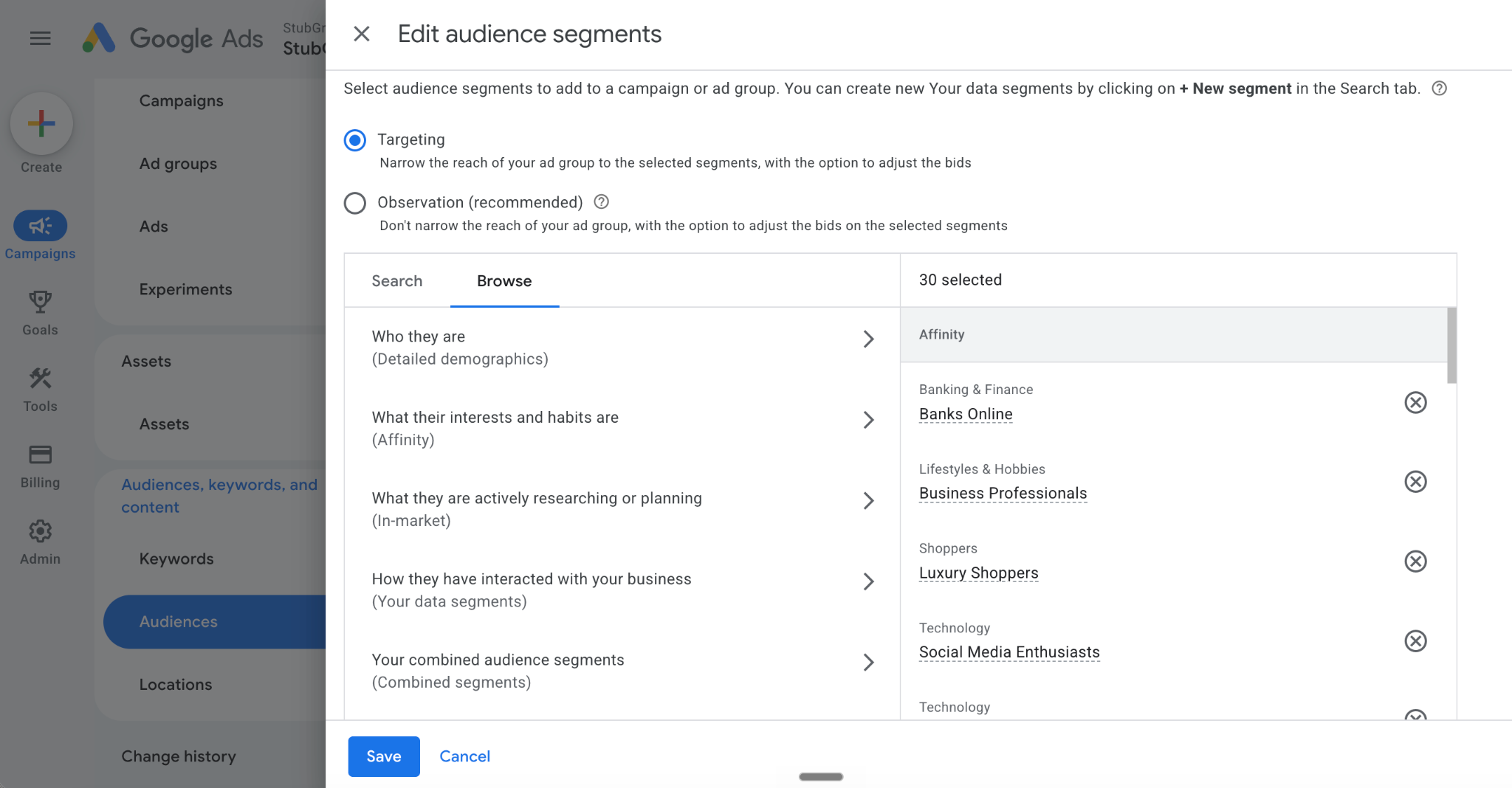
To combat this, the agency bypassed traditional IP-blocking software and implemented a structural change to their Google Search campaigns. They added 540 Google-defined audience segments directly to their campaigns, changing the setting from the standard "Observation" mode to "Targeting."
The results were immediate:
- Invalid click rates dropped by 50% overnight.
- Conversion rates rebounded to highly profitable levels.
- Ad spend was preserved for high-intent, human users rather than being wasted on automated scripts or malicious competitors.
Chronology: From Campaign Collapse to a 50% Fraud Reduction
The resolution of this click fraud crisis followed a systematic process of trial, failure, and ultimate technical pivot.
  +-------------------------------------------------------+
  | 1. DETECTION                                          |
  | Identify signs of click fraud (high CTR, no sales).   |
  +-------------------------------------------------------+
                              |
                              v
  +-------------------------------------------------------+
  | 2. THIRD-PARTY TOOLS                                  |
  | Deploy IP-blocking software (failed due to VPNs).     |
  +-------------------------------------------------------+
                              |
                              v
  +-------------------------------------------------------+
  | 3. GOOGLE INVESTIGATION                               |
  | File dispute with Google (claimed safety; no relief). |
  +-------------------------------------------------------+
                              |
                              v
  +-------------------------------------------------------+
  | 4. THE AUDIENCE PIVOT                                 |
  | Apply 540 "Targeting" audiences to restrict ads.      |
  +-------------------------------------------------------+
                              |
                              v
  +-------------------------------------------------------+
  | 5. OPTIMIZATION                                       |
  | Achieve 50% drop in invalid clicks; restore ROI.      |
  +-------------------------------------------------------+
Phase 1: Identifying the Symptoms of Click Fraud
The campaign began with excellent search term reports. The keywords triggering the ads were highly relevant, and click-through rates (CTR) were strong. However, the traffic failed to convert. A deeper dive into the web analytics revealed classic indicators of invalid click activity:
- Sudden, unnatural spikes in click volume during specific hours of the day.
- High bounce rates combined with near-zero seconds of on-page engagement.
- Repetitive navigation patterns that did not mimic natural human browsing behavior.
- A high volume of clicks originating from geographic regions outside the client’s primary service areas, despite strict geo-targeting parameters.
Phase 2: The Failure of Conventional Defenses
The agency initially deployed industry-standard third-party click fraud prevention tools. These platforms monitor traffic in real-time and automatically add suspicious IP addresses to Google Ads’ campaign exclusion lists.
However, this approach yielded no measurable improvement in performance. Modern fraudsters are highly sophisticated; they routinely bypass IP filters by using virtual private networks (VPNs), proxy servers, and residential botnets. By cycling through thousands of unique IP addresses, attackers ensure that by the time an IP is identified and blocked, the fraudster has already moved on to a new one.

Furthermore, Google imposes a hard limit of 500 IP address exclusions per campaign, making it mathematically impossible to block a scaled, rotating botnet.
Phase 3: The Google Investigation and the Denied Reality
Faced with the failure of third-party tools, the agency submitted a formal click quality investigation request to Google. Advertisers can request manual reviews when they suspect they are victims of click storms.
Google’s engineering team reviewed the traffic and admitted to detecting suspicious activity. However, Google maintained that its automated real-time filters had already identified, filtered, and discarded those invalid clicks, ensuring the client was not billed for them.
Despite Google’s assurances, the client’s campaign metrics remained dismal. It was clear that a significant volume of highly sophisticated invalid traffic was slipping past Google’s automated gatekeepers and being billed as legitimate clicks.
Phase 4: The Audience "Targeting" Breakthrough
Recognizing that reactive measures (IP blocking) and official channels (Google support) were insufficient, the team designed a proactive structural filter based on user identity.
They theorized that while automated bots and outsourced click-farm workers can easily spoof IP addresses and browser user-agents, they cannot easily mimic the complex, long-term web browsing histories that Google uses to build its proprietary audience profiles. A bot running on a clean virtual machine or a worker clearing cookies every few minutes lacks the digital footprint of a real consumer.
To exploit this vulnerability, the agency added 540 diverse, Google-defined audiences—spanning demographics, in-market segments, and affinity groups—to their Search campaigns. Crucially, they set these audiences to "Targeting" rather than the default "Observation" mode.
Phase 5: Optimization and Recovery
The implementation of the targeting filter immediately restricted the delivery of the ads. Google was no longer permitted to show ads to anyone who typed in the target keywords; instead, the ad would only trigger if the searcher typed the keyword and belonged to at least one of the 540 predefined audience segments.
This structural barrier immediately cut the invalid click rate by half. Legitimate searchers, who naturally belonged to Google’s demographic and interest categories, continued to see the ads and convert, restoring the campaign to a healthy, profitable return on investment (ROI).
Supporting Data and the Mechanics of Click Fraud
Understanding why this strategy succeeded requires an examination of the scale of invalid clicks and the limitations of standard PPC security.

The Limits of IP-Based Security
Third-party ad fraud software relies primarily on IP blacklisting. When a software platform detects multiple clicks from the same IP address in a short period, it adds that IP to the campaign’s exclusion list.
While useful against basic scrapers, this system fails against sophisticated ad fraud networks utilizing:
- Residential Proxies: Fraudsters route traffic through legitimate residential internet connections, making their clicks look like they are coming from a typical household.
- Mobile Device Farms: Physical arrays of smartphones connected to cellular networks, where IP addresses change constantly as devices connect to different cell towers.
- Automated VPN Cycling: Scripts that automatically disconnect and reconnect to VPN servers, changing the user’s IP address with every single click.
Because Google restricts campaigns to 500 IP exclusions, an advertiser targeting a competitive keyword can run out of exclusion slots within hours during a concentrated attack.
Industry Benchmarks for Invalid Clicks
Invalid traffic is not an anomaly; it is a permanent fixture of digital advertising. A comprehensive benchmark study analyzing 43,700 Google Ads accounts revealed that the average invalid click rate across all industries stands at 11.4%.
+-----------------------------------------------------------------+
|               INVALID CLICK RATES BY INDUSTRY LEVEL             |
|                                                                 |
|  Average Accounts:    [███░░░░░░░░░░░░░░░░░] 11.4%              |
|                                                                 |
|  High-CPC Niches:     [████████████░░░░░░░░] 40.0%+             |
+-----------------------------------------------------------------+
However, averages can be misleading. In highly competitive verticals where CPCs range from $10 to over $100 per click (such as legal services, locksmiths, enterprise software, and high-end creative services), invalid click rates frequently exceed 40%. In these sectors, competitor clicking and malicious bot campaigns are common tactics used to deplete rivals’ budgets early in the business day.
The Power of Google’s Predefined Audiences
Google’s advertising network tracks billions of users across its ecosystem, including Search, Maps, YouTube, and Chrome. Over months and years, Google compiles detailed behavioral profiles, placing users into categories such as:
- Affinity Audiences: Based on long-term lifestyles, habits, and interests (e.g., "Avid Readers," "Technology Enthusiasts").
- In-Market Audiences: Based on active, short-term search intent and purchase consideration (e.g., "Looking for Business Services," "Book Editing").
- Detailed Demographics: Long-term life stages and statuses (e.g., "Homeowners," "College Graduates").
+-----------------------------------------------------------------+
|                   AUDIENCE FILTER EFFECTIVENESS                 |
|                                                                 |
|  [ Legitimate Human User ]                                      |
|  - Multi-month browsing history                                 |
|  - Uses Google Maps, YouTube, Gmail                             |
|  - Classified into 10+ Google Audiences                         |
|  ==> PASSES FILTER & SEES AD                                    |
|                                                                 |
|  [ Fraudulent Bot / Click Farm Worker ]                         |
|  - Clean-slate browser / Incognito mode                         |
|  - No sustained historical activity                             |
|  - Belongs to 0 Google Audiences                                |
|  ==> BLOCKED BY TARGETING FILTER                                |
+-----------------------------------------------------------------+
A bot or a temporary click-farm worker typically operates on a fresh, cookieless, or incognito browser instance to avoid detection. Because they lack a sustained historical footprint across Google’s services, Google’s algorithms cannot place them into predefined audience segments. By switching a campaign from targeting everyone searching for a keyword to targeting only those who belong to Google’s verified audience database, advertisers create a highly effective digital filter.
Official Responses: Google’s Defensive Stance and Refund Mechanics
Google’s official documentation defines invalid clicks as clicks that are "irrelevant, accidental, or generated by automated software." This category encompasses:
- Accidental double-clicks by legitimate users.
- Manual clicks intended to increase advertising costs for a competitor.
- Automated clicking tools, robots, and other scraping software.
How Google Identifies and Credits Invalid Clicks
Google employs a multi-layered detection system to identify and filter out invalid clicks before advertisers are billed.
+---------------------------------------------------------------------+
|                     GOOGLE'S DOUBLE-FILTER SYSTEM                   |
|                                                                     |
|  [ Incoming Click ]                                                 |
|         │                                                           |
|         ▼                                                           |
|  [ Real-Time Filters ] ───(Invalid)───> [ Discarded immediately; ]  |
|         │                               [ Advertiser not billed. ]  |
|      (Passed)                                                       |
|         │                                                           |
|         ▼                                                           |
|  [ Offline Analysis ] ───(Invalid)───>  [ Retroactive Credit ]      |
|                                         [ "Invalid Activity Credit" ]|
+---------------------------------------------------------------------+- Real-Time Filters: Google’s algorithms analyze each click the moment it occurs, looking at patterns, IP addresses, timestamps, and user-agent data. Clicks flagged at this stage are discarded immediately; they appear in campaign reports as "invalid clicks" but are never charged to the advertiser.
- Offline Analysis: Google also conducts retroactive analyses of click patterns over days and weeks. If Google identifies fraudulent behavior after a bill has been generated, it issues an "Invalid activity credit" to the advertiser’s account, which is applied to future advertising spend.
Accessing the Invalid Activity Reports
Advertisers can monitor how much invalid traffic Google is catching by adding specific reporting columns within the Google Ads dashboard:
- Invalid Clicks: The total number of clicks identified as invalid by Google’s filters.
- Invalid Click Rate: The percentage of total clicks that were flagged as invalid.
To view retroactive refunds, advertisers can navigate to the Report Editor in the Google Ads User Interface and select the "Invalid activity credit" report. This ledger details exactly when and how much credit was returned to the account.
Despite these systems, the case study demonstrates that Google’s automatic detection is not exhaustive. When sophisticated click fraud bypasses Google’s real-time and offline filters, advertisers must take proactive steps to protect their budgets.
Strategic Implications for the Digital Advertising Industry
The success of the audience-targeting strategy highlights a shift in modern pay-per-click (PPC) management. As automated traffic and AI-driven bots grow more sophisticated, traditional reactive management is becoming less effective.
Reevaluating the Trade-Offs of "Targeting" vs. "Observation"
In standard Google Search campaigns, advertisers are encouraged to use the "Observation" setting for audiences. This allows ads to show to all users searching for the targeted keywords, while simply gathering data on how specific audience groups perform.
Switching to "Targeting" represents a major strategic shift:
| Campaign Setting | Audience Scope | Fraud Risk | Ideal Use Case |
|---|---|---|---|
| Observation | Broadest possible reach; displays ads to any user who types the keyword. | High; vulnerable to bots, competitors, and unclassified traffic. | Standard accounts with low invalid click rates and high search volume. |
| Targeting | Highly restricted; displays ads only if the user matches the keyword and a predefined audience. | Low; filters out empty profiles, bots, and rotating VPN networks. | Highly competitive, high-CPC niches suffering from severe click fraud. |
The primary risk of the "Targeting" approach is audience exclusion bias. A legitimate human user who has opted out of tracking, cleared their cookies, or is searching via a highly secure browser may not be classified into any of Google’s 540 audiences. By adopting strict targeting, an advertiser will successfully block bots, but they may also block a portion of clean, legitimate search traffic.
For this reason, digital marketing experts recommend this tactic as a specialized solution reserved for accounts facing clear, performance-damaging click fraud.
Step-by-Step Implementation Guide
For advertisers experiencing high invalid click rates, implementing this audience filter requires a systematic approach within the Google Ads interface:
- Navigate to the Campaign: Select the Search campaign experiencing high invalid click rates.
- Access Audience Settings: Click on Audiences in the left-hand navigation menu, then select Edit audience segments.
- Set to Targeting: Ensure the radio button is set to Targeting (not Observation).
- Browse and Add Segments: Go to the Browse tab. Systematically select a wide range of audiences across Demographics, Affinity, and In-Market segments. To avoid over-restricting legitimate traffic, add a broad selection of audiences (up to several hundred) that reflect a wide variety of human behaviors.
- Save and Monitor: Click Save. Closely monitor the campaign’s click volume, invalid click rate, and overall conversion volume over the following 14 days to balance fraud reduction with overall reach.
The Future of PPC in an AI-Driven Landscape
As artificial intelligence makes it easier to generate human-like browsing patterns, the distinction between human and automated traffic will continue to blur. Relying solely on IP addresses or basic user-agent tracking to defend ad budgets is no longer sufficient.
The success of audience-targeted filtering suggests that the future of PPC defense lies in behavioral verification. Advertisers will increasingly need to rely on deep historical data—such as Google’s multi-year tracking profiles—to verify the authenticity of a user before bidding on their search queries. While this approach changes the open nature of search engine marketing, it remains one of the most effective ways to protect ad spend from the multi-billion-dollar ad fraud industry.