India’s digital payment infrastructure, spearheaded by the Unified Payments Interface (UPI), has fundamentally reshaped the nation’s economic landscape. With daily transaction volumes now exceeding 750 million, the National Payments Corporation of India (NPCI) is looking toward its next ambitious milestone: reaching over a billion daily transactions.
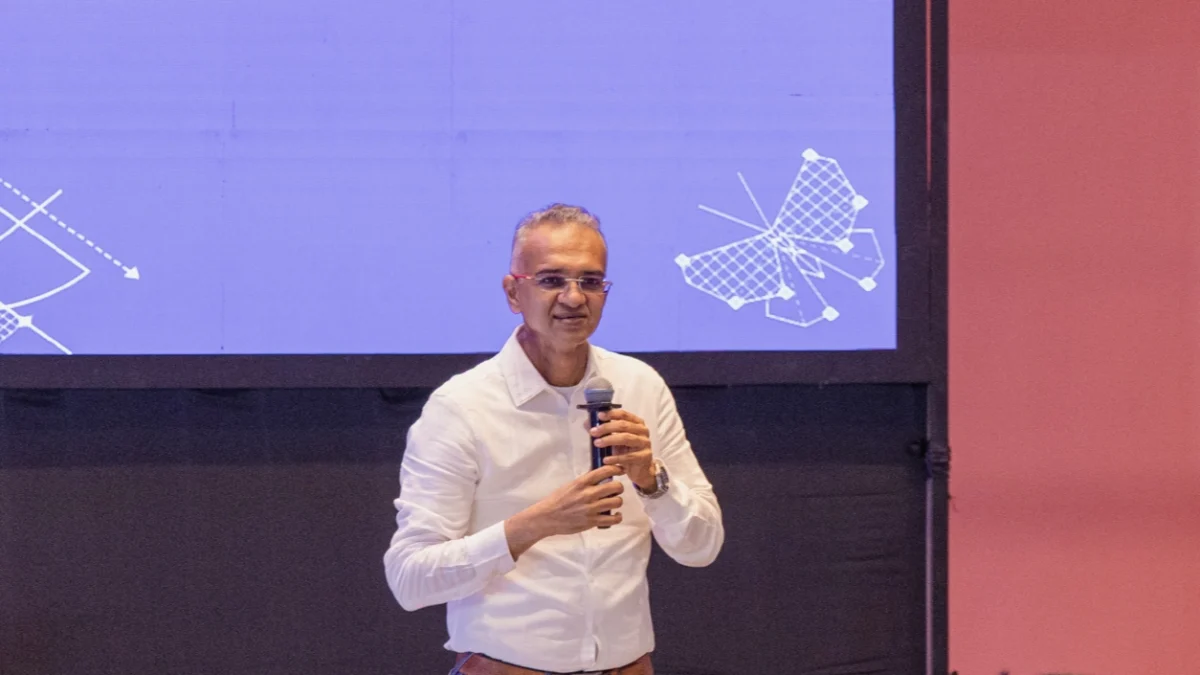
Dilip Asbe, MD and CEO of the NPCI, recently outlined a roadmap at Mumbai Tech Week (MTW) 2026, positioning Artificial Intelligence (AI) as the primary engine for this next wave of growth. Beyond mere volume, the NPCI envisions a sophisticated ecosystem where AI safeguards user assets, streamlines onboarding via multilingual voice interfaces, and democratizes access to credit for millions of previously underserved merchants and consumers.
The Evolution of UPI: A Chronology of Success
To understand the scale of the current ambition, one must look at the trajectory of India’s digital payment revolution:
- 2016: The NPCI launches UPI, a real-time payment system that allows instant bank-to-bank transfers via mobile devices.
- 2018–2020: Rapid adoption spurred by the proliferation of low-cost data and the entry of global giants like Google Pay and PhonePe.
- 2023: NPCI launches a voice-assistant-based interactive payment system, marking the first major attempt to lower the barrier for non-tech-savvy users.
- 2024: NPCI spins off the BHIM UPI app into a standalone subsidiary to bolster competition and security, signaling a shift toward a more diversified app ecosystem.
- 2025: Successful pilot programs for "agentic commerce"—AI-driven shopping and payment experiences—are launched in collaboration with firms like Razorpay.
- 2026: NPCI introduces FIMI, an AI-powered language model designed specifically to handle user disputes and mandate cancellations, currently serving over a million users.
AI as the Bedrock of Future Growth
The NPCI’s strategy for the "next half a billion users" relies heavily on AI to solve the friction points that currently limit digital financial inclusion. According to Asbe, the integration of AI will occur across three primary pillars:
1. Fraud Prevention and Security
As digital footprints grow, so does the sophistication of financial crime. The NPCI is leveraging AI to detect fraudulent patterns in real-time, effectively identifying "money mules" and suspicious transaction chains before they can cause widespread damage. By moving from reactive security to proactive, deterministic AI monitoring, the NPCI aims to maintain user trust—a prerequisite for widespread adoption.
2. Simplified Onboarding
Language remains a significant barrier to digital adoption in a country as linguistically diverse as India. Asbe emphasized that AI must be utilized to create voice-first, multilingual solutions that allow users to navigate the UPI interface using natural language. While acknowledging that voice models are still in their infancy regarding accuracy, Asbe maintains that voice will eventually become the primary interface for millions of new users, making the digital economy as accessible as a phone call.
3. Credit Distribution
Perhaps the most significant shift is the use of AI to evaluate the creditworthiness of merchants and consumers. By analyzing the rich digital footprints generated by millions of UPI transactions, the NPCI plans to facilitate credit flow to the informal sector—a segment traditionally ignored by formal banking institutions due to a lack of documentation.
Building a Sovereign AI Ecosystem: Small Language Models (SLMs)
While global tech giants are racing to integrate massive Large Language Models (LLMs) into finance, Asbe suggests that the Indian ecosystem has a unique opportunity to build "Small Language Models" (SLMs).
"We believe that the models will differentiate from each other based on the data sets that are made available to them," Asbe stated during his interview. Unlike general-purpose models, these SLMs will be specifically tailored to the nuances of Indian financial transactions. They are designed to be "sharp, specific, and as deterministic as possible," minimizing the "hallucinations" often associated with larger, generalized AI.
This approach is already yielding results. The FIMI model, developed by the NPCI to resolve user disputes, is a testament to this strategy. By automating the resolution process for mandate cancellations and transaction errors, FIMI has effectively offloaded millions of customer service queries, allowing human staff to focus on more complex, high-value issues.
Addressing Market Concentration and Competition
A persistent challenge for the NPCI has been the dominance of two major players—Walmart-owned PhonePe and Google Pay—which together control over 80% of the UPI market. This concentration risk has led to regulatory debates over the implementation of a 30% market share cap, a policy slated to take effect on December 31, 2026.
Asbe views the current market structure through the lens of economic viability. He argues that the concentration exists because these dominant players have invested millions to acquire their positions, and the cost of switching for the average user remains low.
"The moment we see a viable commercial model available to the ecosystem, I believe newer players will start investing very heavily," Asbe noted. He believes that the solution to market concentration isn’t just regulation, but the creation of an environment where secondary players can find profitability. This is why the NPCI has focused on making its own BHIM app a secure, sovereign alternative, even if it currently holds only a small fraction of the market share. The goal is to provide a neutral, robust platform that encourages competition rather than stifling it.
Implications: The Path Toward "Agentic" Finance
The global financial sector is witnessing a shift toward "agentic finance," where AI agents—on behalf of the user—manage portfolios, trade stocks, and execute payments. While companies in the U.S. like Coinbase and Robinhood are already experimenting with these autonomous agents, India is treading a more cautious path.
Asbe advocates for a regulatory-first approach. Any implementation of AI-driven agents must be underpinned by a clear framework that defines consent, liability, and risk mitigation. If an agent executes a transaction that results in a loss, the system must be capable of auditing the instructions provided by the user to determine accountability.
Regulatory Readiness
The NPCI is working closely with the Reserve Bank of India (RBI) and the government to ensure that as AI becomes more autonomous, the regulatory guardrails evolve in lockstep. This proactive stance is essential for maintaining the integrity of the world’s largest real-time payment network.
Conclusion: The Road to One Billion Transactions
The vision laid out by the NPCI is nothing short of a total transformation of the Indian retail economy. By moving from a "human-operated" digital payment system to an "AI-augmented" one, the NPCI is attempting to solve the last-mile problem of financial inclusion.
As India moves toward the one-billion-transaction-a-day goal, the intersection of AI, robust regulation, and competitive market dynamics will be the deciding factor. If successful, India will not only solidify its position as the global leader in digital payments but will also provide a blueprint for other emerging economies to leverage AI for national economic growth.
The future of finance in India is not just digital; it is intelligent, multilingual, and increasingly autonomous. With the right mix of caution and innovation, the NPCI is poised to ensure that the next half a billion users are not just participants in the system, but beneficiaries of a more inclusive and efficient financial future.