In the high-stakes world of B2B SaaS, the "Contact Us" form has long been the industry standard—a digital gatekeeper that sorts intent from noise. However, according to the team at SaaStr, this relic of the early internet has become the most expensive "lazy decision" a company can make. By replacing traditional forms with advanced AI agents, businesses are discovering that the standard two-to-three-day response lag isn’t just an inconvenience; it is a structural failure that hemorrhages qualified leads.
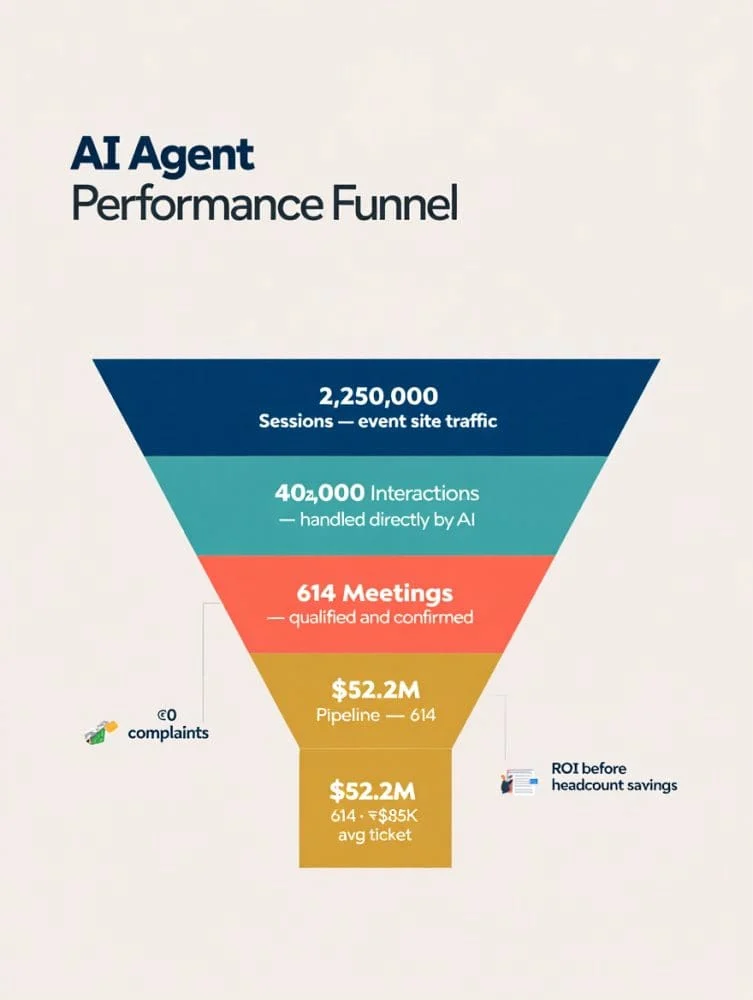
For a lean team of three, the shift from human-reliant lead management to AI-driven engagement has yielded staggering results: 614 high-value meetings booked, an average ticket size of $85,000, and over 400,000 successful interactions. This isn’t just automation; it is a fundamental transformation of the go-to-market (GTM) strategy.
The Chronology of a Failed Funnel
To understand why the "Contact Us" form is failing, one must look at the typical customer journey. A prospect lands on a B2B website with high intent—perhaps looking for sponsorship or a software demo. They fill out a form, detailing their budget and requirements, and then hit "Submit."
In the traditional model, the journey stalls here. The lead enters a round-robin queue. An Account Executive (AE) eventually picks it up, often hours or days later. By the time the human representative makes contact, the "warm" prospect has often moved on, engaged with three competitors, or simply lost the sense of urgency that prompted the inquiry.
The team at SaaStr identified two fatal flaws in this workflow:
- The Latency Trap: Inbound leads have a shelf life. Every hour of delay increases the probability that the prospect will churn.
- Linear Scalability: The current model scales only with headcount. To manage more inbound leads, a company must hire more Business Development Representatives (BDRs)—a cohort notorious for high turnover and inconsistent performance.
Last summer, SaaStr deployed "Amelia AI," a specialized agent built on the Qualified platform, to dismantle this broken process. The goal was simple: turn an incoming flood of interest into qualified, booked meetings without the need for an army of BDRs.
Supporting Data: The ROI of Autonomy
The numbers tell a compelling story of efficiency. Across 2.25 million sessions, Amelia AI managed over 400,000 interactions with near-zero complaints. While not every interaction resulted in a closed deal, the ability to qualify and book 614 meetings—each with an average value of $85,000—demonstrates a level of operational leverage that human teams simply cannot sustain.
The Human vs. Machine Disparity
Human teams are subject to fatigue, changing priorities, and the inevitable "bad week." In contrast, an AI agent operates 24/7 with perfect consistency. For a small team of two or three people running a massive event platform, the agent isn’t just a tool; it is the infrastructure that allows them to punch well above their weight class.
According to data from ICONIQ’s 2026 GTM report, which surveyed over 150 B2B revenue leaders, the stakes have never been higher. Demo-to-close conversion rates have dropped by 5 to 10 percentage points year-over-year, and sales cycles have lengthened by up to four weeks. In this environment, the "two-to-three day" lag is no longer just a minor inefficiency—it is the point of failure where deals die. The data is clear: organizations with strong AI adoption in their sales funnel hit their quotas at a rate of 67%, compared to just 59% for those relying on legacy methods.
Anatomy of the Agent: Training for Nuance
The success of Amelia AI is not due to the software alone, but to the rigor of its training. SaaStr emphasized three pillars of implementation that differentiate their agent from a standard, generic chatbot:
1. Contextual Intelligence
Amelia is trained on nuance, not just FAQs. She recognizes the difference between a self-serve buyer looking for a ticket and a high-level sponsor looking for a partnership. By utilizing a "forward deployed engineer" approach, the team ensured the agent could toggle between being a salesperson, a support representative, and a marketer depending on the user’s intent.

2. Real-Time Data Synchronization
Stale information is the death of credibility. Amelia crawls the SaaStr and event websites daily. Any update pushed to the company’s other internal systems is automatically reflected in her knowledge base. This ensures that when a user asks about a session schedule or a specific venue location, the agent provides accurate, up-to-the-minute data.
3. Compartmentalized Memory
The team deliberately "compacted" the agent’s memory based on the user’s context. When a visitor is at an event, the agent focuses on local, actionable information (e.g., room locations) rather than dumping the entirety of the company’s website knowledge into the chat window. This results in faster, more accurate responses that respect the user’s current environment.
Implications: Beyond Chat
While answering questions is the "floor" of AI capability, the real operational leverage lies in the agent’s ability to act as a full-cycle representative.
Smart Routing
Amelia doesn’t just pass leads to the next available human; she routes them based on live Salesforce close-data. If one rep has a superior track record for closing legacy-company accounts, the agent intelligently weights that data to ensure the lead reaches the person most likely to convert it. This is a level of dynamic management that would overwhelm a human sales manager.
Automated Re-Engagement
The agent manages two critical campaigns that capture leads that would typically be lost:
- The Sponsor Campaign: If a prospect visits the sponsorship page but does not convert, the agent identifies them (via CRM data) and reaches out with personalized, relevant examples of active sponsors. It automatically filters out current customers, ensuring the outreach remains targeted and professional.
- The Ticket Campaign: For ticket buyers, the agent provides VIP codes and follow-up incentives. This campaign alone has generated hundreds of thousands of dollars in revenue from leads that would have otherwise gone cold.
Guardrailed Discounting
Perhaps the most sophisticated feature is the agent’s ability to handle discounting. Human sales representatives often panic when a deal stalls, leading to a "discount spiral" that erodes margins. Amelia operates within hard, pre-set guardrails. She offers the right discount at the right time, acting as a real-time, rule-based CPQ (Configure, Price, Quote) system. This maintains price integrity while providing the necessary nudges to convert the long tail of buyers.
Industry Response and Future Outlook
Kyle Norton, CRO of Owner.com, echoes these findings, noting that the modern buyer expects a spectrum of engagement—from fully self-serve to fully handheld. Perplexity, the AI search company, serves thousands of enterprise customers with a tiny sales team, a ratio that is only possible through heavy reliance on AI-fronted qualification.
For companies still holding onto the "Contact Us" form, the message from market leaders is clear: the cost of inaction is rising. The "two-to-three day" death march is no longer an acceptable standard.
The Playbook for Implementation
For those looking to replicate this success, the path forward is a four-step framework:
- Commit to One Vendor: Avoid "vendor bakeoffs." Pick a robust platform (like Qualified) and go deep into its capabilities.
- Train for Distinct Buyer Types: Segment your training based on the different personas visiting your site. A one-size-fits-all bot will always fail to convert.
- Prioritize Real-Time Data: Integrate your CRM and back-end systems. If the agent isn’t answering with fresh data, it is a liability.
- Audit Your Own Flow: Go "incognito" on your own website. Experience the frustration of your current lead-routing process firsthand. Use that embarrassment as your primary KPI for improvement.
The era of the static form is coming to a close. In its place is a new, autonomous model of GTM that is faster, smarter, and significantly more profitable. As the SaaStr team proves, the most "Captain Obvious" move in AI isn’t building a complex new product—it’s fixing the broken, outdated systems that have been sitting in plain sight for decades.