Is your LinkedIn reach in decline? If you’ve noticed your once-reliable engagement numbers dipping, you aren’t alone. The professional social network has quietly undergone the most significant structural transformation in its history. LinkedIn has effectively retired its legacy architecture—a collection of five separate, patched-together systems—in favor of a single, unified, AI-driven engine designed to reshape how content travels through the professional ecosystem.
Understanding this shift is no longer optional for creators, marketers, and business leaders. To succeed under the new regime, you must decode the new signals that govern visibility.
The New Architecture: From Relationships to Interest-Based Discovery
Historically, LinkedIn operated on a social graph. If you followed a company or connected with a person, the platform prioritized their content in your feed. That era is over. The new LinkedIn algorithm functions more like a search engine or a discovery platform, mirroring the evolution seen on TikTok, YouTube, and Facebook.
The Death of the Social Graph
In this new paradigm, account relationships are secondary to interest-based distribution. The platform now tracks a user’s "professional journey over time." Instead of reacting to your most recent click, the AI builds a comprehensive, evolving profile of your professional interests. If you demonstrate an affinity for B2B marketing, the algorithm will serve you content from experts in that field, regardless of whether you follow them or have ever engaged with their posts before.
Semantic Understanding: The End of Keyword Stuffing
Perhaps the most profound change is the algorithm’s transition to "semantic understanding." The AI now interprets the meaning of your content rather than simply scanning for keywords. For instance, a post discussing strategies to "mitigate subscriber attrition" will now reach an audience interested in "customer retention," even if the two phrases never overlap.
This creates a distinct advantage for specialists. By consistently producing content within a specific niche, you train the AI to categorize you as an authority. This creates a "compounding effect": the more focused your content, the more reliably the algorithm surfaces your posts to the exact audience that needs to see them. Conversely, generalists—who oscillate between AI, pet photos, and career advice—dilute their authority and signal to the algorithm that they lack a consistent subject matter, resulting in fragmented reach.
Chronology of the Shift: The Move to "Invisible" Engagement
The transition didn’t happen overnight, but the data is now conclusive. An analysis of over 600,000 LinkedIn posts across 63,000 accounts reveals a seismic shift in the metrics that actually drive distribution.
- The Era of Public Metrics (Past): Previously, the algorithm prioritized "vanity metrics"—likes, shares, and public comments. These were the primary signals of content quality.
- The Rise of Invisible Engagement (Present): Today, public interactions are in decline. The algorithm is now heavily weighted toward "invisible" signals: clicks, carousel swipes, video watch time, and the act of clicking the "see more" button to expand a post.
- The 14% Boost: Data indicates that content optimized for these invisible interactions sees an overall engagement increase of nearly 14%.
This shift forces a change in content production. Creators can no longer rely on provocative, low-effort posts that drive easy likes. They must now architect their content to encourage deeper, private interactions that signify high user value to the AI.

Engineering "Invisible" Signals: A Strategic Playbook
If invisible signals are the new currency of the LinkedIn feed, how can you optimize your content to earn them?
1. Leverage Carousels and Documents
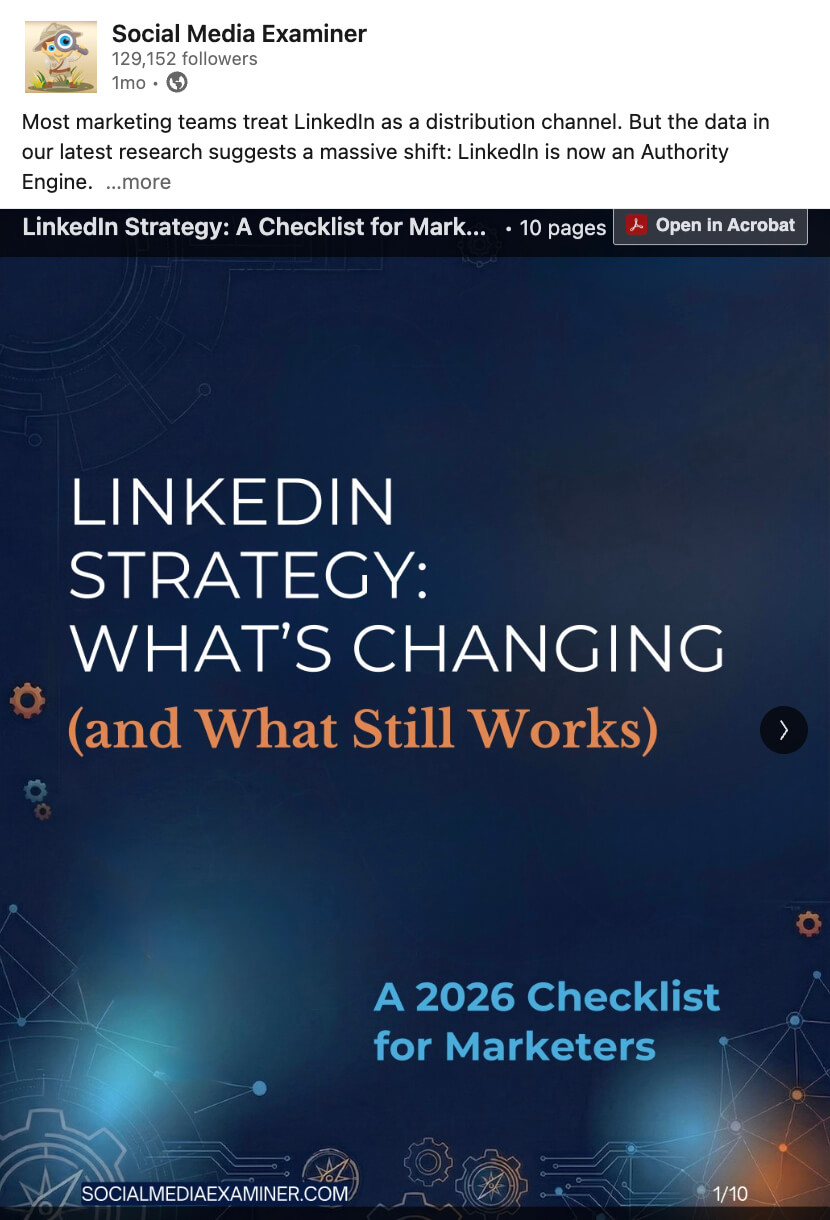
Document-style posts and carousels are currently the highest-performing content formats on the platform, outperforming static images by a factor of eleven. Why? Because they demand action. A user must physically swipe or click to navigate through the document, creating a sequence of invisible signals that tell the algorithm, "This user is highly engaged."
2. Mastering the "See More" Hook
Half of all impressions occur within the first 48 hours of a post’s lifespan. If your post doesn’t gain traction immediately, it risks disappearing from the feed entirely. The "see more" button is a critical gatekeeper. Your hook—the first two lines of text—must be written to spark intense curiosity. Do not give away your conclusion in the first paragraph. Force the reader to click to see the full value.
3. Comment Density Over Comment Volume
While many creators chase high comment counts, the algorithm has become more sophisticated. It now analyzes the depth of the conversation.
- The Problem: Shallow exchanges (one-line replies) are now effectively ignored by the AI.
- The Solution: Focus on "comment density"—meaningful, multi-turn dialogues between you and your audience.
Respond to comments within the first hour of publication to signal to the platform that the post is "hot." However, ignore AI-generated spam. The algorithm is increasingly adept at identifying bot-driven, repetitive comment strings, and engaging with them will not help your reach.
Implications for Content Strategy: Fighting Fatigue
A common pain point for creators is the fear of repeating oneself. However, the expert consensus, as shared by industry leaders like AJ Wilcox, is that you are likely under-communicating, not over-communicating.
The Audience Rotation Principle
Remember that your audience is constantly shifting. A follower who missed your post three months ago is seeing your ideas for the first time today. You do not need to invent new topics to stay fresh; you need to find new metaphors, formats, and angles for your core subject.
Originality vs. Repurposing
AI tools, including LinkedIn’s own backend, are increasingly capable of detecting original thought versus simple regurgitation. If you post variations of the same message without adding new insights, the algorithm may flag your content as low-authority. Use AI tools to brainstorm different perspectives on your core topic, but ensure the final output reflects your unique, personal expertise.
Turning DMs Into Content
Your most valuable content roadmap is found in your direct messages and comment sections. When a user asks a specific question, they are providing a direct window into a gap in your audience’s knowledge. Every question you receive is a potential standalone post. By answering these questions publicly, you not only provide value but also signal to the algorithm that you are a helpful, authoritative expert in your niche.
Conclusion: The New Rules of Engagement
The "new" LinkedIn is not a place to shout into the void; it is a laboratory for authority building. By pivoting from a "social graph" mindset to an "interest-based" content strategy, you can insulate your brand from the volatility of algorithmic updates.
Key Takeaways for Your 2025 Strategy:
- Specialize: Stop being a generalist. Pick a lane and stay in it to build cumulative authority.
- Optimize for Invisible Signals: Prioritize carousels, document views, and long-form engagement over simple "likes."
- Master the Hook: Write for the "see more" click.
- Foster Depth: Engage in substantive conversations in the comments rather than chasing shallow, one-line interactions.
LinkedIn’s new AI-powered brain rewards consistency, depth, and genuine engagement. By aligning your strategy with these signals, you can ensure that your expertise reaches the audience that matters most, even as the platform continues to evolve.