In a move that signals a seismic shift in how enterprise marketing stacks are architected, Salesforce announced on June 1st that it has signed a definitive agreement to acquire Contentful, the Berlin-born powerhouse of composable content infrastructure. While the headline figures—estimated between $1 billion and $1.5 billion—have captured the attention of financial analysts, the real story is unfolding in the "engine room" of digital marketing: the content layer.
For the over 4,800 brands that rely on Contentful to manage their digital assets, this acquisition is not merely a change in ownership; it is a fundamental reconfiguration of the ecosystem. By folding Contentful into its "Headless 360" suite, Salesforce is signaling that the future of customer engagement is no longer about sending emails or managing web pages—it is about the automated, AI-driven assembly of content across every touchpoint.
The Core Facts: A Strategic Consolidation
The acquisition, expected to close in the third quarter of Salesforce’s fiscal year 2027 (roughly August to October 2026), marks a major escalation in the "platform wars."
Contentful’s value proposition has always been its neutrality. As a headless CMS, it allows enterprises to treat content as structured data. Instead of storing text and images in static templates, brands store them as modular assets that can be piped via API into any destination—whether that is a website, a mobile app, or an Email Service Provider (ESP) like Braze, Klaviyo, or Adobe.
Salesforce’s stated goal is to integrate this capability directly into its "Data 360" and "Agentforce" ecosystems. By doing so, Salesforce intends to create a single, unified content layer that acts as the source of truth for the entire customer journey.
Chronology of the Deal and the Consolidation Wave
This acquisition does not exist in a vacuum; it is part of a broader, aggressive trend of consolidation that has defined the marketing technology landscape over the past 18 months.
- Early 2024: The market begins to see a flurry of "vertical" acquisitions. Canva acquires Ortto to bridge the gap between design and marketing automation; Insider One absorbs Bluecore to bolster its predictive capabilities.
- Mid-2024: Privacy-focused and data-centric acquisitions continue, such as Experian’s purchase of AtData, signaling a move toward deep identity management.
- June 1, 2025: Salesforce makes its move for Contentful, simultaneously announcing the acquisition of usage-based billing platform m3ter. This double-tap strategy suggests that Salesforce is looking to own not just the communication channel, but the billing infrastructure and the content creation engine as well.
- The Path Forward: With the deal subject to regulatory approval, the industry enters a period of uncertainty. Customers are now waiting for the "roadmap reveal" to see how Salesforce will balance its commitment to composability with the necessity of prioritizing its own ecosystem.
Supporting Data: Why Contentful Matters
Contentful is not just a tool; it is a central nervous system for modern enterprises. With over 4,800 enterprise clients, its reach is vast. The company’s architecture is built on the philosophy of "write once, publish everywhere."
For email teams, this is revolutionary. Traditionally, email marketing involved a tedious cycle of manual assembly: copying text, uploading assets, and verifying links. Contentful allows teams to treat an email as a collection of dynamic API calls. If a product price changes in the backend, the email—when opened—pulls the updated, accurate price from the content layer.
However, the scale of this acquisition also presents a challenge. A significant percentage of Contentful’s user base relies on competing ESPs. By bringing Contentful under the Salesforce umbrella, the company is effectively forcing a "frenemy" relationship on thousands of brands. These companies now find themselves in a position where their primary content infrastructure is owned by a direct competitor to their marketing automation software.
Official Responses and Strategic Vision
Jujhar Singh, who oversees Salesforce’s C360 applications business, has framed the acquisition as the "final piece of the puzzle." According to Singh, the Salesforce strategy is built on a three-legged stool:
- The Right Data: Provided by Data 360.
- The Right AI-Driven Content: Provided by the integration of Contentful.
- The Experience Layer: Provided by Agentforce.
Contentful CEO Karthik Rau has been equally vocal, emphasizing that the company’s API-first architecture "fits perfectly into the Salesforce stack." The official line from both companies is that "composability" will remain the gold standard. They promise that the platform will continue to serve third-party integrations with the same fidelity as it always has.
The "Agentic" Shift: A Warning for Email Teams
The most significant—and potentially alarming—part of the announcement is the promise that Contentful’s structured content will become accessible to Agentforce. Salesforce describes a future where agents "query, assemble, and deliver content dynamically without manual publishing steps."
For the modern marketer, this is the destination: a world of "zero-click" content. AI agents will assemble one-to-one emails on the fly, tailoring language, tone, and offers based on real-time context.
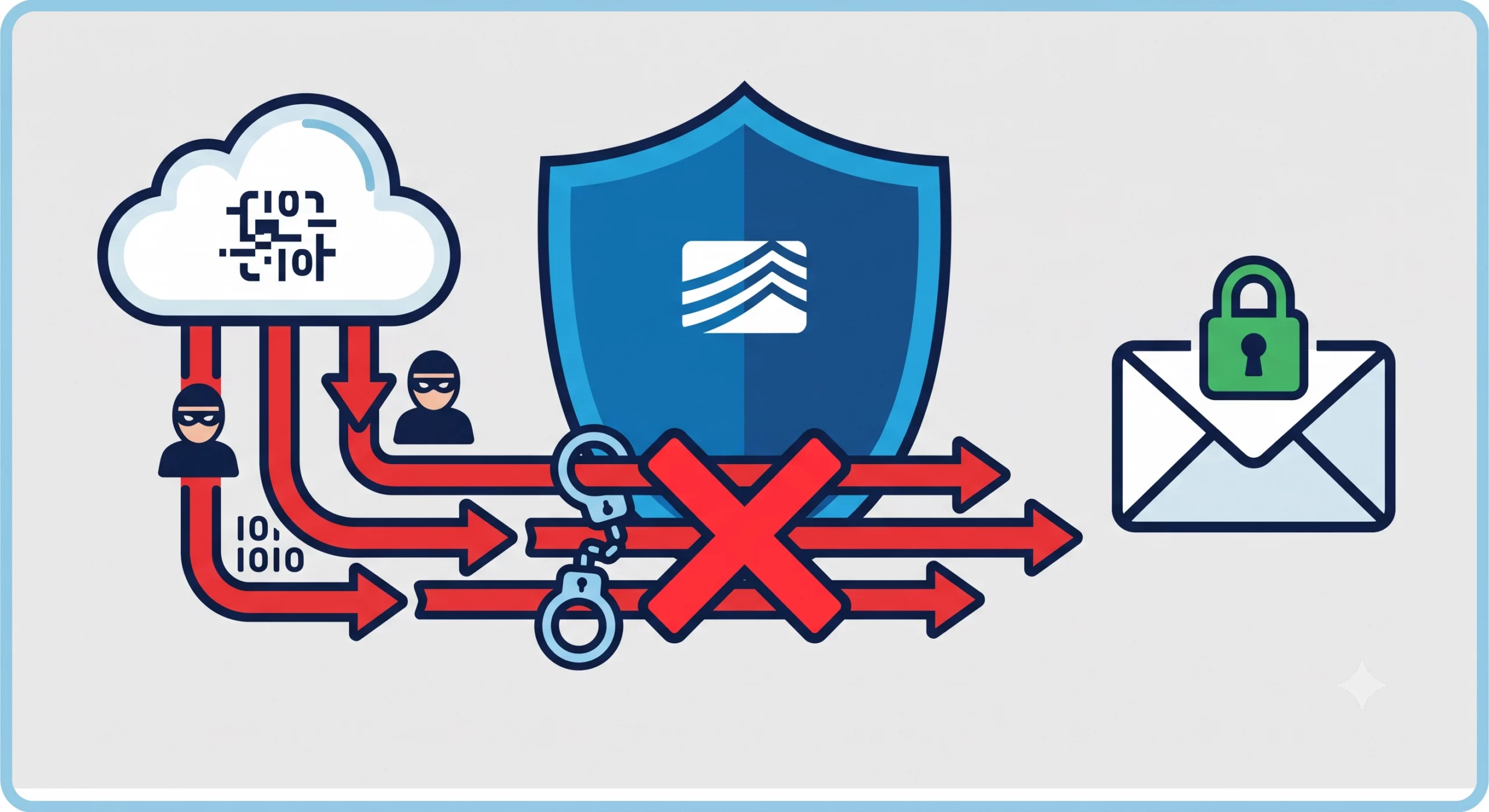
While this sounds like the ultimate efficiency, it introduces a terrifying lack of oversight. As seen in previous industry reports regarding AI "hallucinations" in transactional emails, the speed of dynamic assembly often outpaces the accuracy of verification controls. When you remove the human from the final publishing step, you remove the last line of defense against expired offers, incorrect pricing, or tone-deaf messaging. The risk of automated errors scaling across millions of recipients is, for the first time, a structural reality rather than a hypothetical concern.
Implications: The Neutrality Question
The central question for the industry is: Can a platform remain neutral when it is owned by a competitor?
History provides a cautionary tale. While acquired platforms rarely decline overnight, the "roadmap bias" is inevitable. Engineering resources naturally gravitate toward the features that benefit the parent company’s ecosystem. Customers who use Contentful alongside Braze, Klaviyo, or Adobe should look past the public promises of continued openness.
Strategic Recommendations for CMOs and IT Leads:
- Audit Your Dependencies: Immediately document how much of your current content workflow relies on Contentful. If the platform were to become "Salesforce-first," what is your contingency plan?
- Engage the Account Team: Ask direct, pointed questions regarding API availability, roadmap priority for non-Salesforce integrations, and pricing stability. Document these commitments.
- Evaluate Migration Costs: You do not need to leave today, but you must know what it would cost to migrate. Understanding your exit strategy is the best way to maintain leverage in a negotiation.
- Prioritize Human-in-the-loop Controls: As Salesforce pushes for "manual-free" publishing, your internal governance must go in the opposite direction. Invest in automated testing and AI-verification layers that act as a safety net for any AI-assembled content.
Conclusion: The Machinery is the Prize
Zooming out, the acquisition of Contentful confirms a profound change in the marketing technology sector. The industry has moved past the "gold rush" era of buying up email send capacity or audience databases. The modern prize is the machinery of decision-making.
Salesforce is not buying the email; it is buying the ability to decide what goes into the email, how it gets there, and the intelligence that governs that choice. For email teams, the stakes have never been higher. As the barrier between "data" and "content" dissolves, the responsibility of the marketer shifts from creator to curator of AI-led systems.
The integration of Contentful into the Salesforce machine is a clear signal that the future of marketing is autonomous. Whether that future is a triumph of efficiency or a minefield of automated errors remains to be seen. What is certain, however, is that the tools we use to build our content are becoming as important as the content itself. Marketers must now prepare to manage not just their messages, but the very infrastructure that determines their validity.