In the evolving landscape of digital marketing, the transition from traditional search engine result pages (SERPs) to generative AI-powered search experiences has created a "black box" for SEO professionals. For years, the industry has relied on robust data from Google Search Console to track organic visibility. However, as AI Overviews (AIO) and conversational interfaces become the primary way users interact with the web, standard reporting has failed to keep pace.
While Google continues to obfuscate AI-driven traffic within its standard performance metrics, Bing has emerged as a beacon of transparency. By refining its "AI Performance Report" within Webmaster Tools, Microsoft is offering publishers the first actionable glimpse into how their content is being utilized, cited, and summarized by artificial intelligence.
The Visibility Gap: Why Traditional SEO Metrics Are Failing
The core challenge facing modern SEOs is the lack of granularity. When a user queries a search engine today, they may receive a traditional list of links, or they may be presented with a synthesized answer generated by a Large Language Model (LLM).
In Google’s Search Console, these two worlds are collapsed into a single "Performance" metric. This makes it impossible for marketers to determine whether a decline in traffic is due to poor organic ranking, a drop in AIO visibility, or a shift in user search intent. Without specific data, optimizers are forced to guess, relying on anecdotal evidence or third-party tools that lack direct access to proprietary search engine data.
ChatGPT remains even more guarded. Unless a publisher has signed a direct licensing agreement with OpenAI, they are essentially flying blind regarding their visibility within the ChatGPT ecosystem. This lack of transparency has sparked concerns about the future of publisher revenue, as the "zero-click" search environment threatens to diminish the value of original content.
Chronology of Bing’s AI Transparency Push
Microsoft’s move toward transparency was not instantaneous; it is part of a broader, long-term strategy to lure publishers into its ecosystem.

- Early 2024: Microsoft publishes its foundational "Guide to AEO (Answer Engine Optimization) and GEO (Generative Engine Optimization)," signaling a departure from traditional SEO terminology and acknowledging the role of AI in search.
- Mid-2024: Shortly after the guide’s release, Bing introduces the initial iteration of its AI Performance Report in Webmaster Tools. It provided a basic view of citations but lacked the depth required for data-driven strategy.
- Late 2024 to Present: Recognizing the limitations of its first draft, Microsoft has significantly overhauled the report. The latest version introduces complex sorting, deeper integration with Bing’s AI partners, and expanded metrics that allow for a more granular analysis of how specific URLs perform in a conversational context.
Decoding the AI Performance Report
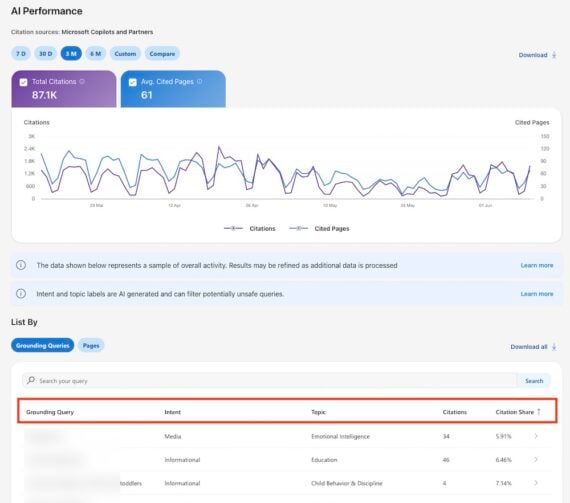
The current iteration of the Bing AI Performance Report is divided into two primary analytical buckets: "Grounding Queries" and "Pages." This structure allows marketers to pivot between understanding what users are asking and which content is providing the answer.
Grounding Queries: The "Why" Behind the AI Answer
A "Grounding Query" is a prompt that triggers a generative response from Bing or Copilot. The report now provides a comprehensive breakdown of these queries, including:
- Intent and Topic Analysis: By categorizing queries, publishers can see if their content is being used to answer informational, transactional, or navigational needs.
- Citation Metrics: The report tracks not just how often a site is mentioned, but the "Citation Share"—a vital metric that helps SEOs understand their dominance in a specific niche compared to competitors.
Page-Level Insights
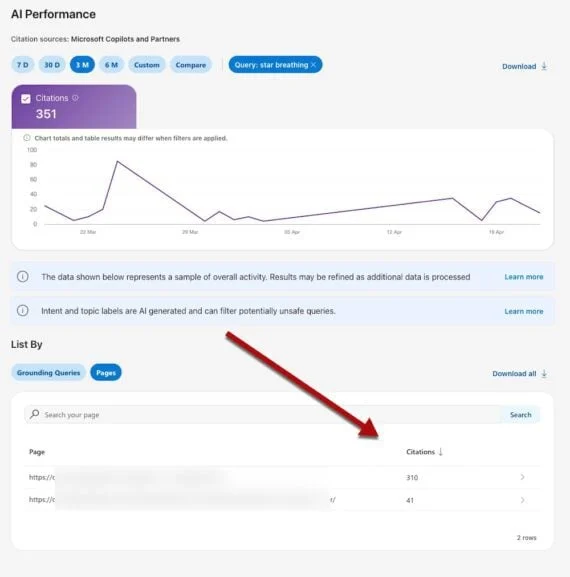
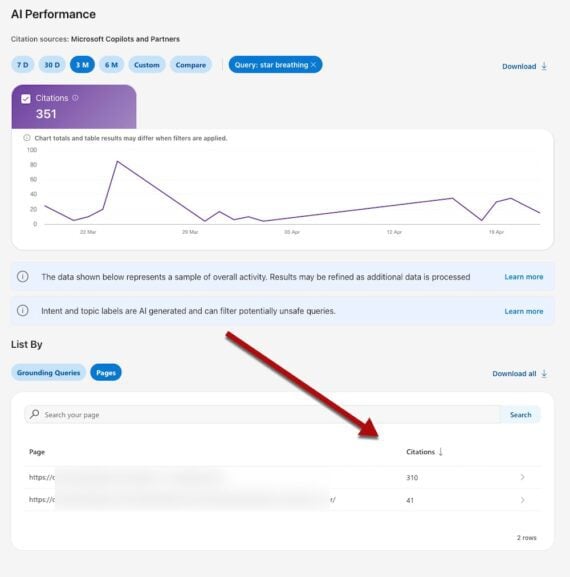
By clicking on any specific URL in the report, users can see the frequency of that page’s appearance as a citation. While the report currently stops short of providing exact "click-through" counts from AI summaries—a limitation that continues to frustrate some in the industry—it provides the visibility frequency required to optimize for "Answer Engine" readiness.
Supporting Data: What the Metrics Actually Reveal
For professional digital marketers, the report functions as a diagnostic tool. By sorting the data by "Citation Share," a brand can see which topics the AI considers them an "authority" on.
The report allows for the export of data into CSV or Excel formats. This is a critical feature, as it enables teams to perform cross-channel analysis. For instance, a marketing team can overlay their AI citation data with their standard organic traffic data. If a specific page sees a drop in organic clicks but an increase in AI citations, it may indicate that the page is being effectively used in summaries but is no longer being visited for the full content—a classic "zero-click" scenario.
Furthermore, the integration with Microsoft Copilot and other AI partner integrations means the data is not limited to the Bing search bar. It encompasses a broader range of the Microsoft AI ecosystem, providing a holistic view of how a domain is being "read" by LLMs.
Official Responses and Industry Implications
The industry response to Microsoft’s initiative has been largely positive, though cautious.
"Bing is forcing Google’s hand," says one industry analyst. "By providing this data, Microsoft is effectively telling publishers: ‘We value your content, and we want to show you how we use it.’ This is a powerful retention tool for Microsoft."
Conversely, critics point out that the lack of "click-through" metrics means the report is still a top-of-funnel indicator rather than a conversion-based tool. There is no way to tell if a citation in a Copilot summary leads to a sale or a bounce. Microsoft has yet to comment on when—or if—they will release granular engagement data related to these citations, likely citing privacy concerns or the complexity of tracking clicks through conversational interfaces.
Strategic Implications: How to Adapt
For businesses looking to thrive in this new era, the Bing AI Performance Report is not just a dashboard—it is a strategic roadmap.
1. Optimize for "Answerability"
Because the report identifies which pages are cited for which queries, it allows marketers to reverse-engineer success. If a page is cited often, analyze its structure. Is it using clear, concise language? Does it have structured data (Schema)? Does it answer the "who, what, where, when, and why" of the user’s question?
2. Prioritize Authority over Keyword Density
Generative AI prioritizes content that exhibits "grounding" potential. This means the content must be factually dense and trustworthy. The report allows you to see which topics the AI finds you most credible for. Double down on those topics to maintain your citation share.
3. The "Import" Advantage
One of the most user-friendly aspects of Bing Webmaster Tools is its integration with Google Search Console. Because the import process takes only minutes and requires no complex technical setup, there is virtually no barrier to entry. Every SEO professional should be using this, if only to gain a comparative advantage over competitors who are still relying exclusively on Google’s opaque metrics.
Conclusion: The Future of Search Visibility
The rise of AI-driven search is arguably the most significant disruption in the history of the web. While the transition from traditional links to generative summaries is challenging, platforms like Bing are providing the tools necessary to navigate this change.
By embracing the Bing AI Performance Report, marketers can move from a state of reactive guessing to proactive optimization. While the industry still awaits a truly universal standard for tracking AI-driven traffic, Bing’s commitment to transparency is a vital step toward a more equitable relationship between AI platforms and the publishers that fuel them. As this technology matures, those who utilize these reporting tools today will be the ones who define the standards for authority and visibility tomorrow.