By Tech Insights Bureau
Published June 29, 2026
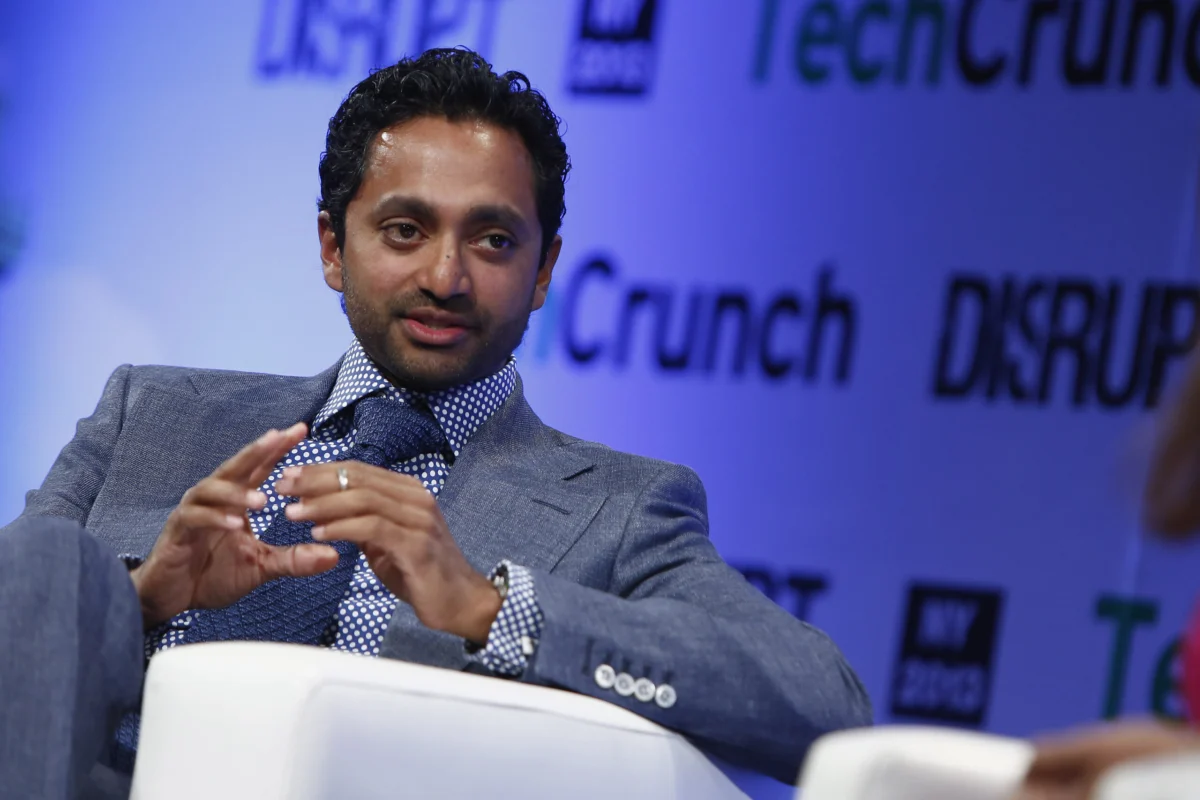
In a move that signals a significant shift in the venture capital landscape, Chamath Palihapitiya—the high-profile investor, Social Capital founder, and co-host of the influential "All-In" podcast—has officially stepped back into the arena as a full-time operating executive. On Monday, June 29, 2026, Palihapitiya announced that 8090 Labs, an AI-focused software development startup he founded, has successfully closed a $135 million Series A funding round.
The raise, led by Salesforce Ventures with a marquee list of strategic investors, marks a pivotal moment for the industry. It signals not only a massive vote of confidence in 8090 Labs’ mission but also a personal transition for Palihapitiya, who has declared his intent to lead the company as its CEO.
The Core Facts: A Heavyweight Syndicate
The $135 million injection is one of the more significant Series A rounds of the year, reflecting the insatiable corporate demand for enterprise-grade generative AI tools. The round was spearheaded by Salesforce Ventures, a move that aligns 8090 Labs with one of the world’s largest enterprise software ecosystems.
The capitalization table reads like a "who’s who" of Silicon Valley power players. Beyond Salesforce, the round saw participation from:
- WndrCo, the venture firm led by media titan Jeffrey Katzenberg.
- Craft Ventures, headed by David Sacks.
- The Production Board, founded by David Friedberg.
- Launch, the investment vehicle of Jason Calacanis.
The participation of the "All-In" podcast co-hosts—often referred to affectionately as the "Besties"—underscores the close-knit nature of the investment group backing this venture. Additionally, high-profile individual investors, including Palo Alto Networks CEO Nikesh Arora and Quora CEO Adam D’Angelo, have joined the cap table, providing both capital and deep industry expertise.
Chronology: From Concept to Corporate Reality
The trajectory of 8090 Labs has been swift, characterized by a stealthy development period followed by a sudden, aggressive public emergence.
- January 2024: Palihapitiya founds 8090 Labs with the intent of solving the "last mile" problem in enterprise AI coding.
- Early 2024 – Mid 2026: The company operates under the radar, focusing on building "Software Factory," a proprietary platform designed to transition AI coding from experimental "vibe-coding" to production-ready enterprise software.
- June 29, 2026: The company emerges from stealth with a $135 million Series A, the appointment of Palihapitiya as CEO, and a clear product roadmap.
The name "8090 Labs" is a nod to the era of technological revolution that shaped Palihapitiya’s early career, signaling his intent to capture a similar paradigm-shifting energy in the current AI cycle.
Supporting Data: Why "Software Factory" Matters
The enterprise AI market is currently saturated with tools that generate code, but there is a critical gap in reliability. Many current solutions excel at prototyping—what developers often dismissively call "vibe-coding"—where AI suggests code snippets that look functional but often lack the security, scalability, and maintainability required for large-scale production environments.
8090 Labs’ product, Software Factory, seeks to bridge this gap. According to the company’s internal documentation, the platform is built to integrate directly into the existing workflows of corporate engineering teams. Key features include:
- Enterprise-Grade Guardrails: Automatic implementation of security protocols that prevent the injection of vulnerable code.
- Auditability: Every line of code generated by the AI is tracked and linked to specific business requirements, ensuring compliance with corporate governance standards.
- Production Lifecycle Management: The software manages the transition from code generation to deployment, testing, and monitoring, effectively acting as an automated "factory floor" for software production.
This focus on the "enterprise stack" is what distinguishes 8090 Labs from consumer-facing AI coding assistants. By targeting the pain points of CTOs and CIOs—specifically the need for consistency and audit trails—Palihapitiya is positioning the company to become a foundational layer in the modern enterprise tech stack.

Official Responses and Strategic Vision
The announcement of the CEO role is perhaps the most surprising aspect of the news. Palihapitiya has spent the better part of the last decade as a venture capitalist, commentator, and SPAC sponsor. His decision to return to an operating role suggests he views the AI wave as a "once-in-a-generation" event that requires his direct, daily attention.
In a candid post on X (formerly Twitter), Palihapitiya drew parallels between his current endeavor and his formative years at Facebook, where he served as an early executive during the platform’s meteoric rise.
"Since I left Facebook, I was waiting for a moment like this to return to a full-time operating role," Palihapitiya wrote. "I am convinced that what we are building now is even more important than what we built in the mid-2000s. The shift to AI-driven software development is not just an optimization; it is a total reimagining of how the world creates digital infrastructure. There was no decision to make except to be all in."
The investors involved have also expressed strong support for this leadership transition. Salesforce Ventures, in particular, views the investment as a strategic play to enhance its own AI capabilities by tapping into 8090 Labs’ specialized development environment.
Implications: A New Era for Enterprise AI
The success of this funding round carries several profound implications for the broader tech sector:
1. The Rise of the "Operating VC"
Palihapitiya’s transition back to CEO marks a shift in the venture capital model. Increasingly, top-tier investors are finding that the complexity of AI requires more than just capital—it requires active, hands-on operational leadership. This could trigger a trend where other prominent VCs attempt to launch their own "incubated" companies with themselves at the helm.
2. Commoditization vs. Specialization
As AI coding becomes commoditized, the "winners" will not necessarily be the companies that generate the most code, but those that provide the most reliable code. 8090 Labs is betting that enterprises are willing to pay a premium for software that guarantees security and auditability. This could put immense pressure on generic AI coding assistants that lack enterprise-specific controls.
3. The "All-In" Influence
The participation of the "All-In" cohort highlights the power of the podcasting and content-driven venture model. By aligning their capital, these investors are not just providing money; they are creating an ecosystem of support, marketing, and corporate partnership that is difficult for traditional startups to replicate.
4. Enterprise Software Spending
The $135 million valuation for a startup that has been operating in relative silence underscores the massive capital expenditure currently flowing into the AI infrastructure sector. Corporations are desperate to accelerate their digital transformation, and they are increasingly looking to startups to provide the "picks and shovels" of this new era.
Conclusion
As Chamath Palihapitiya takes the reins of 8090 Labs, the tech world will be watching closely. His track record at Facebook, combined with his high-profile career as an investor, provides him with a unique platform to challenge the status quo of software development.
The success of "Software Factory" will ultimately depend on whether the company can deliver on its promise of bringing "production-quality" consistency to an industry currently intoxicated by the speed of AI. If Palihapitiya’s conviction that this moment is "more important" than the social media revolution holds true, 8090 Labs may well become the new backbone of the digital economy. For now, the $135 million raised serves as the initial fuel for what promises to be one of the most closely watched corporate turnarounds in recent Silicon Valley history.