For years, the WordPress ecosystem was defined by its physical footprint. From the bustling hallways of WordCamps to the monthly camaraderie of local Meetups, the community was the beating heart of the world’s most popular Content Management System (CMS). However, as the global landscape shifts, the very fabric of this community is undergoing a profound transformation.
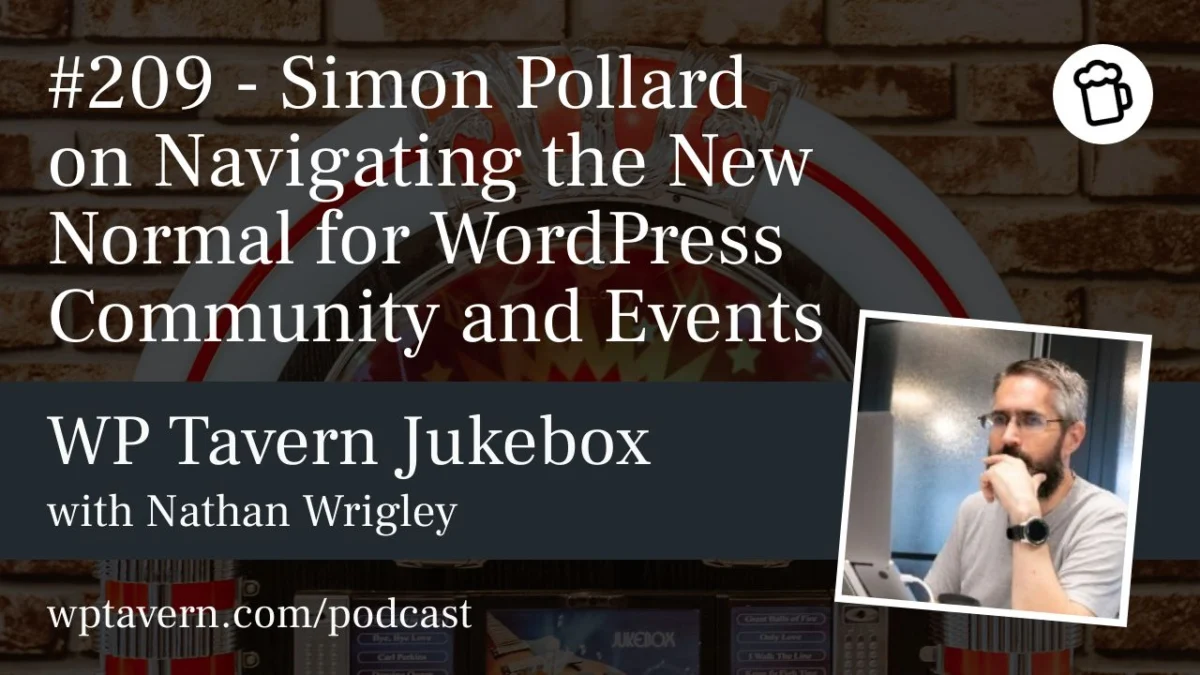
In a recent episode of the WP Tavern Jukebox podcast, host Nathan Wrigley sat down with veteran WordPress developer and community organizer Simon Pollard to dissect a pressing question: What happened to the vibrant, in-person Meetup culture that once defined the WordPress experience, and can it ever truly return?
The Rise and Stagnation of a Community
For many, the narrative of the WordPress community is a tale of two eras: pre-COVID and post-COVID. Simon Pollard, a seasoned developer currently with Illustrate Digital, remembers the "golden age" of the Bristol WordPress Meetup.
What began as a casual gathering of six developers in a local pub evolved into a sophisticated, officially backed organization. By late 2019, the group was regularly drawing 30 to 40 attendees, maintaining a professional bank account, and even turning a profit through sponsorship—funds which were then reinvested into better catering and venues.
"We had an organizing team of six or seven people," Pollard recalls. "It was going great. It was a lovely kind of gathering, just a nice thing."
Then, in 2020, the pandemic effectively pressed the "pause" button on global social life. While many organizers hoped for a swift return to normalcy, the reality proved far more complex. As the world moved online, the appetite for digital-only Meetups began to wane, and the momentum that had taken years to build evaporated almost overnight.
Chronology of a Disconnected Era
The decline of physical events wasn’t just a result of health mandates; it was a fundamental shift in behavior.
- 2019: The peak of the Bristol Meetup, characterized by strong attendance, consistent growth, and high-energy networking.
- 2020: The onset of the pandemic. Organizing teams, exhausted by the "new normal" and lacking the technological appetite to pivot entirely to virtual events, saw their groups peter out.
- 2021-2022: A period of professional and personal introspection. Many key community members, including Pollard, found their priorities shifting toward family and personal life. The "in-between" spaces—the social media platforms that once served as the community’s town square—began to fragment.
- 2023-2024: Tentative attempts at renewal. Some original organizers, like Janice—a founding member of the Bristol group—returned to the fold to restart the Meetups, finding a landscape that was quieter, more fractured, and significantly smaller than before.
The Disappearing Town Square
One of the most significant hurdles to the revival of WordPress communities is the loss of a centralized communication hub. In the mid-2010s, Twitter (now X) served as the de facto town square for WordPress developers. It was where organizers could broadcast events, retweet successes, and build personal brands that fed back into the community.
Today, that landscape has shattered. Users have migrated to various platforms or abandoned social media altogether, leaving no clear "go-to" space for community building. Pollard notes that the loss of this centralized communication has made it difficult to reach the network of people who once formed the backbone of these events.
"There’s no one place you can go to," Wrigley observes. "Everything is shattered over multiple accounts. It makes me think this isn’t good."
The "AI Effect" and the Erosion of Knowledge Sharing
A secondary, more technical challenge involves the changing nature of problem-solving. Historically, WordPress Meetups and forums like Stack Overflow were the primary engines for troubleshooting. When a developer faced a bug, they turned to the community. This created a cycle of consumption and contribution: you learned from the community, and eventually, you felt a responsibility to give back by answering others’ questions.
The rise of AI-driven coding assistants has disrupted this cycle. "You get your responses, you don’t have to reach out to a person anymore," Pollard explains. "The AI agent is the one who’s responded, you don’t know who actually did that… the community’s kind of gone in that sense."
While AI provides efficiency, it removes the human attribution that once turned a "user" into a "community member." Without the need to ask a person for help, the impetus to attend a Meetup to expand one’s network—or to find a mentor—is significantly weakened.
Re-imagining the Future: Beyond the "Tech Talk"
If the traditional model of a "technical talk followed by pizza" is no longer the draw it once was, what comes next?
Both Pollard and Wrigley suggest that the future of WordPress community engagement may lie in diversification. The "WordPress-only" focus, while core to the project’s identity, might be too narrow to sustain interest in a distracted, entertainment-saturated world.
Hybrid Events and Arts Integration
There is a strong correlation between WordPress professionals and creative pursuits, particularly music. Pollard and Wrigley posit that the next iteration of community events could be "hybrid arts-meets-tech" experiences. By incorporating live music, film, or non-technical creative talks (such as those from designers or animators), organizers could attract a broader audience and provide a social environment that feels less like a classroom and more like a community hub.
"Does it have to be mixed up with other things?" Wrigley asks. "You’ve got to have the social afterwards, you’ve got to have the band, the live entertainment… some aspect of gimmicks to make these events fun."
The "Welcoming" Factor
Ultimately, the success of the few remaining thriving Meetups hinges on the "welcoming team." Pollard credits the Bristol group’s success to a proactive approach: greeting newcomers at the door, wearing name badges, and actively facilitating introductions based on attendees’ professional needs. In an era where digital connection is abundant but superficial, the warmth of in-person interaction remains an "irreplaceable value."
Implications for the Open Source Project
The broader implication is clear: the WordPress project is not merely a collection of code; it is a community-driven ecosystem. If the "glue" that binds this community—in-person collaboration and networking—continues to erode, the project’s future health could be at risk.
"I have an intuition that the project wouldn’t have been successful without [the community]," says Wrigley. "The community is still there in some context, but where are they? How can I talk to them?"
The challenge for the next five years will be twofold:
- Bridging the generational gap: Introducing younger developers, who have never experienced a pre-pandemic Meetup, to the value of physical community.
- Creating new hubs: Developing modern, decentralized ways to stay in touch that don’t rely on the volatile algorithms of traditional social media.
For now, the WordPress community finds itself in a state of flux. It is a period of "re-learning how to socialize," as Pollard puts it. Whether the answer lies in music, broader creative themes, or simply a renewed dedication to the "hallway track," one thing is certain: the spirit of the WordPress community is not dead—it is simply waiting for a new reason to gather.