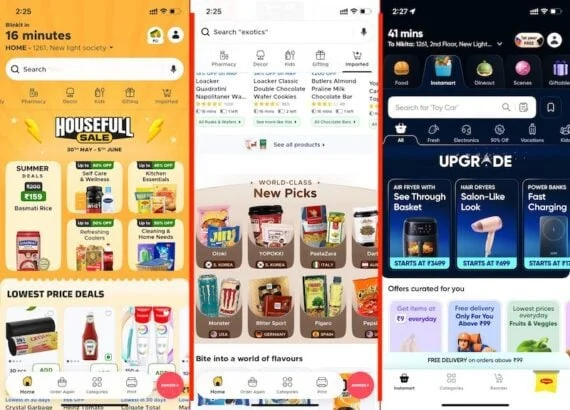
The landscape of Indian retail is undergoing a tectonic shift, fueled by a model that prioritizes velocity above all else. Quick commerce—the practice of delivering groceries, electronics, and household essentials in under 30 minutes—has evolved from a niche urban convenience into a cornerstone of the modern Indian consumer experience. As of April 2026, the sector is projected to reach $50 billion in annual revenue by 2030, accounting for 10% of the nation’s total e-retail expenditure, according to a joint report by Deloitte and Google.
For the global brand manager or the international investor, the "India Playbook" is no longer about slow-burn market penetration. It is about integrating into a hyper-localized, high-frequency logistics ecosystem that turns the chaos of daily life into a streamlined digital transaction.
The Mechanics of the 10-Minute Economy
At the heart of this revolution are three dominant players: Blinkit, Swiggy Instamart, and Zepto. These platforms have become so embedded in the daily routines of urban Indians that their brand names are now used as verbs—"Blinkit it" or "Swiggy it"—a testament to their psychological grip on the consumer.
The model relies on "dark stores"—micro-warehouses strategically placed in high-density residential zones. By shortening the distance between inventory and the doorstep, these platforms leverage India’s unique demographic profile: a massive, dense population with rapidly rising disposable income. While early operations were confined to Tier 1 and Tier 2 cities, the platforms are now aggressively expanding into Tier 3 markets, where roughly 700 million of India’s 1.45 billion people reside.
The Profitability Paradigm
Unlike traditional e-commerce, where basket size is king, quick commerce prioritizes frequency and retention. The goal is to become the default utility for recurring needs: milk, bread, snacks, diapers, and personal care. The unit economics are driven by the high velocity of these low-margin, high-demand items. For instance, Eternal (the parent company of Blinkit) reported that during the 2026 fiscal year, 109 million users generated $10 billion in revenue, supported by a vast network of 2,243 dark stores.
A Chronology of Rapid Expansion
- 2020-2022 (The Incubation): The COVID-19 pandemic acted as a massive accelerant for on-demand delivery. Initially, platforms struggled with logistics and supply chain stability.
- 2023-2024 (Consolidation): The "dark store" model matured. Companies began investing heavily in AI-driven inventory management and predictive demand forecasting.
- 2025 (Regulatory Pivots): Major players, including Blinkit’s parent company, underwent significant restructuring to comply with India’s stringent foreign direct investment (FDI) laws, ensuring that inventory-holding entities were effectively Indian-owned.
- 2026 (The Scaling Phase): The Deloitte-Google report cements quick commerce as a primary driver of the $250 billion total e-commerce market expected by 2030. Attention has shifted toward deep penetration into Tier 3 cities.
Supporting Data and Market Dynamics
For foreign brands looking to enter the Indian market, success requires an understanding of the specific cost structures involved. Advertising is the primary lever for visibility. According to data from SW Cybernetics, brands should anticipate the following cost benchmarks on platforms like Blinkit:
- Sponsored Search Ads: Average cost of $0.11 per click.
- Home Page Banners: $3.16 CPM (cost per thousand impressions).
- Category Banners: $2.11 CPM.
- Operational Overheads: Brands typically pay between $1,000 and $5,000 per month for prime shelf space in dark stores, alongside a platform commission fee ranging from 10% to 25%, depending on the city’s economic tier.
These numbers illustrate a "pay-to-play" reality. Simply listing a product is insufficient; AI-driven algorithms prioritize products based on sales volume and availability, meaning brands must subsidize their initial growth through aggressive ad spend to earn organic rankings.

Official Responses and Strategic Implications
The regulatory environment in India remains complex. The government’s stance on foreign retailers—specifically the prohibition against foreign companies owning inventory-holding retail entities—continues to dictate corporate structure.
The "India-First" Strategy
Foreign brands often stumble by grouping India with China or Southeast Asia. However, India’s legal framework, platform economics, and consumer habits are distinct. The successful strategy involves:
- The Distributor Model: Using an India-registered "seller of record" (distributors like Opptra or Ace Turtle) allows brands to reach consumers on platforms like Amazon or Flipkart without needing to navigate the complexities of local retail ownership.
- Product Localization: Indian consumers are value-conscious. While there is a strong preference for Western and global brands due to their perceived credibility, they must be priced appropriately. Packaging must be redesigned for the Indian market, adhering to local labeling requirements and optimized for the specific, smaller basket sizes typical of quick-commerce users.
- The Trust Loop: Brands are finding success through micro-influencers and the distribution of free samples to build initial reviews. In a market where trust is the primary currency, these "trial-lowering" tactics are essential.
The Path Ahead: Implications for Global Brands
The quick commerce model is not merely a logistical upgrade; it is a fundamental shift in the retail lifecycle. For multinational corporations—from snack giants like Monster and Doritos to personal care leaders like Nivea and Pampers—the "dark store" is the new flagship retail space.
Challenges to Watch
The biggest threat to this model remains the regulatory gray area. As quick commerce continues to blur the lines between a "marketplace" and an "inventory-owning retailer," further government scrutiny is inevitable. Companies that have not built a compliant, India-registered corporate structure will find themselves vulnerable to policy shifts.
The Future of Consumption
As these platforms continue to scale, they are becoming "super-apps." We are seeing an increase in the integration of financial services, hyper-local services, and even cross-border shopping categories within the apps. For a foreign brand, the opportunity is clear: if you can win on the quick-commerce shelf, you have successfully tapped into the pulse of the fastest-growing consumer market in the world.
However, the cost of entry is high, and the competition is ruthless. Success in India will be defined by those who stop treating it as an "emerging market" and start treating it as a distinct, highly sophisticated, and hyper-competitive retail ecosystem that demands a unique, localized, and agile approach.
Conclusion: The transition to a 10-minute delivery cycle is not just about the speed of transit; it is about the speed of market integration. As India moves toward a $50 billion quick-commerce milestone, the winners will be those who embrace the complexity of the "India Playbook," prioritize high-frequency engagement, and align their brand values with the deeply practical, value-conscious, and technology-forward Indian consumer.