The digital marketing landscape is undergoing a structural bifurcation. On one side, we have platforms that function as utility-based, transactional pipes for sending messages; on the other, we have sophisticated orchestration hubs that are rapidly consuming the decision-making process. Klaviyo’s Q1 2024 earnings report, released on May 5th, serves as the definitive third data point confirming this trend.
With reported revenue of $358 million—a 28% year-over-year increase—Klaviyo has not only outperformed expectations but also signaled a fundamental pivot in how the industry defines "marketing software." Coupled with the accelerated growth of Braze and the shrinking footprint of legacy players like Mailchimp, the evidence is now irrefutable: the market is splitting between those who merely send and those who orchestrate.
The Chronology of Consolidation and Growth
The trajectory of the current marketing tech environment can be traced through a series of rapid shifts over the last twelve months.
- Early 2024: The industry observed a distinct cooling of interest in legacy email-only providers. As platforms like Mailchimp faced headwinds, competitors that integrated advanced data-layering with orchestration saw an uptick in enterprise adoption.
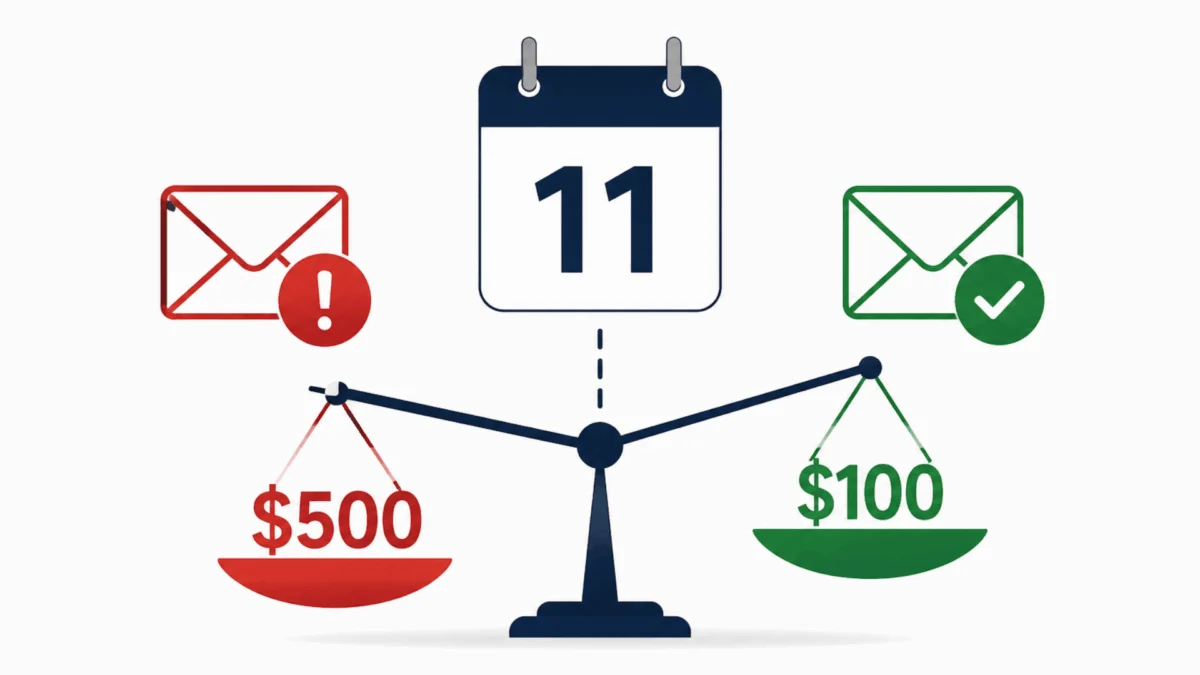
- May 5, 2024: Klaviyo officially announced its Q1 results. The figures were robust: $358 million in revenue, a raised full-year guidance, and a $500 million share buyback authorization. This signaled that the platform had successfully moved beyond the "startup" phase and into a period of mature, compounding growth.
- Post-Earnings: Market analysts noted the emergence of a new vocabulary in the space. The shift from "omnichannel" (the buzzword of 2018) to "autonomous" (the buzzword of 2024) began to dominate investor calls and product roadmaps.
The "Autonomous" Paradigm: A Strategic Rebranding
Perhaps the most significant development in Klaviyo’s recent narrative is its self-identification as an "autonomous B2C CRM." This is not merely a semantic shift; it is an attempt to redefine the value proposition of marketing technology.
Defining Autonomy in Marketing
In the modern context, "autonomous" implies a system that executes commercial decisions—selecting the audience, determining the channel, and timing the message—without requiring manual input from a human marketer.
Klaviyo is not alone in this pursuit. The industry is currently engaged in a massive land-grab for the "autonomous" label:
- ActiveCampaign is explicitly marketing "autonomous marketing" solutions.
- Braze has doubled down on AI-powered decisioning that automates channel selection.
- Salesforce has introduced Agentforce, a system designed to assemble content and publish it without human intervention.
While these platforms promise efficiency, they invite a critical question for CMOs and merchants: What happens when the machine gets it wrong? As we have documented throughout the year, AI-generated content and autonomous decision-making are prone to "hallucinations" and logical errors. Moving from a tool that the merchant operates to a system that acts on the merchant’s behalf carries significant brand risk. The industry is racing toward a future where the software is expected to be the pilot, but the legal and reputational liability remains firmly with the human owner.
The Assistant Land-Grab: Integrating the Front Door
Klaviyo’s Q1 report also highlighted a deliberate expansion of integrations with ChatGPT, Claude, Canva, and Google. This is a defensive and strategic move. By embedding themselves into the AI assistants that marketers use daily, platforms like Klaviyo are ensuring they remain the "front door" of the marketing stack.
However, this integration strategy comes with inherent complications. Take the Canva-Klaviyo partnership: in May, Canva acquired Ortto, a direct competitor in the marketing automation space. We are now seeing a web of "coopetition," where your integration partner is also your competitor and your potential acquirer. This is a hallmark of a consolidating market. By 2026, the lines between service providers will likely be blurred beyond recognition, forcing companies to manage increasingly complex ecosystems of partners.
Geographic Divergence: The EMEA Growth Story
A granular look at the data reveals an interesting regional split. While Klaviyo’s total revenue grew by 28%, their EMEA revenue—excluding the United Kingdom—surged by 51%.
This detail is telling. In the world of corporate reporting, companies rarely isolate a region unless the exclusion provides a more flattering picture of growth. The implication is clear: the UK market, once the primary beachhead for US tech expansion into Europe, has reached a level of maturity and saturation. It is no longer the growth engine it once was.
Conversely, continental Europe represents a massive, under-penetrated opportunity. The "Shopify-plus-Klaviyo" stack, which dominated North American ecommerce for years, is currently sweeping through the European mid-market. For agencies and competitors, this serves as a warning: the home market (UK) is slowing down, while the continent is ripe for a high-speed land grab.
Financial Implications: The Shift to Cash-Returning Models
The most striking indicator of Klaviyo’s maturity is the $500 million share buyback authorization. In the context of a high-growth tech company, a buyback is a powerful signal. It suggests that leadership believes their own stock is the best possible investment for their surplus cash.
Why Buybacks Matter
- Confidence: It signals to the market that the company is profitable on its preferred metrics and confident in its long-term cash flow.
- Lack of M&A Appetite: It indicates that the company does not see a clear, high-value acquisition target in the current landscape that would outperform the value of their own shares.
- Maturation: It marks the end of the "growth at all costs" era. Companies like Braze and Klaviyo are entering the "cash-returning" phase of their lifecycle.
While companies like Canva, Insider, and Salesforce continue to act as active consolidators, the orchestration leaders are choosing to compound their own value. This restraint is a bold statement in a year characterized by aggressive deal-making.
Conclusion: The Human Variable
Despite the industry’s obsession with "autonomous" systems, the reality remains that these platforms are ultimately governed by human expectations. Every quarterly report is a reminder that even the most "autonomous" platform is still beholden to Wall Street’s short-term requirements.
The divergence between platforms that orchestrate and those that merely send is no longer just a thesis—it is a market reality. As we move further into 2024, the companies that successfully navigate the balance between AI-driven autonomy and human brand oversight will be the ones that define the next generation of commerce. However, as the market consolidates and "autonomous" becomes a commoditized buzzword, the true winners will be the platforms that prove their machines can be trusted when the stakes are high and the human is out of the loop.